
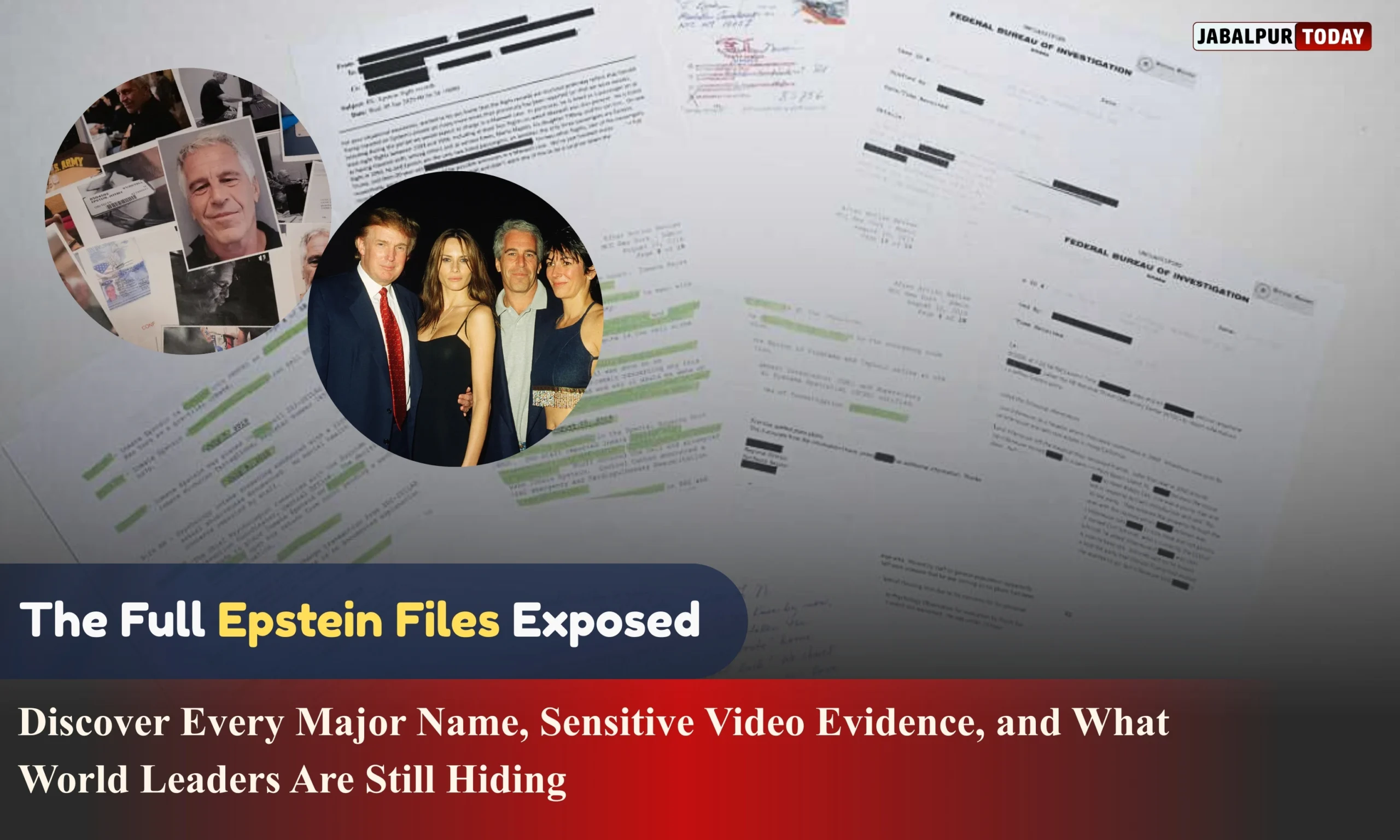
This article examines the massive release of the Epstein files, uncovering key revelations about Jeffrey Epstein’s trafficking network, elite connections, legal controversies, and ongoing demands for full transparency.
New Delhi: At a time when the world is demanding more transparency from powerful institutions, the Epstein files have become one of the most significant and controversial document releases in modern history. Spread across millions of pages, thousands of videos, and hundreds of thousands of images, these records expose details of a global sex trafficking network connected to wealthy and influential individuals.
This article brings everything together in simple language—covering who Jeffrey Epstein was, what the files contain, how they were released, what they reveal about powerful figures, and what questions still remain unanswered.
Who Was Jeffrey Epstein?
Jeffrey Epstein was an American financier born in 1953. He built a reputation as a wealthy investor and philanthropist and moved in elite social circles. He managed money for billionaires, including Les Wexner. However, behind this image, he was running a sex trafficking operation that targeted underage girls, often recruiting them under the pretext of giving “massages.”
Key Events in His Life
• 2005 – Police in Palm Beach began investigating allegations that he was sexually abusing minors.
• 2008 – He pleaded guilty to state charges in Florida and served 13 months in jail under a controversial plea agreement that allowed work release.
• 2019 – He was arrested on federal sex trafficking charges.
• August 2019 – He died in jail. Authorities ruled his death a suicide, though many conspiracy theories continue.
His close associate, Ghislaine Maxwell, was later convicted in 2021 for helping recruit and traffic underage girls.
Epstein owned several properties linked to abuse allegations:
• A mansion in New York
• A home in Palm Beach
• A ranch in New Mexico
• A private island, Little St. James
His private jet, often called the “Lolita Express,” transported guests between these properties. Flight logs later became a key part of the investigation.
What Are the Epstein Files?
The “Epstein files” are not a single list or secret document. They are a massive collection of investigative materials gathered over many years. These include:
• FBI investigation records
• Emails and schedules
• Flight logs
• Financial transaction reports
• Victim testimonies
• Photos and videos
• Court documents
• Depositions from civil lawsuits
Some of the documents came from a 2015 lawsuit filed by Virginia Giuffre against Ghislaine Maxwell, parts of which were unsealed in 2024. Other materials come from the FBI’s internal systems and public submissions.
It is important to understand that a person’s name appearing in these documents does not automatically mean they committed a crime. Some individuals are mentioned in social contexts, contact lists, or unverified tips.
The Historic January 30, 2026 Release
The January 30, 2026, release of over 3 million pages, 2,000 videos, and 180,000 images under the Epstein Files Transparency Act exposed a vast collection of sensitive material detailing Jeffrey Epstein’s sex trafficking network. The U.S. Department of Justice (DOJ) released this batch as part of a total 3.5 million pages made public.
The release included emails, photos, victim testimonies, FBI investigative notes, and internal communications that highlighted abuse, exploitation, and connections to elite individuals. While not every mention implies wrongdoing, the files reveal patterns of systemic abuse, including underage victims from different parts of the world.
The release triggered global fallout, prompting officials to resign, authorities to launch new investigations, and critics to strongly condemn the redactions—where officials blacked out sections of the documents. Many survivors and lawmakers argued that authorities were still hiding too much information.
Below, we explain the key sensitive elements revealed and then outline what the files say about prominent leaders and their public responses.
How Authorities Released the Files?
The process of making these documents public happened over several years due to lawsuits, public pressure, and new legislation.
Timeline of Major Events
• 2019–2023 – Partial FBI records were released after Epstein’s death.
• January 2024 – A federal judge unsealed about 950 pages from the Giuffre-Maxwell case.
• July 2025 – Lawmakers Ro Khanna and Thomas Massie introduced the Epstein Files Transparency Act.
• November 2025 – The U.S. Congress passed the bill unanimously.
• November 2025 – President Donald Trump signed it into law.
• December 2025 onward – The Department of Justice began releasing millions of pages.
In total, about 3.5 million pages have been released so far. Lawmakers estimate the full archive may contain up to 6 million pages.
In February 2026, officials temporarily removed some files after errors exposed sensitive victim information. The DOJ stated that redactions were necessary to protect privacy and national security, but critics argue that some redactions may protect powerful individuals.
Key Sensitive Revelations in the Files
1. Victim Testimonies and Abuse Evidence
The documents contain detailed accounts from dozens of underage victims, many identified as “Jane Does.” These testimonies describe:
• Sexual abuse at Epstein’s properties
• Trafficking and coercion
• Payments in exchange for sexual acts
The files reference more than 250 underage girls allegedly exploited over the years. Some documents date back to criminal complaints filed in the 1990s.
There are also references to victims from outside the United States, including individuals connected to India and Pakistan, showing the global nature of the trafficking network.
The release included 2,000 videos and 180,000 images. Authorities redacted some of this sexually explicit material to protect the victims.
Mistakes in redaction briefly exposed sensitive information, leading to criticism from human rights experts and survivor groups.
2. Elite Networks and Communications
The files show flight logs, emails, party invitations, and schedules that connect Epstein with powerful figures from politics, business, academia, and entertainment.
They include:
• Travel records on Epstein’s private jet
• Social event invitations
• Business discussions
• Financial documents
Some documents reference a “birthday book” compiled for Epstein with messages from prominent individuals.
Again, appearing in these documents does not automatically prove criminal involvement. However, they show the scale of Epstein’s social network.
3. Investigative Failures and Possible Cover-Ups
The files reveal details about Epstein’s 2008 plea deal, which allowed him to avoid federal prosecution despite serious allegations.
Internal discussions within the DOJ suggest debates about charging additional co-conspirators. Some 200,000 pages remain withheld under legal privilege.
The documents reference ignored evidence, possible blackmail material, and raise broader concerns about how officials handled the case.
These revelations raise serious questions about whether authorities protected powerful individuals.
Prominent Figures Mentioned in the Files
The files mention many well-known leaders. What follows is based on what appears in the documents and their public statements. Inclusion in the files does not equal guilt unless proven in court.
- Donald Trump
What the files show:
His name appears frequently in flight logs, emails, and investigative notes. Some documents include allegations compiled by the FBI.
His response:
He has repeatedly said he had nothing to do with Epstein’s crimes and described parts of the controversy as politically motivated. He signed the Transparency Act but criticized aspects of the public reaction.
- Bill Clinton
What the files show:
Multiple mentions in travel logs and photographs. Witness statements quote Epstein making inappropriate remarks, though no new direct criminal charges appear in the latest releases.
His response:
A spokesperson said he had no knowledge of Epstein’s crimes and cut ties after Epstein’s 2008 conviction.
- Prince Andrew
What the files show:
Accusations of inappropriate conduct and communication with Epstein. He previously settled a civil lawsuit without admitting liability.
His response:
He has expressed regret over the association and denies wrongdoing.
- Elon Musk
What the files show:
Emails discussing possible meetings and invitations during 2012–2013.
His response:
He has denied ever visiting Epstein’s island and called related claims misleading.
- Bill Gates
What the files show:
References to meetings and draft communications after Epstein’s earlier conviction.
His response:
He has said meeting Epstein was a mistake and denied any criminal involvement.
- Les Wexner
What the files show:
Managed Epstein’s finances for years and is mentioned in investigative documents.
His response:
He has said he was deceived and denies any involvement in criminal acts.
- Ghislaine Maxwell
She was convicted in 2021 for assisting Epstein in trafficking minors. She has sought clemency in the past, which was denied.
Global and Political Fallout
The document releases have led to:
• Resignations and investigations in Europe
• Bipartisan criticism in the U.S. Congress
• Claims that files were heavily “scrubbed”
• Survivor frustration over incomplete transparency
Lawmakers, including Ro Khanna and Thomas Massie, have demanded fewer redactions and full disclosure. The DOJ argues that redactions are necessary to protect victims and sensitive information.
What Questions Still Remain?
Despite the massive release of documents, major questions remain:
- Will the remaining unreleased pages ever become public?
- Is there a possibility that other co-conspirators were protected?
- What led to Epstein receiving such a lenient plea deal in 2008?
- Details about the still-withheld internal DOJ documents also remain unclear.
While the January 2026 release is described as the largest and possibly final major batch, survivors, experts, and lawmakers continue to push for full accountability.
Conclusion
The Epstein files present a disturbing picture of abuse, exploitation, and powerful connections. They show how underage girls were trafficked across borders and how elite networks operated around Epstein for years.
At the same time, they highlight the complexity of large investigations. Not every name mentioned is guilty, and many claims remain unproven. But the scale of the evidence has forced governments and institutions to confront serious failures.
The demand for truth and accountability continues—and this story is not yet over.
Also Read on jabalpur today: India’s Big AI Summit Turned Into Chaos: Founders Evicted, Products Stolen, Hours Without Water

Mansi Sharma is a journalist covering Global Affairs, and wellness, known for turning complex ideas into sharp, engaging narratives. Her work is driven by curiosity, depth, and a constant urge to question and explore. When she’s not writing, you’ll often find her diving into new ideas—preferably with a cup of coffee in hand, one sip at a time.