
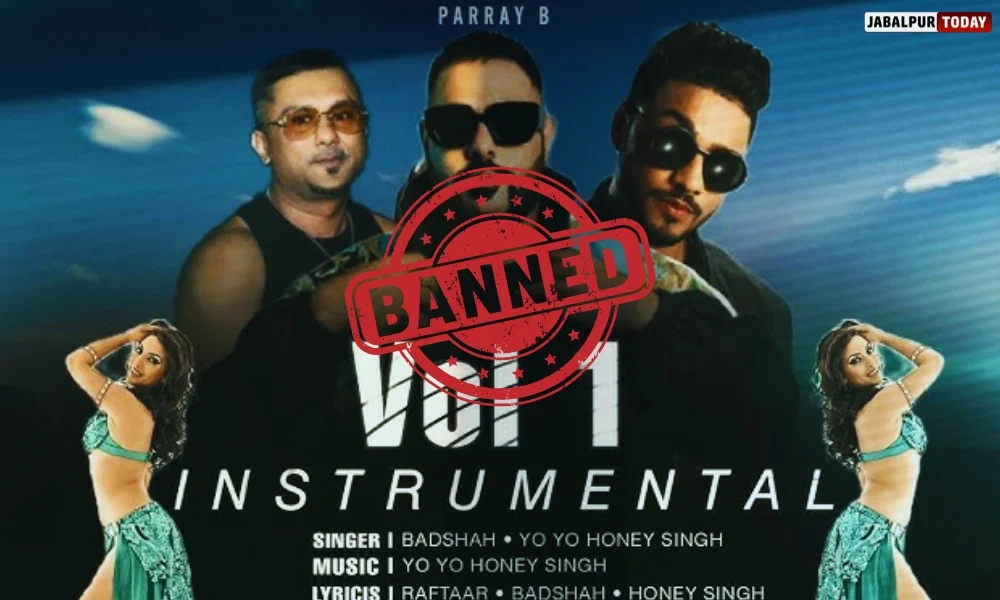
On April 2, 2026, a single-judge bench of the Delhi High Court passed an important order that could change how the digital era treats explicit content in Indian hip-hop
New Delhi: On Thursday, April 2, 2026, the Delhi High Court ordered the immediate and complete removal of the 2006–07 track “Volume 1” (also publicly known as “Ch**t Vol. 1”) from all digital platforms.
Justice Purushaindra Kumar Kaurav, who heard the petition filed by Hindu Shakti Dal, described the song’s lyrics as “grossly vulgar, clearly obscene, and insulting towards women.”
The judge said this is one of the rare situations where “the conscience of the court is shaken to the core” and added that the court is “deeply shocked.”
He also made it clear that no part of the song should appear publicly again. This includes any fragments, small clips, pieces of lyrics, or remixed versions.
The main order is broad and strict. It directs Yo Yo Honey Singh, Badshah, all people claiming rights to the song (including those linked to the Mafia Mundeer label), Spotify, and every other platform or intermediary to remove every URL hosting the song immediately.
The court has also asked the Union of India to instruct online intermediaries to act when they receive complaints. It has allowed the petitioner to submit additional URLs if more links to the song appear online.
The Song and Its Origins
The Mafia Mundeer group, which included Honey Singh and Badshah during their early underground careers, released “Volume 1” in the mid-2000s.
The track became controversial because of its highly explicit lyrics that objectify women in extreme ways. The song spread widely during the early underground hip-hop era, but neither artist included it in their official commercial music catalogues.
Over the years, both Honey Singh and Badshah have publicly distanced themselves from full ownership of the song, and critics have also raised questions about who actually wrote it.
The court order noted that the song’s title was so offensive that it could not be fully reproduced in the judicial record.
Why the Case Reached the High Court Now
The petition filed by Hindu Shakti Dal argued that the song’s continued availability on social media and streaming platforms violated basic standards of decency and dignity.
Even though the track is almost two decades old, it was still available online, including on streaming services like Spotify, where it had gained millions of streams in earlier years.
The court accepted the argument and acted quickly, choosing to issue a complete ban instead of simply sending a notice or warning.
According to the records of the hearing, no arguments from the artists or their representatives changed the outcome on the day of the case.
What the Order Actually Directs
The court’s decision leaves no room for partial compliance.
The order requires:
- Immediate removal of every version or clip of the song by the artists and rights holders.
- Instructions to the Central Government and all online intermediaries to enforce the ban.
- A complete prohibition on any future upload or circulation, even of small clips or lyrics.
- Permission for the petitioner to identify and report additional links that may appear online.
This order is not temporary. This directive aims to completely remove the song from the public digital space.
The Bigger Picture: From Underground Viral to Judicial Erasure
Today, Honey Singh and Badshah are among India’s biggest mainstream music stars, with chart-topping songs, film soundtracks, and massive fan followings.
However, their early Mafia Mundeer phase included songs like “Volume 1” that reflected the raw and unfiltered style of the underground hip-hop scene at the time.
The court’s order represents a strong judicial intervention in that early legacy. It clearly states that platforms cannot freely provide access to or monetize content that lacks artistic or social value and is considered dehumanising, especially when it can reach young audiences.
Legal experts say the ruling could become an important precedent for defining obscenity standards for online music under Indian law.
The court also stressed that no civilised society governed by the rule of law can allow such material to remain in circulation.
Reactions and Immediate Aftermath
As of April 2, 2026, neither Honey Singh nor Badshah has released an official public statement about the court’s decision.
Major news outlets across India reported the order within hours, highlighting the court’s strong language and the unusually wide scope of the takedown order.
The song, which was once a viral underground track that helped shape the early careers of both rappers, is now being systematically removed from the internet under a court mandate.
What It Means for the Music Industry
The Delhi High Court’s decision about “Volume 1” goes beyond just one song released in 2006–07.
It sends a strong message that courts can remove even decades-old content from the internet if they believe it crosses legal limits related to obscenity and dignity.
In an industry where old tracks often return to popularity through streaming platforms, the verdict sets a clear line: artistic freedom has limits when content becomes grossly vulgar.
Whether this leads to closer examination of other early-career songs in the future remains uncertain. For now, one thing is clear:
“Volume 1” has been ordered to be removed from the internet permanently.

Mansi Sharma is a journalist covering Global Affairs, and wellness, known for turning complex ideas into sharp, engaging narratives. Her work is driven by curiosity, depth, and a constant urge to question and explore. When she’s not writing, you’ll often find her diving into new ideas—preferably with a cup of coffee in hand, one sip at a time.