
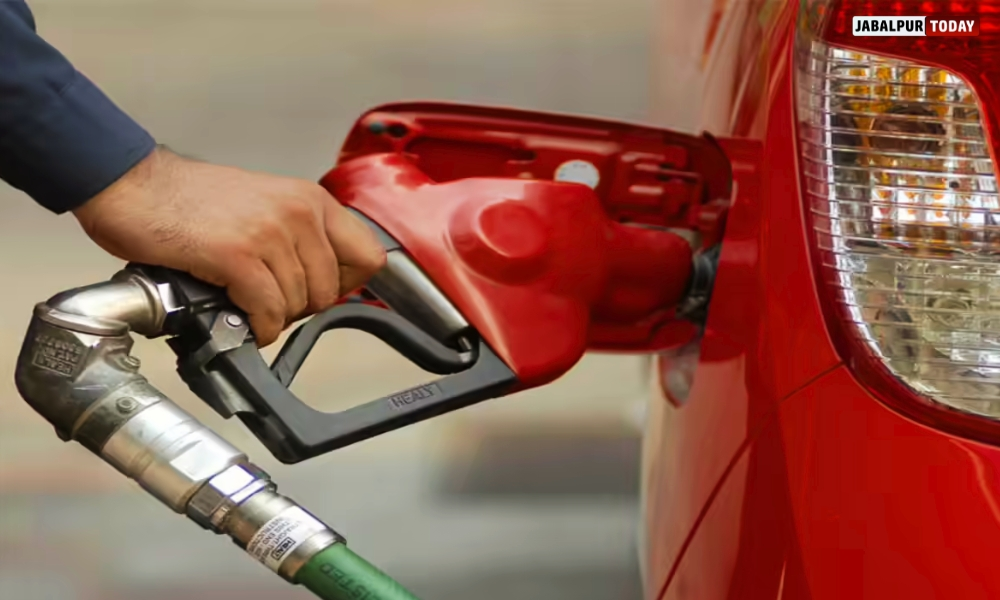
India reduces ₹10 excise duty on petrol and diesel amid global oil surge, but prices remain unchanged. Understand how the move protects consumers while supporting oil companies
New Delhi: Due to rising tensions in West Asia affecting global oil supply, the Indian government has taken an important financial step. On March 26, the Ministry of Finance reduced the Special Additional Excise Duty (SAED) on petrol and diesel meant for domestic use. The government says this move is to protect citizens from rising fuel prices, but many people are asking whether it will actually reduce prices at petrol pumps or mainly help oil companies dealing with heavy losses.
As of March 27, fuel prices in India have not changed. In Delhi, petrol still costs ₹94.77 per litre and diesel ₹87.67 per litre. These prices have stayed the same for weeks, even though global crude oil prices have increased sharply.
What Exactly Has Been Announced?
The government reduced the SAED on petrol from ₹13 per litre to ₹3 per litre, cutting ₹10. For diesel, the SAED has been completely removed, going from ₹10 per litre to zero. This benefit applies only to fuel used within India, not exports.
Nirmala Sitharaman said that the government took this step to protect people from rising global fuel prices. She also said that the government has informed Parliament and has added export duties at the same time to manage supply.
Why Did the Government Take This Step?
The main reason is the ongoing conflict in West Asia. The US-Israel tensions with Iran have led to the blocking of the Strait of Hormuz, a key route for global oil supply. Around 20–25 million barrels of oil pass through this route daily, and India earlier depended on it for about 12–15% of its oil imports.
Because of this crisis, global crude oil prices have jumped from about $70 per barrel to $122 per barrel in just one month. Many countries have already seen fuel prices rise sharply—by 20% to 50% in different regions.
Petroleum Minister Hardeep Singh Puri said that oil companies in India are incurring heavy losses—around ₹24 per litre on petrol and ₹30 per litre on diesel—because they have not increased prices for consumers.
Government’s Thinking: Protect People or Raise Prices?
According to Puri, the government had two choices:
• Increase fuel prices like other countries
• Or take the financial burden itself to protect citizens
The government chose the second option. It is absorbing a large part of the losses instead of passing them on to the public. This decision could cost the government about ₹1.55 lakh crore annually and cover around 30–40% of oil companies’ losses.
Why Are Prices Not Reduced Yet?
Even after the ₹10 duty cut, fuel prices have not gone down. This is because oil marketing companies like Indian Oil Corporation, Bharat Petroleum, and Hindustan Petroleum are using this relief to reduce their losses instead of lowering prices.
Since fuel prices were deregulated in 2014, the government does not directly control daily fuel prices. Instead, companies decide prices based on overall costs. Right now, the tax cut is helping them manage losses rather than reducing retail prices.
What About Exports?
To make sure enough fuel stays in India, the government has added export duties:
• ₹21.5 per litre on diesel
• ₹29.5 per litre on aviation turbine fuel (ATF)
This discourages companies from exporting fuel for higher profits and ensures domestic supply remains stable.
Has This Happened Before?
Yes. In May 2022, the government reduced excise duty to lower petrol and diesel prices. Later, in April 2025, duties were increased again. Now, part of that increase has been reversed. The government’s approach has remained the same—protect citizens from global price shocks, even if it reduces its own revenue.
What Does This Mean for You?
Even though prices have not fallen, this move is helping in other ways:
• It is preventing a sudden increase in fuel prices
• It is controlling inflation (transport, food, goods)
• It is ensuring steady fuel supply across the country
India has also maintained enough fuel stock and diversified its import sources to avoid shortages.
The Real Story
The government did not introduce the ₹10 duty cut to immediately reduce your fuel bill. Instead, it introduced this step to prevent a bigger problem—sharp price hikes or fuel shortages. The government is taking the financial hit so that people do not feel the impact immediately.
Whether prices will come down later depends on global oil prices and decisions by oil companies. For now, the focus is on stability, not reduction.
In simple terms: you are not paying less today, but you are also not paying much more—and that is exactly what the government aimed to achieve.
