
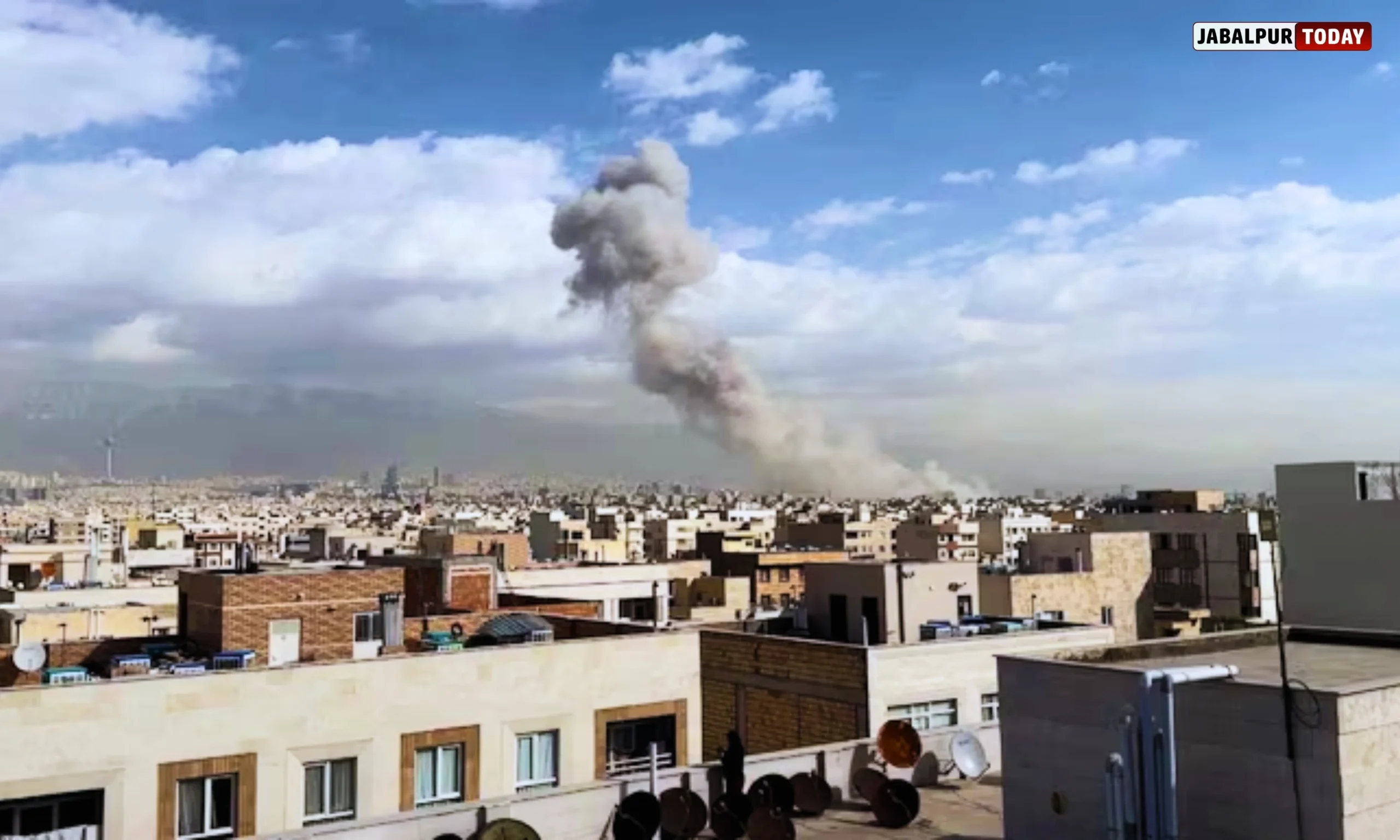
Iran strikes US military bases in UAE and Bahrain after pre-emptive US-Israel attack on Tehran, prompting regional airspace closures and global concern.
Dubai/Tehran: Tensions in the Middle East sharply increased after Iran launched missile strikes on US military bases in Abu Dhabi (UAE) and Bahrain. These attacks came just hours after US and Israeli forces carried out pre-emptive airstrikes on Iranian targets.
Following the strikes, many countries across the Gulf closed their airspace, flights were disrupted, and fears of a larger regional war grew. So far, no casualties have been officially confirmed, but explosions were heard in several cities, sirens sounded, and residents were told to stay indoors. This report explains what happened, its impact, and what could happen next.
The Trigger: US and Israel Launch Pre-Emptive Strikes on Iran
The conflict began early on February 28, 2026, when Israel announced it had carried out a “pre-emptive” attack on Iran. The United States confirmed it also took part in the operation.
Israeli Defence Minister Israel Katz said the strikes targeted Iran’s nuclear and missile facilities, including locations near the offices of Supreme Leader Ali Khamenei in Tehran.
US President Donald Trump posted on Truth Social that “major combat operations” were underway to destroy Iran’s missile systems and remove what he called a nuclear threat.
Explosions were reported in Tehran, Dezful, and Kharg Island. Iranian media said military, government, and intelligence sites were hit. Iran closed its airspace for six hours, according to a notice from its Civil Aviation Organization. Israel also shut down civilian flights.
Iran’s Swift Retaliation: Missile Attacks on US Bases
Iran quickly responded. The Islamic Revolutionary Guard Corps (IRGC) confirmed it launched missiles and drones at US and Israeli targets in the region.
The main targets were US military bases that host thousands of American troops:
- Al Dhafra Air Base, Abu Dhabi (UAE): Iranian ballistic missiles targeted this important US Air Force base. A THAAD defense system intercepted two missiles, but explosions were heard nearby. Videos posted online showed missiles flying over the city.
- US Navy 5th Fleet Headquarters, Juffair (Bahrain): Bahrain’s state news agency confirmed a missile attack. Smoke and explosions were reported in the area.
- Al Udeid Air Base, Qatar: Reports said missiles were launched toward the base. Sirens sounded and at least one missile was intercepted.
- Ali Al Salem Air Base, Kuwait: Local reports said explosions were heard.
- There were also unconfirmed reports of strikes in Jordan and Saudi Arabia
Iran’s Fars News Agency said the attacks were in response to “aggression.” Early reports suggest no major damage so far, but investigations are ongoing.
Airspace Shutdowns Across the Middle East
The missile strikes caused several countries to close their airspace, leading to major flight disruptions. Airlines such as Turkish Airlines and Wizz Air canceled flights to the region until early March.
Countries affected include:
- Iran and Israel: Closed airspace for military operations.
- Iraq: Shut down airspace, according to its Ministry of Transport.
- UAE (Abu Dhabi and Dubai): Closed after explosions were reported.
- Qatar, Kuwait, Bahrain: Activated sirens and suspended flights.
- Oman, Saudi Arabia, Syria: Closed airspace as a precaution.
Flight tracking platform Flightradar24 showed many planes being diverted, with routes changed over Egypt and Saudi Arabia.
On-the-Ground Situation: Explosions and Panic
Residents across the Gulf described tense scenes:
- In Manama, Bahrain, loud explosions shook buildings and smoke was seen rising from Juffair.
- In Abu Dhabi and Dubai, people reported hearing multiple blasts and feeling windows shake. Some evacuations were reported from major landmarks such as the Burj Khalifa.
- In Doha, Qatar, sirens sounded as missiles were intercepted.
- Kuwait and other Gulf locations also reported emergency alerts.
Reactions from Key Players
- Iran: Said it would defend itself and warned Gulf countries hosting US bases.
- United States / President Trump: Called the operations “massive and ongoing.”
- Israel: Issued evacuation warnings to Iranian civilians near military areas.
- Gulf States: Bahrain asked residents to stay calm. The UAE said missiles were intercepted but did not directly blame any side.
- Houthis in Yemen: Announced they had resumed attacks in the Red Sea in support of Iran. Wider Impact: Risk of Larger War and Economic Effects
This is one of the most direct clashes between Iran and the United States since 2020. There are growing fears that the conflict could spread further.
Oil prices may rise sharply if tensions continue. Travel and medical tourism in the Gulf and India could also be affected due to flight disruptions. Military experts say US bases in the region remain vulnerable, similar to past Iranian missile operations.
Missile exchanges are reportedly continuing. No deaths have been officially confirmed so far, though at least two fatalities have been reported in Iraq. The Pentagon is closely monitoring the situation, and there is a possibility of further Iranian strikes.
Also Read on jabalpur today: 8,630 Complaints Against Judges in 10 Years: Law Ministry’s Disclosure in Lok Sabha Triggers Fresh Transparency Debate

Mansi Sharma is a journalist covering Global Affairs, and wellness, known for turning complex ideas into sharp, engaging narratives. Her work is driven by curiosity, depth, and a constant urge to question and explore. When she’s not writing, you’ll often find her diving into new ideas—preferably with a cup of coffee in hand, one sip at a time.