
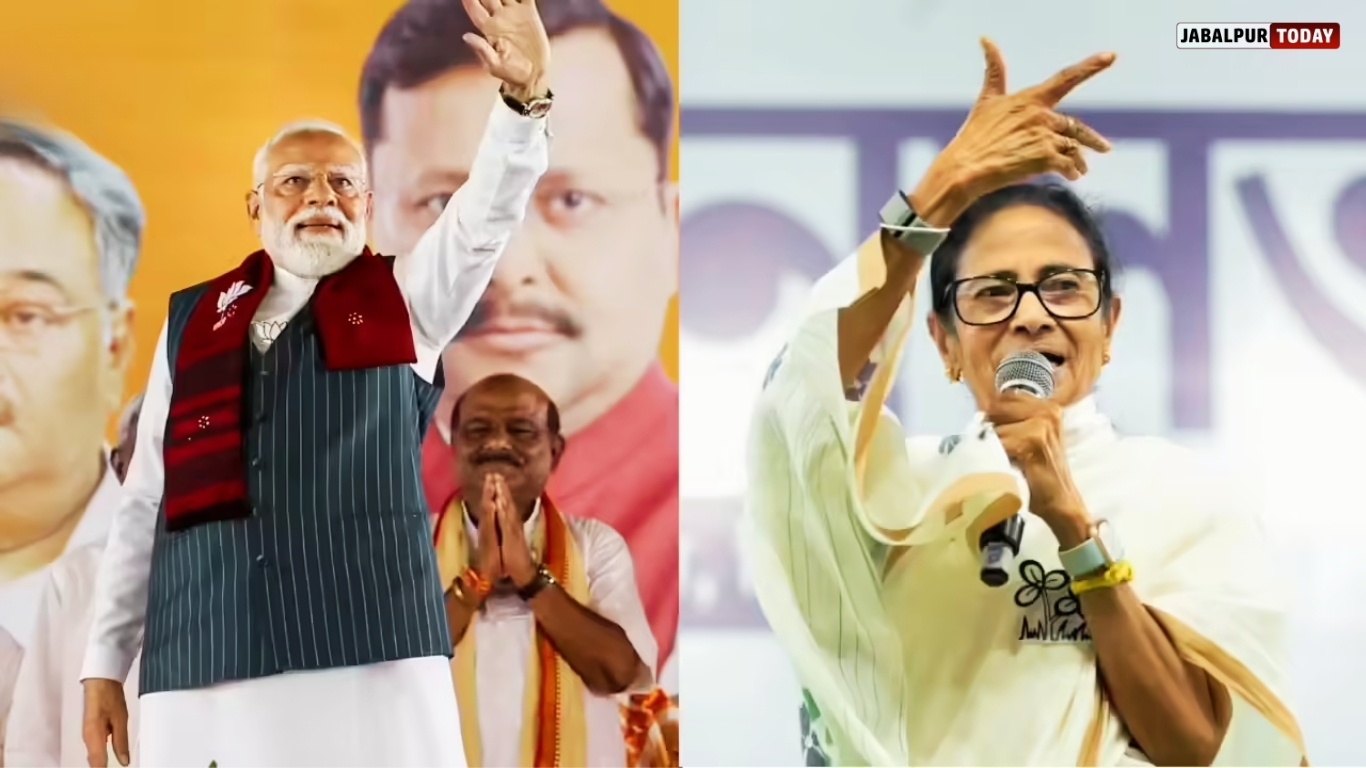
After 15 years of TMC rule, the West Bengal Assembly Election 2026 sets up a high-stakes battle between Mamata Banerjee and BJP’s Suvendu Adhikari, with results on May 4 expected to reshape the state’s political future
West Bengal: West Bengal completed its two-phase assembly elections on April 29, 2026, and the state now stands at a major turning point after 15 years of continuous rule by the Trinamool Congress (TMC) under Chief Minister Mamata Banerjee. Voters cast their votes on April 23 (Phase 1 covering 152 seats) and April 29 (Phase 2 covering 142 seats), and authorities will count the votes on May 4.
People voted in two phases—April 23 and April 29—and now all eyes are on May 4, when the results will finally tell the story. On one side stands TMC, leaning on its welfare network and grassroots strength. On the other, a far more confident BJP led in the state by Suvendu Adhikari, trying to push past its 2021 ceiling.
This time, the fight doesn’t feel one-sided. It feels sharper, more personal—and far more unpredictable.
A Look Back at 2021, Because It Still Matters
To understand 2026, you have to go back five years. In 2021, TMC stormed back with 215 seats and just over 48% vote share. BJP, however, made its biggest breakthrough in Bengal, winning 77 seats and close to 38% votes.
But the real headline came from Nandigram, where Suvendu Adhikari defeated Mamata Banerjee—a symbolic blow, even though she later returned to the Assembly through Bhabanipur and stayed on as Chief Minister.
That result didn’t just end an election—it set up a rivalry that continues to define Bengal politics today.
Bhabanipur: More Than Just a Seat
If one contest captured the mood of this election, it was Bhabanipur. BJP fielded Suvendu Adhikari against Mamata Banerjee, turning it into a direct, high-stakes face-off. Adhikari also stayed in the fray from Nandigram, keeping both battlegrounds alive.
The campaign here never really cooled down. Amit Shah called the seat crucial for change, while Mamata turned her roadshows into a statement about Bengal’s identity and pride.
By the end of it, Bhabanipur stopped being just another constituency—it became the symbol of the entire election.
When Scandals Took Centre Stage
This election didn’t run only on promises—it ran heavily on accusations.
The WBSSC recruitment scam became a major flashpoint. The Calcutta High Court stepped in and cancelled thousands of jobs, and later the Supreme Court of India backed that decision. Over 25,000 people found their appointments under question.
BJP pushed this issue hard, calling it proof of deep-rooted corruption. TMC hit back, accusing the Centre and institutions of targeting it selectively.
Then came Sandeshkhali. Protests led by women over alleged land grabs and harassment linked to local strongman Sheikh Shahjahan shook the narrative. After staying out of sight for days, Shahjahan was eventually arrested by the Central Bureau of Investigation.
Prime Minister Narendra Modi and BJP leaders repeatedly raised the issue, along with the RG Kar case, to question law and order.
TMC, however, stuck to its line—this was politics, not justice.
What Voters Actually Talked About
Away from rallies and speeches, voters spoke about simpler, harder things—jobs, rising costs, and the need to move out of the state for work. Many migrant workers returned just to vote, which said a lot without saying much.
BJP tried to tap into that frustration, promising industry and economic revival. TMC leaned on what it already built—cash support schemes, welfare benefits, and targeted outreach to women and minorities.
At the same time, identity politics quietly ran in the background. Issues like border security, alleged infiltration, and voter list changes created tension in several districts. The Matua community, especially in certain pockets, continued to hold electoral weight because of its connection with the Citizenship Amendment Act (CAA).
Polls Said One Thing, Ground Buzz Said Another
Most surveys gave TMC an edge—but not a comfortable one. Some predicted a clear lead, others hinted at a much tighter race, even suggesting BJP could come close.
Mamata Banerjee still led as the preferred Chief Minister in most polls, but the numbers showed clear shifts beneath the surface.
North and West Bengal looked more open than before, while South Bengal largely stayed with TMC. Analysts kept pointing to around 50–60 seats where margins were thin last time—those could swing everything.
Even turnout became a talking point. BJP saw high voting as a sign of anger against the government. TMC read it as silent support.
The Regional Puzzle
No single trend explains Bengal this time.
BJP pushed hard in North Bengal and parts of Medinipur, especially in areas where Left and Congress once had a base. TMC, meanwhile, held its ground in South Bengal and urban pockets, though dissatisfaction around jobs and infrastructure did surface.
There were also flashes of tension during voting—Murshidabad, for instance—but nothing that completely disrupted the larger process.
What May 4 Could Change
When the results arrive, they won’t just decide a government—they’ll shape the next phase of Bengal politics.
If TMC returns comfortably, it strengthens Mamata’s welfare-first model despite years in power. If BJP crosses the 120 mark, it sends a strong message—not just in Bengal, but nationally.
A very tight result could open the door to political manoeuvring, though the current two-party setup makes that less likely.
Beyond politics, the outcome will influence investment, governance priorities, and Centre-state relations.
For years, Bengal’s politics revolved around ideology. This election feels different. Voters seem to weigh practical questions—Who delivers? Who listens? Who deserves another chance?
At its core, the 2026 election tells a layered story: a government trying to defend its record, an opposition sensing opportunity, and a direct clash between two leaders who have already tested each other before.
Now, everything rests on the numbers. May 4 will decide whether Bengal stays the course—or turns the page.
Also Read on Jabalpur Today: Assembly Election 2026 Live: How & Why Arvind Kejriwal Urges Deleted Voters in WB to back TMC Against BJP, Read full Story

Mansi Sharma is a journalist covering Global Affairs, and wellness, known for turning complex ideas into sharp, engaging narratives. Her work is driven by curiosity, depth, and a constant urge to question and explore. When she’s not writing, you’ll often find her diving into new ideas—preferably with a cup of coffee in hand, one sip at a time.