
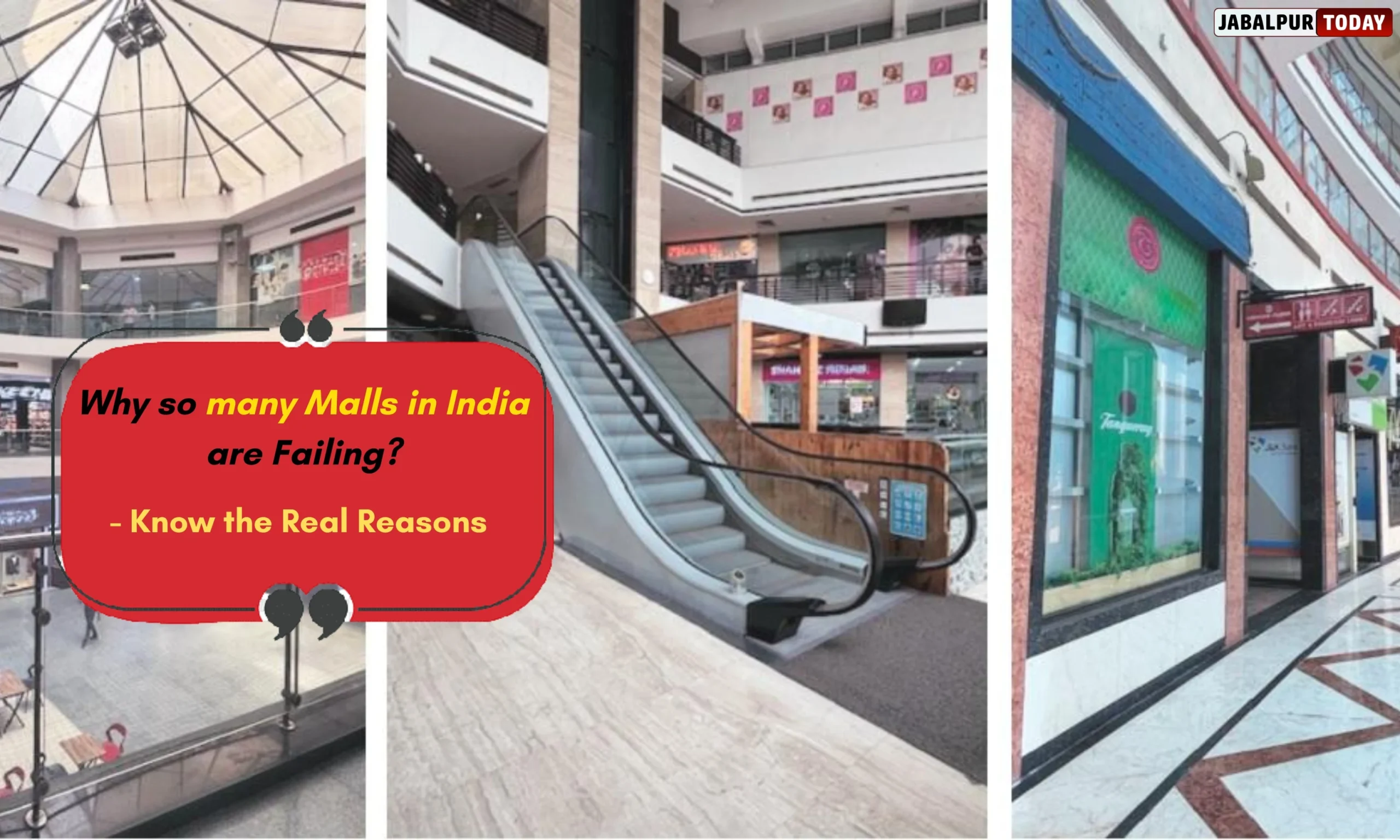
India’s mall crisis explained: Around 20% of malls have turned into “ghost malls” due to oversupply, rising e-commerce, poor planning, and high rents. Here’s why malls are failing and what solutions could revive them.
New Delhi: Across India, many shopping malls that were once full of shoppers are now struggling. Corridors that used to be busy are now quiet, with many shops closed and fewer people visiting. Because of this, people have started calling these places “ghost malls.” According to the Knight Frank India Retail Report (December 2025), there are 74 such malls in India, which is about 20% of the country’s 365 malls. These malls have more than 40% of their shops empty. As a result, nearly 15.5 million square feet of retail space is lying unused, causing an estimated ₹357 crore loss in rental income every year.
The 70% Myth: What the Numbers Actually Show
The idea that 70% of malls failed mostly comes from discussions around 2014, when India experienced a big mall-building boom during a period of economic growth. At that time, a Business Standard report mentioned that 30–40% of malls were struggling because of early planning mistakes. However, the latest reports provide more accurate data.
Key Statistics from Knight Frank 2025:
• Total malls in India: 365
• Ghost malls: 74 (20%), up from 64 in 2023
• National vacancy rate: 15.4% (but ghost malls have 40% or more)
• Worst-affected region: Delhi-NCR with 25 ghost malls
• Estimated economic loss: ₹357 crore in annual rentals
According to JLL Q4 2025, online shopping platforms now account for 40% of retail sales, while malls’ share dropped to around 10% in 2019.
A quick timeline of mall growth in India:
• 2000s: Mall boom begins, around 100 malls open.
• 2010s: Rapid expansion leads to 500+ malls, creating oversupply.
• 2020: COVID-19 hits, and mall footfall drops by about 60%.
• 2025: Around 120 new malls are added, but only half perform well.
The reality is not total collapse. Instead, it is a warning that malls need better planning and innovation.
Reason 1: Too Many Malls Were Built Too Quickly (Oversupply)
Between 2023 and 2025, India added 120 new malls, according to ANAROCK data. However, the number of shoppers did not grow at the same pace. As a result, there are now more malls than the market actually needs, which leaves many spaces empty.
Key data:
• Knight Frank estimates oversupply caused about 80% of ghost malls.
• In Delhi-NCR, more than 100 malls compete for the same customers.
Example:
Some malls in places like Noida suburbs are located far from busy roads or residential areas, so very few people visit them.
Reason 2: The Rise of E-Commerce
Online shopping platforms such as Amazon and Flipkart have changed the retail market. According to JLL, e-commerce now accounts for about 40% of India’s retail sales, compared with 10% in 2019.
Key data:
• Mall footfall has dropped about 25% since 2020.
• Online shopping has been growing around 25% every year.
Younger consumers in cities like Delhi increasingly prefer shopping through mobile apps. Many malls failed to respond by offering unique experiences or attractions.
Reason 3: Poor Locations and Outdated Designs
Many struggling malls are located in places where people rarely go. They may be far from residential areas or office districts, and often lack good roads or parking facilities. Inside, the layouts may feel confusing or outdated, with very few entertainment options.
Key data:
• Around 60% of ghost malls are located on the edges of Tier-2 cities, according to Magicbricks (2025).
• Many of them also lack strong anchor brands such as Zara that usually attract crowds.
Example:
Raghuleela Mall in Vashi, Mumbai has a decent location but an outdated design, and about 55% of its shops are vacant.
Reason 4: High Rents Are Driving Small Shops Away
Mall rents have increased around 20% every year, but sales have not grown at the same rate. Many small retailers cannot afford these costs and are forced to close or leave.
Key data:
• About 70% of mall tenants are small retailers.
• Evictions have increased 30% in ghost malls, according to an Economic Times report (December 2025).
Even large international chains have struggled. For example, Forever 21 shut many of its India stores partly because of high operating costs.
Reason 5: Malls Did Not Adapt to Changing Consumer Expectations
After the COVID-19 pandemic, many people began looking for safe, engaging, and social spaces. Modern shoppers want gyms, entertainment zones, events, open spaces, and strong food courts. However, many malls remained unchanged.
Key data:
• Successful malls that added entertainment features have vacancy rates as low as 5%, according to JLL.
Many malls ignored new trends such as fitness centers, gaming zones, digital experiences, and social-media-friendly spaces.
City wise Comparison
| City | Ghost Malls (#/%) | Avg Vacancy | Example Failure | Example Success |
|---|---|---|---|---|
| Delhi-NCR | 25/25% | 45% | Ansal Plaza (70% empty) | DLF Promenade (3% vacant) |
| Mumbai | 10/15% | 35% | Raghuleela Vashi (55%) | Phoenix Marketcity (5%) |
| Bengaluru | 8/12% | 30% | Forum Mall outskirts | Orion Mall (4%) |
What Experts Say
Shishir Baijal, Knight Frank:
“Oversupply and the growth of e-commerce are major factors, but the biggest problem is poor adaptation. Mixed-use spaces could unlock nearly ₹3.5 billion in value.”
Harman Sidhu, JLL:
“Malls must become community hubs rather than just shopping centers. Otherwise, more malls will become empty.”
Possible Future Scenarios
• Positive Scenario (60% chance): Retail leasing grows by 15%, and malls in Tier-2 cities thrive by serving local communities.
• Negative Scenario (40% chance): Another 10% of malls may become ghost malls if no changes happen, while e-commerce could reach 50% of retail sales.
A social media post by @FinFloww in December 2023 (459,000 views) warned:
“About 21% of malls are already ghosts, and 60% are at risk if malls stop being useful.”
However, malls can still succeed if they focus on entertainment, community experiences, and mixed-use spaces instead of just retail stores. Developers, retailers, and city planners need to work together to bring life back to struggling malls.

Mansi Sharma is a journalist covering Global Affairs, and wellness, known for turning complex ideas into sharp, engaging narratives. Her work is driven by curiosity, depth, and a constant urge to question and explore. When she’s not writing, you’ll often find her diving into new ideas—preferably with a cup of coffee in hand, one sip at a time.