
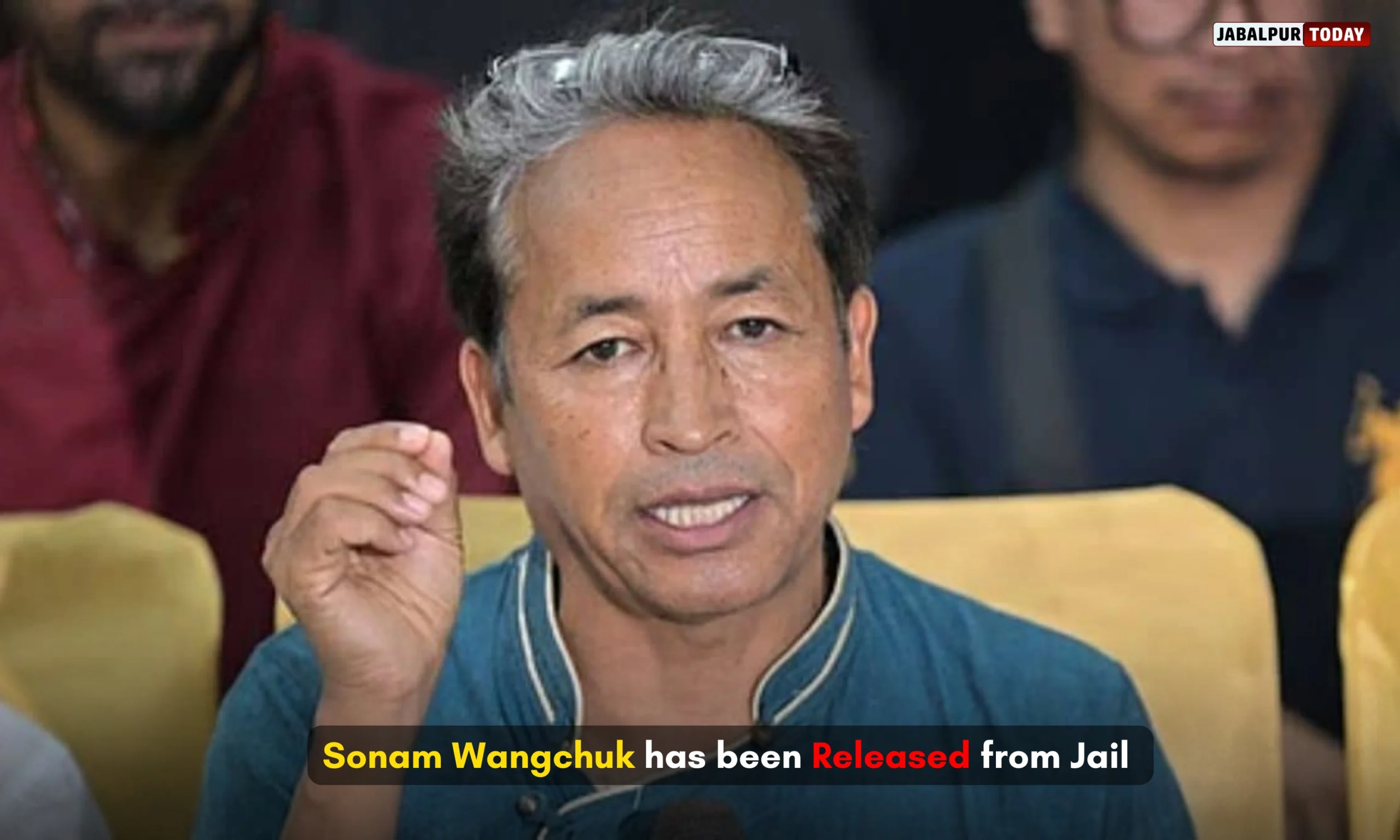
Climate activist and Ladakh innovator Sonam Wangchuk has been released after nearly six months in detention at Jodhpur Central Jail after the Ministry of Home Affairs revoked his detention under the National Security Act
New Delhi/Ladakh: In a surprising decision that ends months of tension, the Union Ministry of Home Affairs (MHA) on Saturday cancelled the detention of well-known Ladakh climate activist Sonam Wangchuk under the National Security Act with immediate effect.
The 56-year-old engineer and educator had been kept in Jodhpur Central Jail since September 26, 2025. With the order withdrawn, he is now free. His release is expected to open the door for fresh discussions on Ladakh’s long-standing demands for statehood and Sixth Schedule protections.
MHA’s Official Statement: Emphasis on Peace and Dialogue
The Ministry said the government wants to create an atmosphere of peace, stability, and trust in Ladakh so that meaningful discussions can take place with all stakeholders.
In its statement, the government said it decided to cancel the detention after reviewing the situation and using its powers under the National Security Act.
Officials also noted that Wangchuk had already completed nearly half of the maximum detention period allowed under the law. They added that long periods of shutdowns and protests had affected students, businesses, tourism, and the local economy.
Who Is Sonam Wangchuk? Ladakh’s Climate Innovator
Sonam Wangchuk became widely known after inspiring the character Phunsukh Wangdu, played by Aamir Khan in the popular film 3 Idiots.
He is internationally respected for creating Ice Stupas — artificial glaciers that help villages in Ladakh store water during winter for use in spring. He also founded the Students’ Educational and Cultural Movement of Ladakh, an innovative education initiative in the region.
His work on education and climate solutions has brought global attention to Ladakh’s environmental challenges.
Timeline of the Crisis: From Hunger Strike to Release
- Sept 10–24, 2025:
Wangchuk began a hunger strike demanding constitutional safeguards for Ladakh.
- Sept 24, 2025:
Protests in Leh turned violent. At least four people were killed and more than 160 were injured in clashes.
- Sept 26, 2025:
He was detained under the National Security Act by the Leh District Magistrate and later moved about 1,600 km away to Jodhpur Central Jail.
- Oct 2025 – March 2026:
His wife Gitanjali J. Angmo filed a habeas corpus petition in the Supreme Court of India. Several hearings were held and concerns were raised about his health.
- March 14, 2026:
The government cancelled the detention just days before the next Supreme Court hearing scheduled for March 17.
Inside Jodhpur Jail: The Activist Who Kept Working
Even while in jail far from home, Wangchuk continued his educational and environmental work.
He spent time teaching the children of jail staff, reading Sri Aurobindo’s book Tales of Prison Life, and even suggested an experiment for an eco-friendly thermometer system for prison barracks, reflecting his commitment to zero-carbon innovation.
Government officials said he underwent 24 medical check-ups during his detention, which they used to argue that his health condition alone did not require his release. However, his wife said the long separation had been very difficult for the family.
The Legal Battle: Wife’s Fight in the Supreme Court
Gitanjali J. Angmo continued to challenge the detention in court. Her petition argued that there were procedural mistakes in the case and that the government relied on selective references to old speeches made by Wangchuk.
During hearings, the Supreme Court questioned the government about the case and noted that Wangchuk’s health condition was “not that good.” The court was preparing to conclude arguments on March 17, but the government cancelled the detention before any final order was issued — something that rarely happens in NSA cases.
What Happens Next: Plans After His Release
Just days before the release, Gitanjali told The Hindu in an interview:
“Who wants to sit on a fast for 15–30 days every time? September 24 was a black day. Instead of agitation and protests, once he is released, we will look for solutions through dialogue and collaboration. We want to make Ladakh a role model.”
She also said her husband has no political ambitions and will continue working through the high-powered committee he joined in June 2025.
On March 12, Wangchuk wrote on social media that he has not stepped away from activism but believes future work requires “clarity, unity, and sincere dialogue.”
What This Means for Ladakh
Many people in Ladakh see the cancellation of Wangchuk’s detention as an opportunity to restart discussions on the region’s demands, especially statehood and protection under the Sixth Schedule of the Constitution.
Over the past few months, repeated shutdowns had affected tourism, businesses, and schools. Local leaders now hope that constructive dialogue between the government and community representatives will replace protests.
Analysts say the move shows the central government trying to balance security concerns in a sensitive border region while also responding to the aspirations of local people.
As Sonam Wangchuk prepares to return to Ladakh, many in the region feel a sense of relief — and hope that peaceful efforts and dialogue can still bring meaningful change.

Mansi Sharma is a journalist covering Global Affairs, and wellness, known for turning complex ideas into sharp, engaging narratives. Her work is driven by curiosity, depth, and a constant urge to question and explore. When she’s not writing, you’ll often find her diving into new ideas—preferably with a cup of coffee in hand, one sip at a time.