
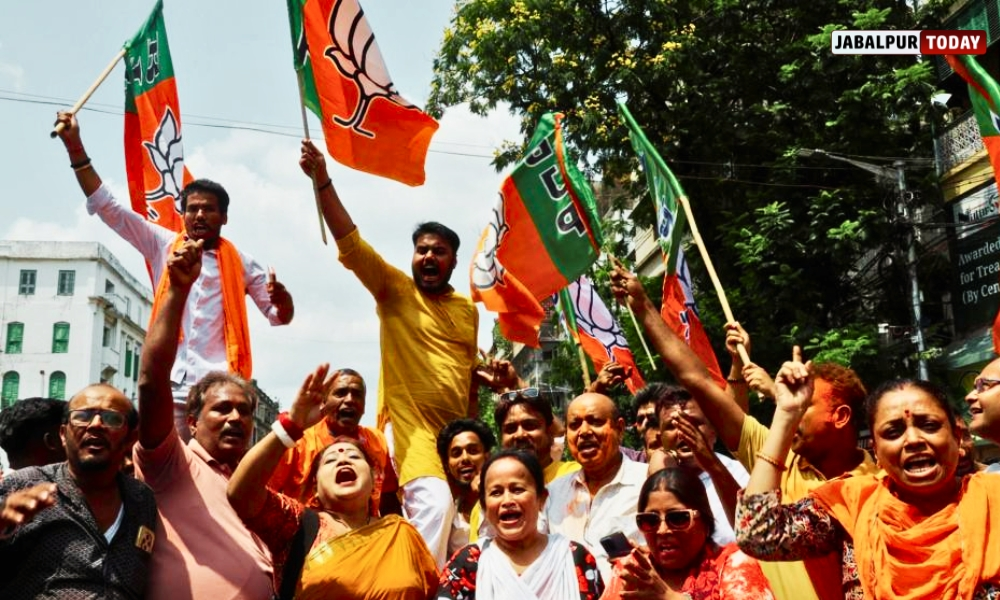
BJP dominates Bengal, Vijay’s TVK breaks Tamil Nadu’s 60-year pattern, and Congress-led UDF secures victory in Kerala, signaling strong anti-incumbency across India
New Delhi: Counting started at 8 AM on Monday, May 4, 2026, and people across three states waited anxiously. By evening, the country’s political map had changed in a big way. Bengal’s “Didi” lost power. In Tamil Nadu, a new party led by a film star broke a 60-year-old political system. Whereas In Kerala, voters removed a Chief Minister who had started to seem unbeatable. In all three states, voters sent a clear message: being in power for a long time is no longer a guarantee of victory.
This is not just about winners and losers. It shows how Indian voters are changing — they are becoming more impatient, less forgiving, and more open to trying new leaders instead of sticking with familiar ones.
Bengal: The End of “Didi”
The slogan “4 May, Didi Gayi,” used by BJP workers before counting began, turned out to be true. By afternoon, the Bharatiya Janata Party had won 9 seats and was leading in 189 out of 294 constituencies in West Bengal. The Trinamool Congress, which had ruled since 2011 under Mamata Banerjee and was aiming for a fourth term, had won only 1 seat and was leading in 88.
The BJP crossed the majority mark of 148 seats and continued to increase its lead.
In 2021, TMC had won 215 seats. So what changed in five years? There is no single reason — many factors played a role.
The SIR That Changed Everything
One major and controversial factor was the Special Intensive Revision (SIR) of voter lists, which removed around 91 lakh names before the election. The Election Commission of India conducted this process. BJP said it was needed to remove illegal and duplicate voters. TMC said it unfairly removed minorities and migrant workers, and Mamata Banerjee challenged it in the Supreme Court.
This issue made identity and citizenship central topics in the election. BJP called it a matter of national security, while TMC called it a matter of democratic rights. Voters had to decide whom to believe. The high turnout — 92.47% across two phases on April 23 and April 29 — showed that instead of reducing participation, the issue actually increased it.
Hindu Consolidation and Suvendu Adhikari
BJP leader Suvendu Adhikari, who defeated Mamata Banerjee in Nandigram in 2021, again contested against her, this time in Bhabanipur. He said BJP’s big win came from “Hindu consolidation” and claimed Muslim voters did not support TMC as strongly as before. Whether this claim is fully correct or not, the results clearly showed strong support for BJP.
Corruption allegations against the TMC government, especially the school recruitment scam, also affected voters. BJP focused heavily on these issues, while TMC highlighted its welfare schemes. In the end, 15 years in power may have worked against TMC.
Mamata’s Bhabanipur Battle
At the time of reporting, Mamata Banerjee was leading in Bhabanipur by 7,184 votes after 12 rounds of counting. Even if she wins her seat, it gives little relief because her party has lost badly across the state. She was expected to visit Raj Bhavan later — not to form a government, but to accept defeat.
Tamil Nadu: Vijay Breaks a 60-Year System
If Bengal’s result was shocking, Tamil Nadu’s result was historic.
Since 1967, when C.N. Annadurai brought the DMK to power, Tamil Nadu politics has been controlled by two parties — DMK and AIADMK. Power kept shifting between them, and no new party could break this pattern. That changed on May 4, 2026.
The TVK Surge
Actor-turned-politician Vijay led Tamilaga Vettri Kazhagam (TVK) into its first election — and surprised everyone. By afternoon, TVK was leading in 107 out of 234 seats. DMK, which had won 159 seats in 2021, was leading in only 57. AIADMK, allied with BJP under Edappadi K. Palaniswami, was ahead in 51.
With the majority mark at 118, TVK was close to forming the government. Party workers started celebrating early in Chennai.
Vijay’s Strategy and Youth Support
TVK decided to contest all 234 seats alone, which many people initially thought was too risky. Vijay himself contested from Perambur in Chennai. His party promised a drug-free state, jobs for youth, education and startup loans without collateral, and financial support for students.
These ideas connected strongly with young and urban voters.
The campaign faced challenges. A stampede at a rally in Karur caused 41 deaths and injured many people. A party leader also made controversial comments about Rajinikanth, leading to criticism. But these issues did not stop the party’s rise.
DMK Loses Strongholds
TVK made gains in areas of Chennai that were long-time DMK strongholds. Early results showed Udhayanidhi Stalin trailing in Chepauk-Thiruvallikeni. This showed strong anti-incumbency in urban areas.
In smaller towns like Kumbakonam, Sholavandan, and Vikravandi, results were very close, with margins of less than 100 votes in some places.
If TVK forms the government, Vijay will become the first leader in Tamil Nadu’s history to bring a brand-new party to power in its very first election.
Kerala: A Predictable but Important Result
Compared to the other two states, Kerala’s result was expected but still important. The Congress-led United Democratic Front (UDF) moved towards a clear majority, leading in 86 seats — well above the 71 needed in the 140-member Assembly. The LDF, led by Chief Minister Pinarayi Vijayan, was leading in only 46 seats.
Pinarayi’s Third Term Dream Ends
Pinarayi Vijayan had made history in 2021 by winning a second consecutive term, breaking Kerala’s tradition of changing governments every election since 1982. This time, he aimed for a third term, but voters rejected that idea.
Around 12 ministers in his government were trailing. Vijayan himself was behind in Dharmadam against Congress candidate VP Abdul Rasheed. Voting took place on April 9, with a turnout of 78.27%.
Exit polls had already predicted a UDF win, and counting confirmed it.
What May 4 Means for India
The three states had different winners, but one common message: voters rejected entitlement.
In Bengal, 15 years of TMC rule ended under pressure from corruption allegations, identity politics, and voter fatigue. Also In Tamil Nadu, a 60-year-old political system collapsed as voters chose a new party focused on youth and development. In Kerala, voters returned to their usual pattern of changing governments.
The 2026 elections show that Indian voters are changing. They are not just choosing parties — they are demanding accountability. They are showing less patience for political dynasties and leaders who take their support for granted.
May 4, 2026, was not just one story. It was three clear reminders that in Indian democracy, no leader is untouchable and no position is permanent.

Mansi Sharma is a journalist covering Global Affairs, and wellness, known for turning complex ideas into sharp, engaging narratives. Her work is driven by curiosity, depth, and a constant urge to question and explore. When she’s not writing, you’ll often find her diving into new ideas—preferably with a cup of coffee in hand, one sip at a time.