
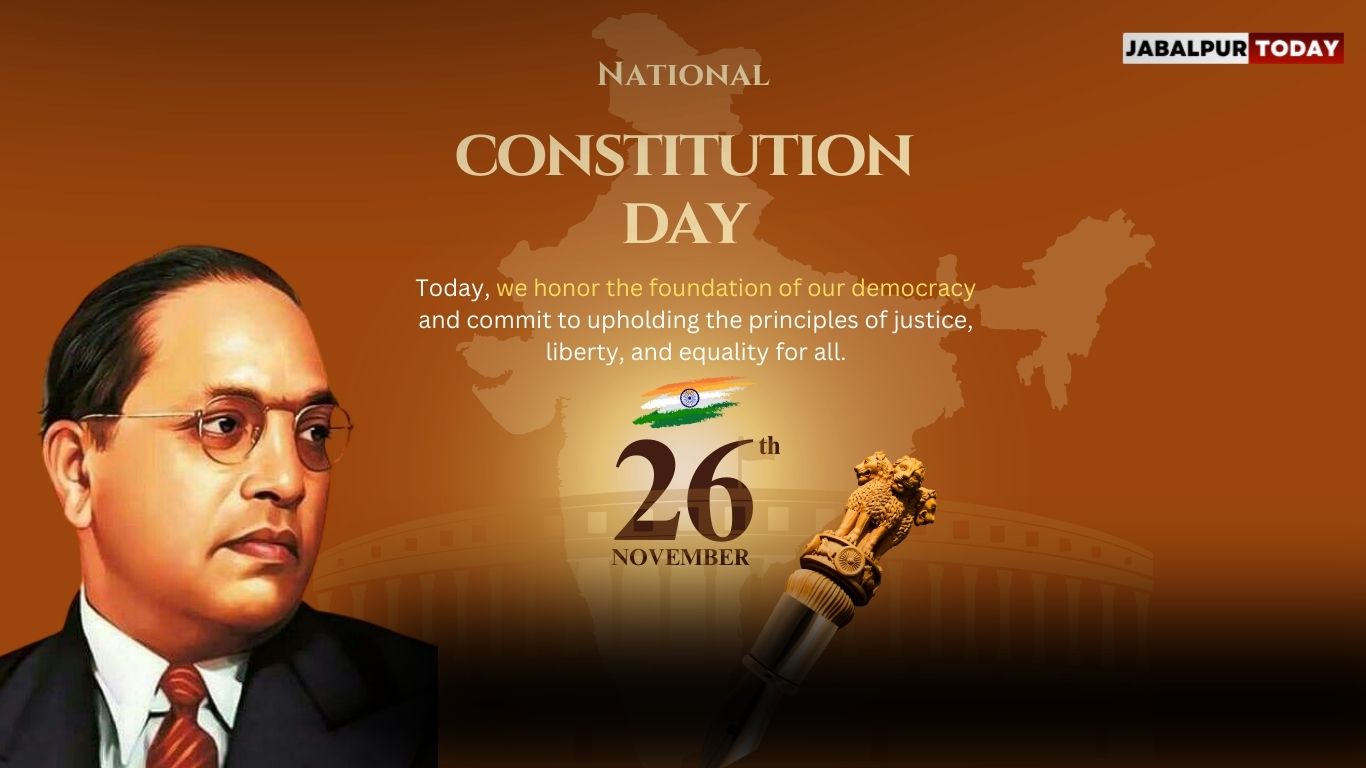
Discover the journey of India’s Constitution on Constitution Day 2025. From its historic adoption in 1949 to modern celebrations, learn how Samvidhan shapes democracy, rights, and the future of every citizen.
New Delhi: Today, India stands united to honour the very document that shaped its identity as a modern democracy. Every year on 26 November, the nation observes Constitution Day (Samvidhan Divas) to commemorate the adoption of the Indian Constitution in 1949. From schools and universities to Parliament and state assemblies, citizens across the country come together to read the Preamble, remember the framers, and celebrate the values of justice, liberty, equality, and fraternity that guide India even today.
What Is the Indian Constitution? The Foundation of India’s Democracy
The Indian Constitution is the highest law of India. It explains how the government works, what rights people have, and what duties citizens must follow. It was adopted on 26 November 1949 and made India a sovereign and democratic republic. Today, it is the longest written constitution in the world, with 470 articles and many important amendments.
Though it is a legal document, it also reflects India’s social values—freedom, equality, justice, and unity. The Constitution is designed to grow with time. This is why India can add new reforms, like strengthening local bodies in 1992 or ensuring equality-based welfare policies.
India’s Constitution stands out because it is both flexible and strong. Its core principles—democracy, secularism, and federalism—cannot be changed easily, ensuring stability for future generations.
Why Did India Needed a Constitution?
When India became independent in 1947, the country was facing major challenges—Partition violence, millions of refugees, and hundreds of princely states needing integration. The old British law, the Government of India Act 1935, was not suitable for an independent nation.
India needed a new system to provide justice, protect freedoms, and create unity among diverse communities. Leaders like Dr. B.R. Ambedkar and Jawaharlal Nehru believed that political freedom alone was not enough. India also needed social and economic equality.
The Constitution became the tool that shaped India’s identity—democratic, diverse, yet united.
LIVE: President Droupadi Murmu graces Samvidhan Divas – 2025 at Central Hall of Samvidhan Sadan, New Delhi https://t.co/iUUDbeu1NF
— President of India (@rashtrapatibhvn) November 26, 2025
How Was It Written? The Three-Year Journey of Nation-Building
The Constitution was written by the Constituent Assembly, which held its first meeting on 9 December 1946. Even after Partition reduced the number of members to 299, the Assembly represented India’s rich diversity—Scheduled Castes, minorities, women, and leaders from every region.
Over 2 years, 11 months, and 18 days, members held detailed discussions, debated thousands of changes, and worked through major national crises. The final draft was completed after 167 days of actual debate—much longer than many other countries needed.
The process included public feedback too. Farmers, laborers, women’s groups, and tribal communities sent suggestions, ensuring the Constitution reflected India’s real needs.
On Constitution Day, we pay tribute to the framers of our Constitution. Their vision and foresight continue to motivate us in our pursuit of building a Viksit Bharat.
— Narendra Modi (@narendramodi) November 26, 2025
Our Constitution gives utmost importance to human dignity, equality and liberty. While it empowers us with…
Who Wrote the Constitution? The Visionaries Behind the Framework
While 299 members contributed, the Drafting Committee led by Dr. B.R. Ambedkar played a key role. Ambedkar is often called the architect of the Indian Constitution for his leadership and vision.
Other important contributors included:
• Alladi Krishnaswami Ayyar – expert in federal structure
• K.M. Munshi – supporter of cultural rights
• N. Gopalaswami Ayyangar – helped frame Union–State relations
• Hansa Mehta – ensured gender-neutral language
• B.N. Rau – prepared the initial draft
Each person brought different experiences, making the document strong and inclusive.
The Moment of Adoption: India Steps Into a New Era
On 26 November 1949, the Constitution was officially adopted. The signing of the document marked a historic moment—India had finally created its own guiding framework after centuries of colonial rule.
The Constitution came into full effect on 26 January 1950, celebrated today as Republic Day, honoring the 1930 pledge of complete independence.
The Core Features: Rights, Duties, and Democratic Values
India’s Constitution balances rights, responsibilities, and guiding principles:
- Fundamental Rights
These rights protect equality, freedom, and justice for every citizen.
- Directive Principles
These guide the government to ensure welfare—education, healthcare, fair economy.
- Fundamental Duties
Added in 1976, these remind citizens to respect the Constitution, promote harmony, and protect the environment.
Universal adult voting rights, independent courts, and strong institutions make the Constitution a living and evolving document.
How Constitution Day Began: A Tribute to the Framers
Though the Constitution was adopted in 1949, Constitution Day (Samvidhan Divas) was officially declared in 2015 to honor Dr. B.R. Ambedkar’s 125th birth anniversary. The idea was to spread constitutional awareness among citizens, especially the youth.
Every year, millions participate in reading the Preamble, attending workshops, and learning about rights and duties.
Constitution Day 2025: Celebrating 76 Years of India’s Democratic Spirit
This year’s theme is “Hamara Samvidhan – Hamara Swabhiman”. The national celebration takes place at Samvidhan Sadan in New Delhi. The President, Prime Minister, and national leaders take part in Preamble reading and launch important initiatives like a digital version of the Constitution in multiple languages.
Across India, schools, colleges, and communities hold quizzes, debates, Preamble readings, and youth programs. States like Odisha and Andhra Pradesh have special events, while social media sees millions sharing tributes and messages.
Why the Constitution Is Still Important Today
Even today, India faces many challenges—spreading false information online, growing economic gaps, climate change, and social divisions. The Constitution remains our guide to tackle these problems:
• Right to privacy is now part of Article 21, protecting personal freedoms.
• Women’s reservation in Parliament ensures fair representation.
• Courts continue to protect citizens’ rights and freedoms.
For young Indians, the Constitution is a reminder that they play a key role in creating a fair, equal, and inclusive country.
Honouring and Defending the Constitution Together
Constitution Day is not just a celebration—it is a reminder. As Dr. Ambedkar warned, even the best Constitution can fail if the people running it are not responsible.
On this 76th Constitution Day, let us not only read the Preamble but also live by its ideals—justice, liberty, equality, and fraternity.
Jai Samvidhan. Jai Hind.
Also Read: Delhi AQI Jumps to 425: CAQM Imposes GRAP Stage 3 – Here’s All You Need to Know

Mansi Sharma is a journalist covering Global Affairs, and wellness, known for turning complex ideas into sharp, engaging narratives. Her work is driven by curiosity, depth, and a constant urge to question and explore. When she’s not writing, you’ll often find her diving into new ideas—preferably with a cup of coffee in hand, one sip at a time.