
New Delhi, 3 April 2024
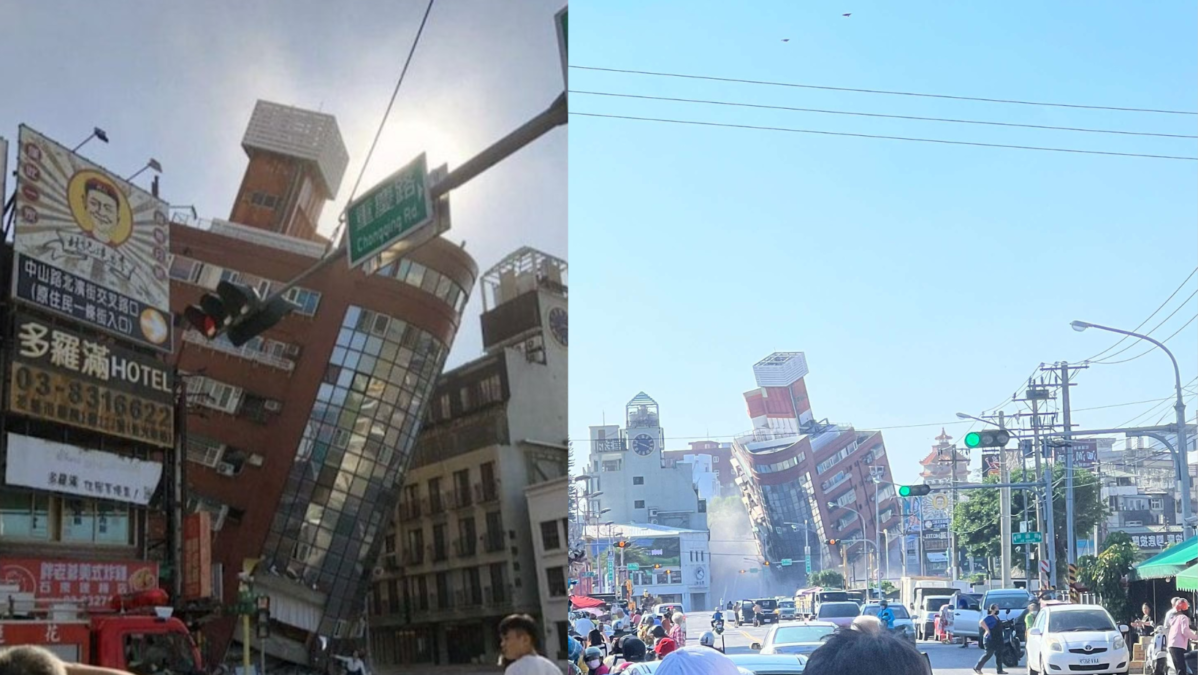
A powerful earthquake measuring 7.4 on the Richter scale struck eastern Taiwan, causing widespread damage and sparking fears of casualties. This seismic event, the strongest to hit the island in a quarter-century, sent tremors rippling through buildings in the capital city of Taipei and surrounding areas.
The epicenter of the earthquake was located off the coast of Taiwan, near Hualien County, a region prone to seismic activity. Reports indicate that numerous buildings have been severely damaged, with many people feared trapped under the rubble.
In the wake of the quake, tsunami alerts are swiftly issued for nearby Japanese islands and the northern coast of the Philippines. However, these alerts have since been downgraded, alleviating concerns of further catastrophic consequences.
The disaster’s toll is already evident. Taiwan’s government has confirmed at least seven fatalities and 711 injuries. Emergency responders are continuing to assess the situation and provide aid to affected areas. Taiwan’s Ministry of Foreign Affairs have appreciated the worldwide support via a social media post on X.
This earthquake underscores the severity of the situation and the challenges ahead for recovery efforts. Taiwan’s neighbors, particularly Japan, have expressed solidarity. Prime Minister Fumio Kishida took to X, the former Twitter platform, to offer Japan’s assistance during this difficult time.
Taiwan and Japan, both situated in the seismically active Pacific Ring of Fire, are no strangers to earthquakes. Over the years, both nations have faced numerous seismic events, making earthquakes a recurring threat to their populations and infrastructure,

Prateeksha Kumari is a journalist and strategic communications professional specialising in digital journalism, political reporting, and public affairs. Her work focuses on grassroots issues, governance, and civic developments, with an emphasis on clarity, accuracy, and narrative-driven reporting.
She holds a Master’s degree in Journalism and Mass Communication from Himachal Pradesh University, Shimla and has qualified the UGC-NET examination, reflecting her academic grounding in media studies and communication research. Her reporting spans politics, public policy, health, education, and socio-economic issues, and she is experienced in bilingual (Hindi and English) content creation tailored to diverse audiences.
Alongside her journalistic work, she brings experience in political communication and public relations, where she has contributed to campaign messaging, media outreach, and narrative building. She has worked on integrated communication strategies across print and digital platforms, combining editorial judgment with audience insight and data-led content approaches.