
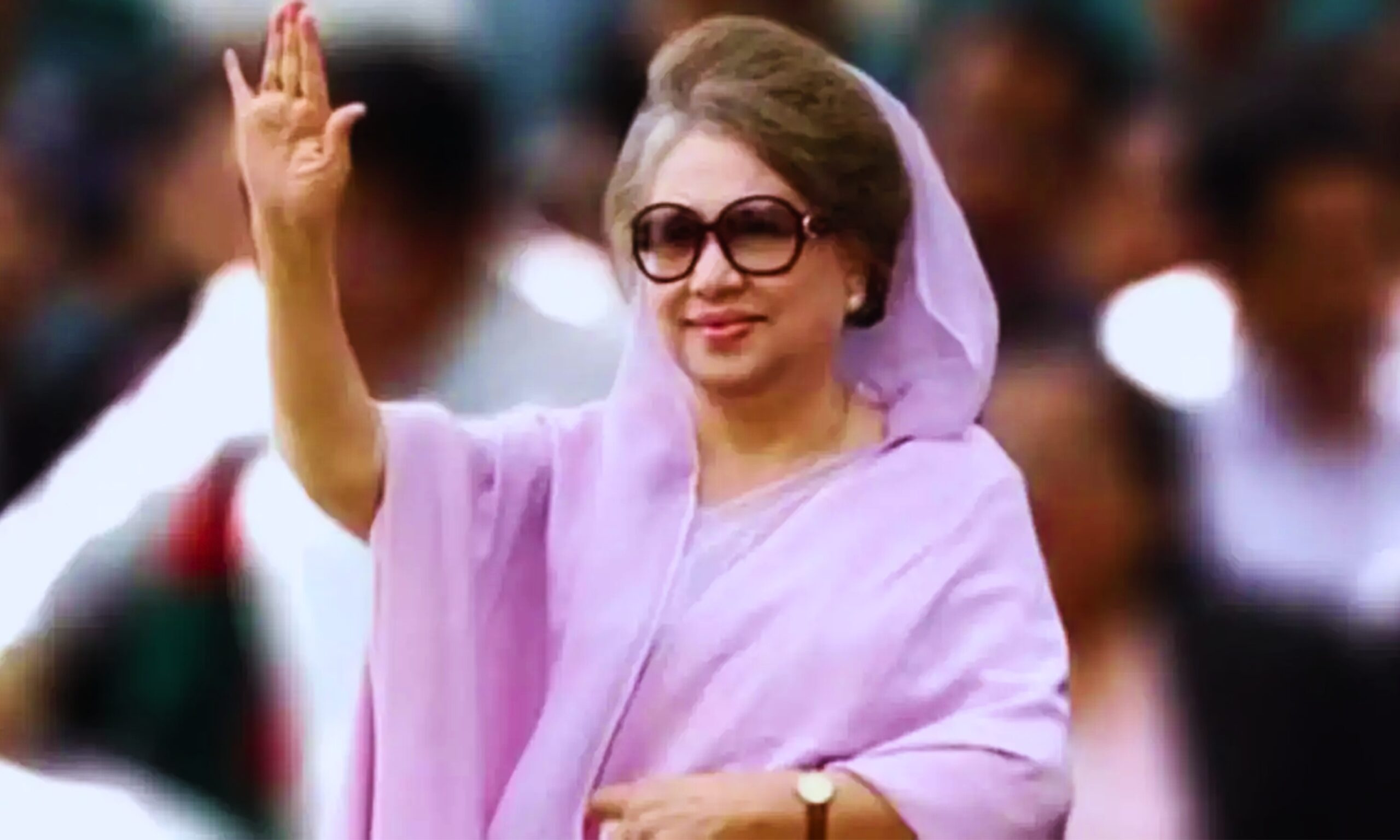
Khaleda Zia, Bangladesh’s first female Prime Minister, passes away at 80. Explore her political life, major achievements, rivalry with Sheikh Hasina, and ties with India.
New Delhi: Khaleda Zia, Bangladesh’s first woman Prime Minister and one of the most influential leaders in the country’s history, passed away today at the age of 80. She had been suffering from several long-term illnesses, including heart problems. Her party, the Bangladesh Nationalist Party (BNP), and her elder son Tarique Rahman confirmed the news. He said, “My mother is no more.”
Khaleda Zia passed away around 6 a.m. at Evercare Hospital in Dhaka, where doctors had been treating her since late November. After the news broke, the BNP announced seven days of national mourning. Leaders will hold her funeral prayer on Wednesday at Manik Mia Avenue near the Parliament complex in Dhaka, and family members will lay her to rest beside her husband, former President Ziaur Rahman.
Bangladesh is facing a period of political uncertainty as the country prepares for elections in early 2026, with Khaleda Zia’s son Tarique Rahman expected to take charge of the BNP. Her passing could generate public sympathy for the party and may also shape the future course of India–Bangladesh relations.
Khaleda Zia’s passing comes at a sensitive moment for Bangladesh, as the country prepares for elections expected in early 2026 and her son Tarique Rahman is likely to take charge of the BNP. This development could generate public sympathy for the party and may also shape the future course of India–Bangladesh relations.
Early Life and Entry into Politics
Khaleda Zia was born on August 15, 1945, in Jalpaiguri, West Bengal, India, which was then part of undivided Bengal. After the partition of India in 1947, her family moved to Dinajpur, now in Bangladesh. Her Indian birthplace often came up in discussions about her political and diplomatic relationship with India.
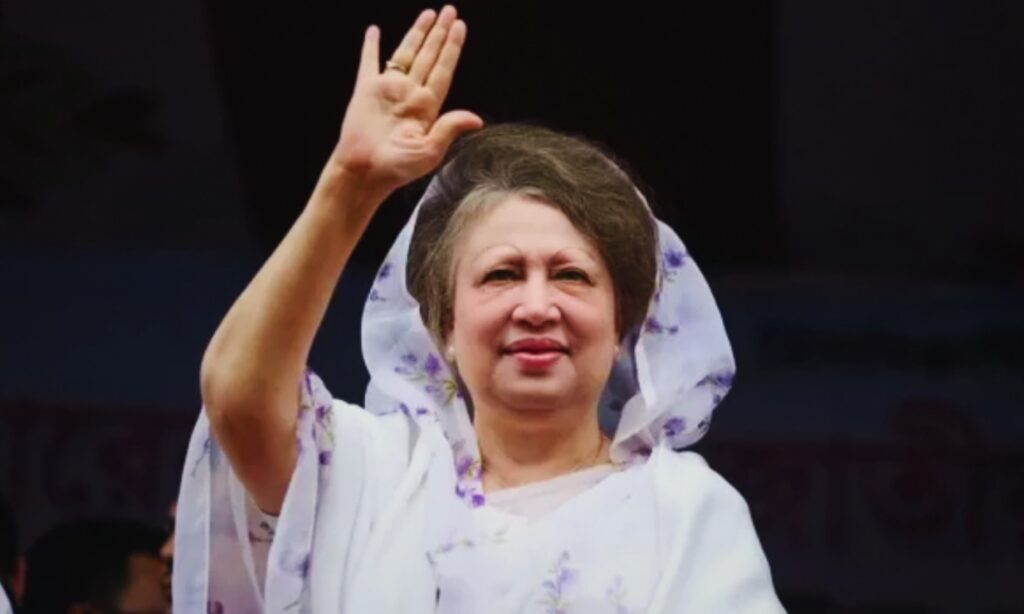
She married Ziaur Rahman in 1960. He later became President of Bangladesh in 1977. Until his assassination in 1981, Khaleda Zia lived a largely private life and was known as a quiet homemaker. After his death, she entered politics and took charge of the BNP, the party founded by her husband.
During the 1980s, she became a strong voice against military ruler Hussain Muhammad Ershad. Her leadership played a key role in the mass movement of 1990 that forced Ershad to step down and restored democracy in Bangladesh.
In 1991, Khaleda Zia became Bangladesh’s first woman Prime Minister. She was also the second woman to lead a Muslim-majority country, after Pakistan’s Benazir Bhutto. She served as Prime Minister three times: from 1991 to 1996, briefly in 1996, and again from 2001 to 2006.
Her governments focused on economic reforms, building infrastructure, and reducing poverty. At the same time, her political career was affected by corruption allegations. In 2018, she was jailed in corruption cases but was later acquitted in 2025.
After coming to power, Khaleda Zia brought back the parliamentary system of government and strengthened the role of the Prime Minister. She also eased rules on foreign investment to help improve the country’s economy.
Political Career and Achievements
On the international stage, Khaleda Zia supported regional cooperation through SAARC. She worked to strengthen ties with different global powers and promoted unity among South Asian countries. Her leadership encouraged more women to take part in politics, especially in Muslim-majority nations. Under her rule, Bangladesh saw growth in exports and foreign assistance.
Relations with India: Cooperation and Conflict
Khaleda Zia’s relationship with India was complex. Although she was born in India, her political approach was strongly nationalist. Unlike Sheikh Hasina, who was seen as friendly towards India, Zia often took a tougher stand.
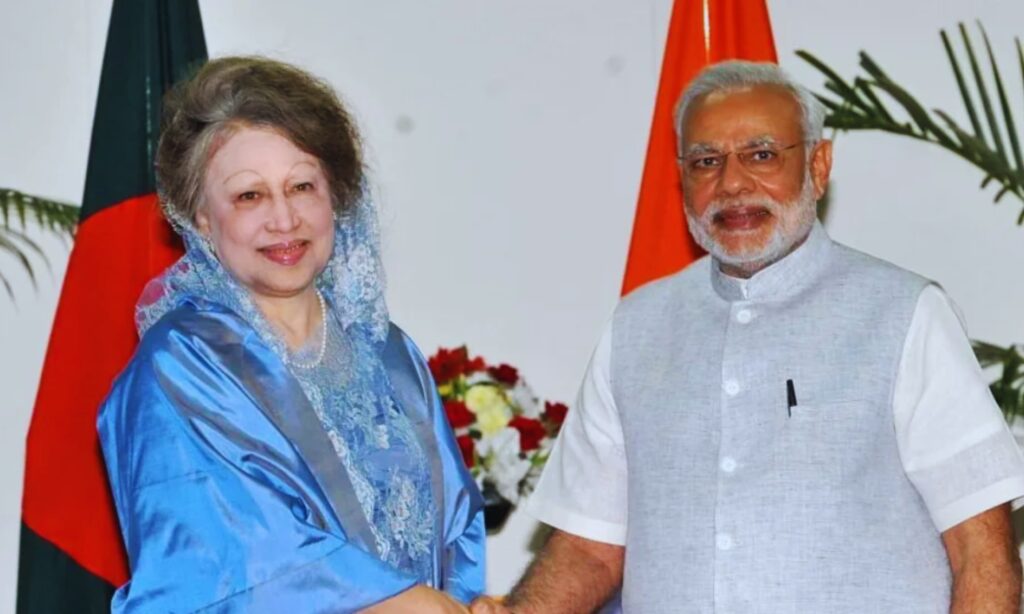
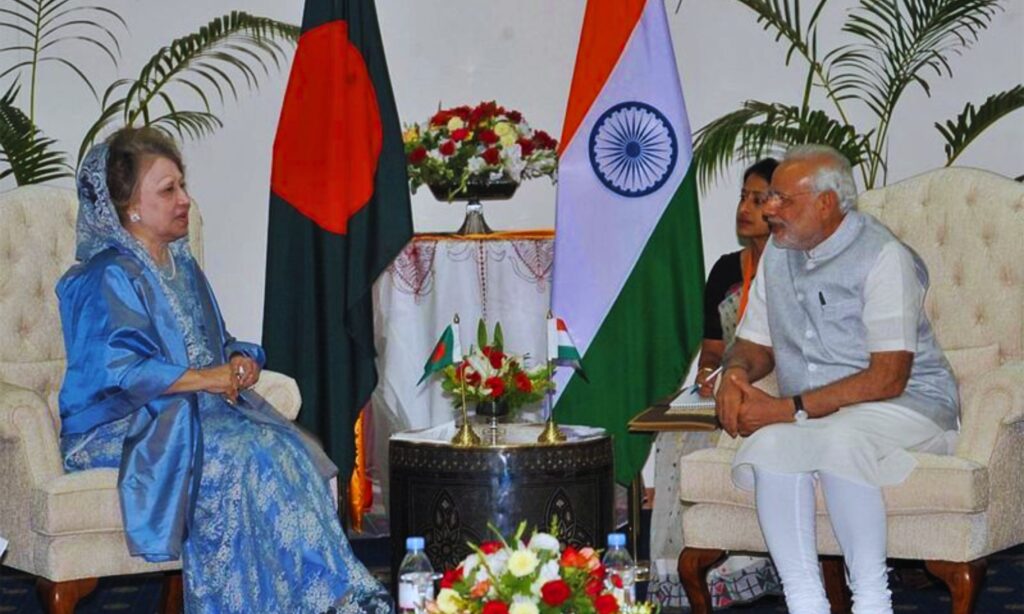
She visited India several times—once as Prime Minister in 1992 and 2006, and later as opposition leader in 2012. In 2015, she met Prime Minister Narendra Modi in Dhaka, a meeting he later recalled in his condolence message.
During her 2001–2006 term, her government cooperated with India on security issues, including action against cross-border militancy. However, tensions remained high. She opposed giving India transit access to its northeastern states, saying it could harm Bangladesh’s sovereignty. India also accused her government of sheltering insurgent groups, and disputes over river water sharing, especially the Teesta river, added to the strain.
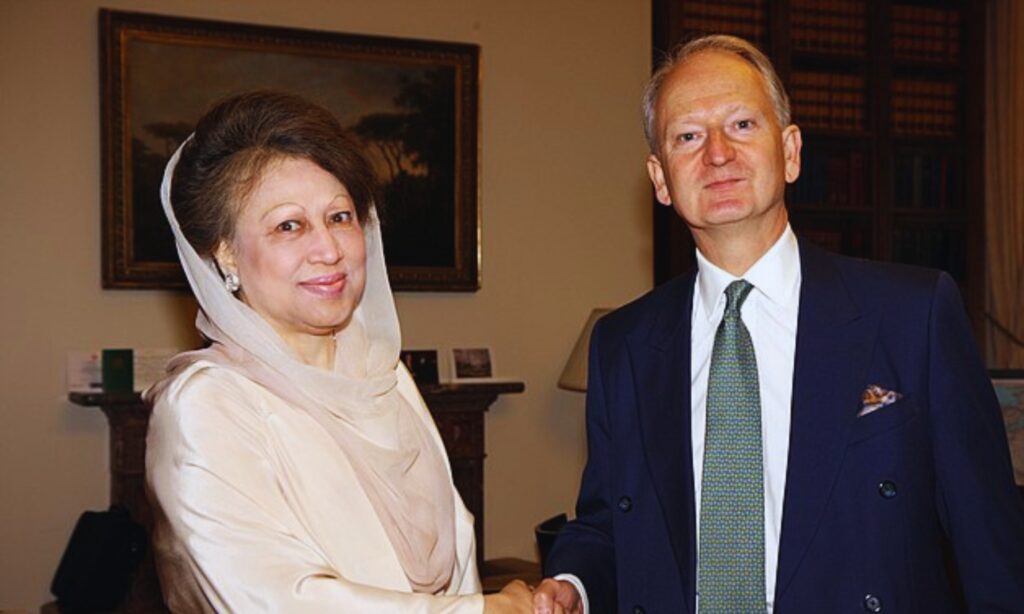
Khaleda Zia often used strong language against India, accusing it of dominance and interference. Despite this, her governments signed several agreements with India and kept diplomatic talks going at high levels.
Global Role and Lasting Legacy
Beyond South Asia, Khaleda Zia worked to improve Bangladesh’s position globally. She strengthened relations with China and Western countries and supported economic cooperation in the region. Her policies helped Bangladesh move towards export-driven growth, though her image abroad was affected by corruption cases and allegations of supporting extremist groups.
Her death comes at a time of political uncertainty in Bangladesh, with national elections expected in early 2026 and her son Tarique Rahman likely to take the lead in the BNP. This development may generate public sympathy for the party and could also shape the future course of India–Bangladesh relations.
Khaleda Zia will be remembered as a strong and determined leader who shaped Bangladesh’s politics for decades, balanced rivalry and diplomacy, and left a lasting impact on the country and the region.

Mansi Sharma is a journalist covering Global Affairs, and wellness, known for turning complex ideas into sharp, engaging narratives. Her work is driven by curiosity, depth, and a constant urge to question and explore. When she’s not writing, you’ll often find her diving into new ideas—preferably with a cup of coffee in hand, one sip at a time.