
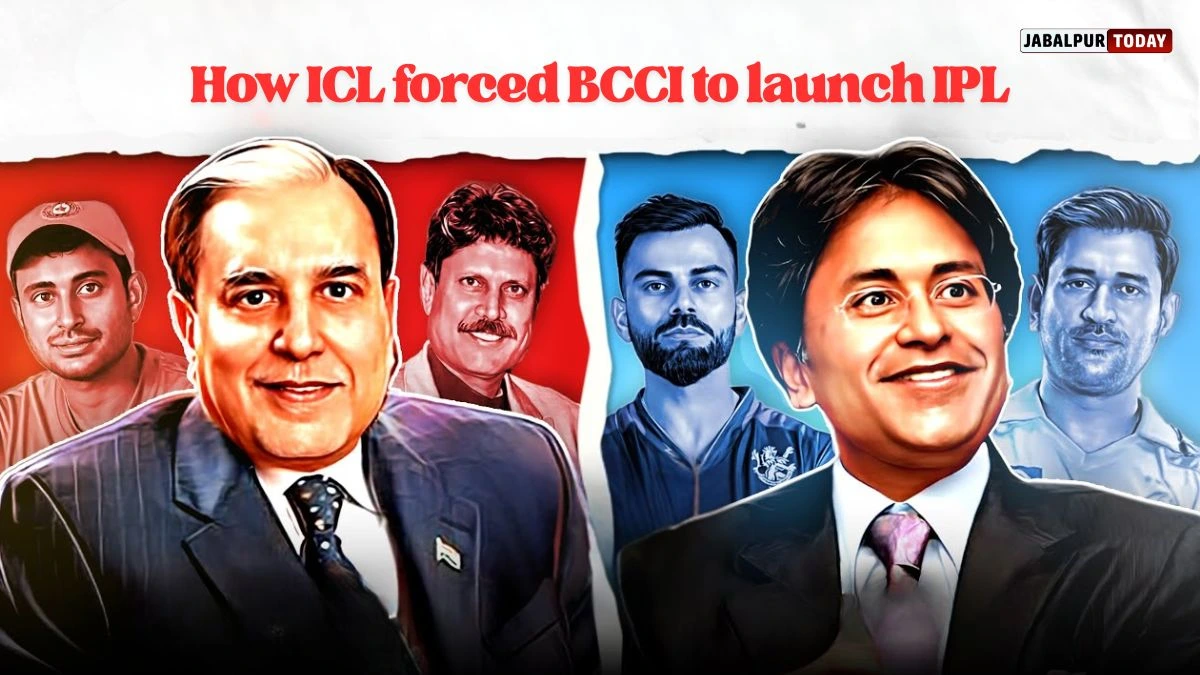
New Delhi: In the mid-2000s, the traditional establishment still largely controlled cricket in India, while international matches and domestic tournaments followed the rhythms set by the Board of Control for Cricket in India (BCCI).
However, a disruptive force soon challenged that monopoly — the Indian Cricket League (ICL). Although the league survived for only a short time, it eventually pushed the BCCI to launch the Indian Premier League (IPL), and in doing so, it transformed cricket into a global entertainment phenomenon.
Birth of ICL
Launched by Subhash Chandra’s Essel Group (the powerhouse behind Zee Entertainment), the ICL arrived with a bang in May 2007. It wasn’t just a local tournament—it was an ambitious, well-funded project that sought to bypass the traditional hierarchy.
Key Features of the ICL:
The Legends Involved: The league wasn’t short on star power. Iconic figures like Kapil Dev, Tony Greig, and Dean Jones lent it immediate credibility.
The Format: It introduced city-based teams long before they were household names. Teams like the Chennai Superstars, Mumbai Champs, and Chandigarh Lions battled it out under lights.
International Reach: It wasn’t just for Indians. The ICL recruited heavy hitters like Shane Bond (New Zealand), Inzamam-ul-Haq (Pakistan), and Chris Cairns, alongside talented domestic players who felt overlooked by the official system.
The league successfully conducted two seasons (2007–08 and 2008–09), with teams like Chennai Superstars and Hyderabad Heroes winning titles.
BCCI’s Strong Opposition
The BCCI didn’t take the competition lightly. Fearing a loss of control and revenue, they launched an all-out offensive to dismantle the ICL. This “cold war” in cricket led to several drastic measures:
The “Lifetime” Ban: As a result, the BCCI immediately banned any player who signed with the ICL from representing India or participating in official domestic matches.
Global Pressure: Using its immense financial influence, the BCCI pressured other boards (like the ECB and Cricket Australia) and the ICC to declare the ICL an “unauthorized” league.
Infrastructure Lockdown: The BCCI barred ICL matches from being played at any major stadium in India, forcing the league to play at smaller venues like Panchkula and Ahmedabad.
Note: Consequently, many players, such as Ambati Rayudu and Shane Bond, saw their international careers stall or derail during this period of exile.
How ICL forced BCCI to launch IPL
The ICL’s greatest legacy wasn’t its own success, but what it forced the BCCI to do. Realizing that the demand for franchise-based T20 cricket was astronomical, the BCCI knew they couldn’t just ban the competition—they had to outdo it.
Lalit Modi,then BCCI Vice-President, a visionary (and controversial) administrator,became the chief architect of the IPL. The ICL’s blueprint to build a bigger, sanctioned, and more glamorous version.
On 13 September 2007, the BCCI officially announced the Indian Premier League. It was designed as a fully sanctioned, high-profile league modeled on American franchise sports leagues. Key elements included:
| Feature | ICL (The Rebel) | IPL (The Official) |
|---|---|---|
| Status | Unsanctioned / Private | Officially Sanctioned by BCCI/ICC |
| Funding | Private Media Group | Corporate & Celebrity Franchises |
| Talent Pool | Retirees & Banned Players | Current Global Superstars |
| Venues | Second-tier Stadiums | Iconic International Grounds |
The franchise auction in January 2008 was a blockbuster success, with eight teams sold for around $723 million.
End of ICL
By 2009, the BCCI had offered amnesty to ICL players who agreed to leave the rebel league. Although the ICL no longer exists, it left a profound impact on cricket. Most importantly, it demonstrated India’s massive appetite for T20 franchise cricket and, as a result, forced the BCCI to move faster and more boldly with the IPL.
Furthermore, many former ICL players later found success in the IPL, while the concept of private leagues influencing official cricket also set a precedent for other countries.
Today, people often remember the ICL as merely a footnote in cricket history; however, that description does not do justice to its influence. In many ways, the ICL became the “Big Bang” of modern cricket.
It broke the long-standing tradition of “country vs. country” being the only dominant format and proved that cricket fans were ready for a fast-paced, city-versus-city competition.

Amulya Shrivastav is a journalist who loves cricket and enjoys telling stories around it. Her interest in the sport is what led her to choose journalism as a career. She holds a Master’s degree in Journalism and writes mainly on sports, while also exploring topics like politics, health, tech, and lifestyle. Her work focuses on simple, engaging storytelling that connects with readers.