
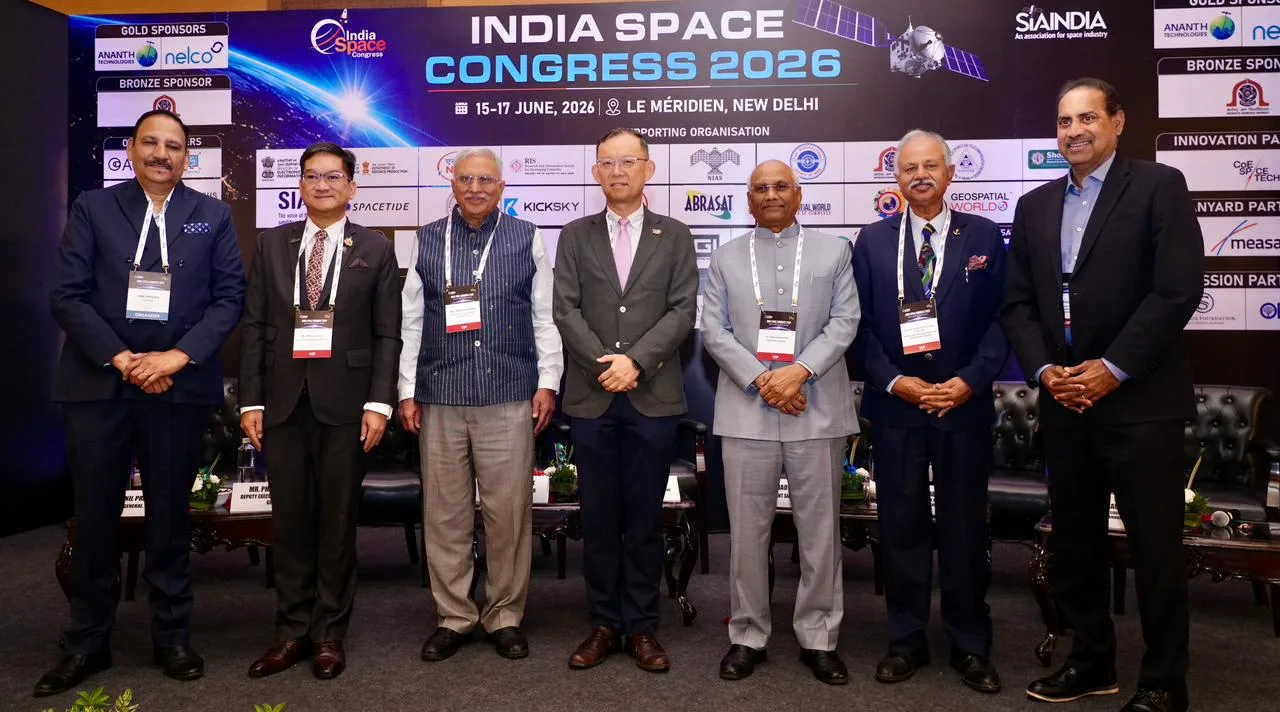
New Delhi: The fifth edition of India Space Congress (ISC) 2026 commenced today with a strong turnout, attracting more than 700 delegates from 25 countries along with 55 partner and collaborating organizations. As one of the region’s largest space-sector gatherings, the event brought together policymakers, industry experts, investors, defence leaders, researchers, startups, academic institutions, and global stakeholders, emphasizing that the future of space depends on collaboration, resilient supply chains, and trusted international partnerships.
Setting the tone for the Congress, Dr. Subba Rao Pavuluri, President, SIA-India, underscored the growing importance of collective action in an increasingly interconnected space ecosystem.
“Reimagining the global space landscape, reinventing collaboration, and realising the next era of space are not separate aspirations—they are interconnected imperatives. As economies become increasingly dependent on space-enabled services, space must be viewed as critical infrastructure. The opportunities before us are too significant for any nation, company, or institution to pursue alone. The future will belong to those who collaborate to build resilient, secure, and sustainable space capabilities.”
A central theme of Day One was the growing importance of international cooperation in shaping the future space economy. From India–Thailand and India–Taiwan partnerships to discussions on Global South leadership and emerging space economies, leaders explored how countries can leverage complementary strengths in technology, manufacturing, innovation, talent and investment to build globally connected and resilient space ecosystems.
Speaking on regional cooperation, Mr. Phee Choosri, Deputy Executive Director, GISTDA, highlighted Thailand’s commitment to building an open and internationally connected space ecosystem and called for stronger industry-led partnerships between India and Thailand to unlock new commercial opportunities.
Addressing India–Taiwan cooperation, Dr. Mumin Chen, Representative, Taipei Economic and Cultural Centre in India, emphasised that the next era of space growth will be driven not by self-reliance alone, but by strategic partnerships that combine complementary strengths in technology, innovation, talent and manufacturing.
Highlighting opportunities for deeper India–Canada engagement in the commercial space sector, Mr. Ed Jäger, Minister (Commercial), High Commission of Canada, spoke about the growing potential for collaboration between India and Canada across innovation, advanced technologies, investment and commercial space development, while emphasising the importance of trusted international partnerships in building resilient space ecosystems.
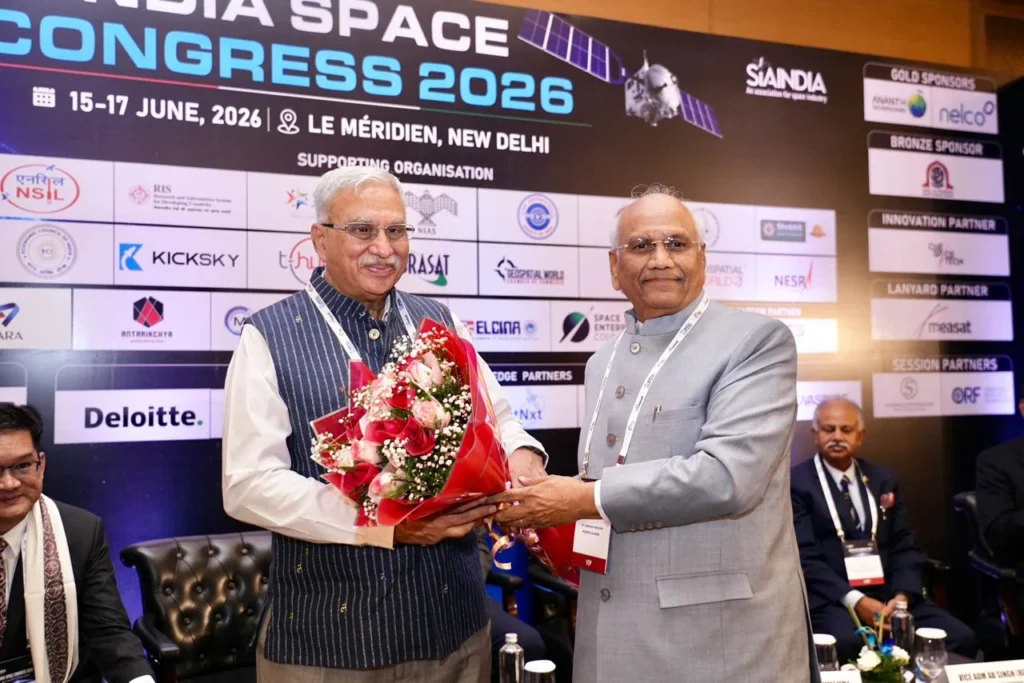
Reinforcing the growing momentum for regional cooperation, Dr. Gay Jane Perez, Director General, Philippine Space Agency (PhilSA), highlighted the significant opportunities for collaboration between India and the Philippines across satellite applications, Earth observation, capacity building, research and technology development, while underscoring the role of international partnerships in accelerating the growth of emerging space economies.
The Congress also examined how artificial intelligence, advanced analytics, geospatial intelligence, Earth observation and next-generation computing are transforming the space sector from infrastructure creation to intelligence generation.
Dr. Shailesh Nayak, Director, NIAS and Former Secretary, Ministry of Earth Sciences*, noted that the future value of the space economy will increasingly depend on the ability to convert vast streams of space-derived data into actionable intelligence capable of supporting sustainable development, governance, economic growth and societal impact.
Connectivity emerged as another major focus area, with stakeholders highlighting that bridging the digital divide and achieving universal access will require a combination of terrestrial and non-terrestrial networks. Discussions around satellite communications and Direct-to-Device services reinforced the view that connecting the unconnected, particularly in remote, rural and disaster-affected regions, will only be possible through the integration of satellite-enabled connectivity solutions.
The strategic importance of space infrastructure featured prominently throughout the day. Speakers highlighted the growing dependence of governments, critical infrastructure operators, defence establishments, financial systems and businesses on space-enabled services and stressed the need to ensure resilience, security and continuity of space assets and supporting ground infrastructure.
Vice Adm AB Singh (Retd), PVSM, AVSM, VSM, Distinguished Fellow, Centre for Land Warfare Studies, remarked that while space presents unprecedented opportunities for economic growth, connectivity, disaster response and national security, safeguarding these capabilities will be critical to ensuring long-term resilience and strategic advantage.
A major highlight of the opening day was the release of three landmark publications addressing connectivity, critical infrastructure and space security.
“Connecting the Unconnected: Designing India’s Regulatory Framework for Direct-to-Device Satellite Services”, developed jointly by SIA-India and TMT Law Practice, highlighted the transformative role satellite communications can play in extending connectivity to underserved and remote regions, enabling truly inclusive digital access across India.
“Reframing Space from ‘Enabling Layer’ to ‘Critical Infrastructure'”, developed jointly by **SIA-India and EY, called for recognising the entire space ecosystem—including satellites, launch systems, ground stations, gateways and control centres—as strategic national assets. The report underscores the growing dependence of economies, critical services and national security on space-enabled capabilities and advocates a framework for enhanced resilience and protection.
The Congress also witnessed the release of “Space, Strategy & the Future World Order – Perspectives from DEFSAT 2026”, published by **SIA-India. The publication examines the rapidly evolving space-security landscape and the growing role of space capabilities in shaping geopolitical influence, defence preparedness and national resilience.
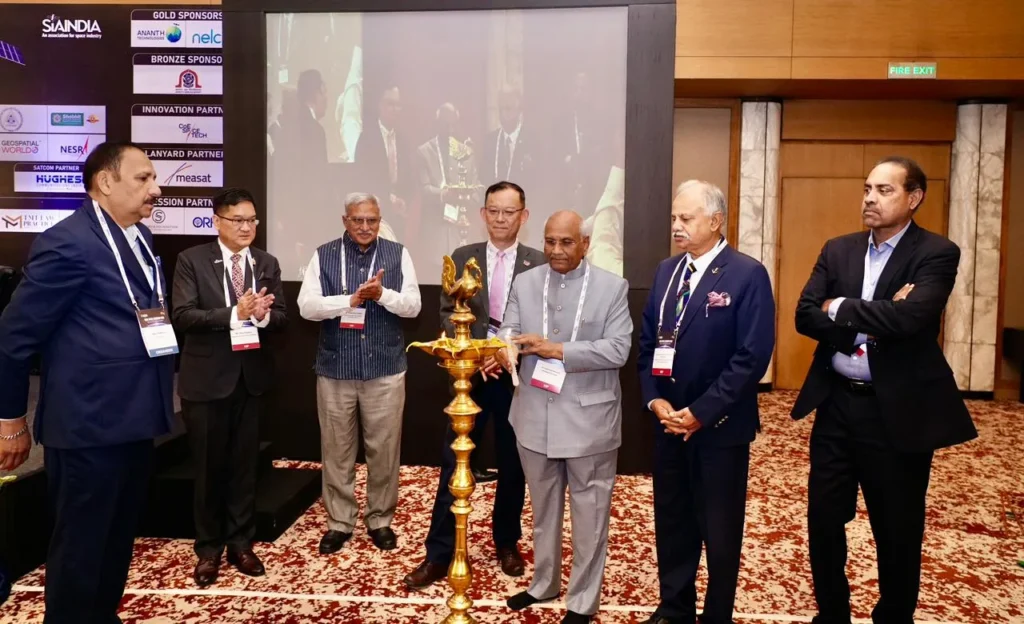
Further strengthening India’s future space leadership pipeline, the Congress witnessed the launch of GeoNiti – India Space Policy Ideathon, a first-of-its-kind national initiative designed to bridge space technology, public policy, governance, sustainability and innovation. The initiative seeks to nurture the next generation of space leaders and policy thinkers while encouraging innovative solutions to emerging challenges facing the sector.
Day One concluded with the inaugural India Space Congress Excellence Awards, recognising outstanding achievements across the space ecosystem. Awards were presented across five categories: Space Startup of the Year; Excellence in Space Technology & Innovation – Nova Award; Excellence in Space Technology & Innovation – Pioneer Award; Emerging Leader/Young Professional; and Emerging Women Space Pioneer.
As India Space Congress 2026 continues over the coming days, the conversations emerging from New Delhi point towards a clear reality: the next chapter of the global space economy will be defined not by individual achievements, but by the strength of partnerships connecting nations, industries, innovators and institutions to build a secure, resilient and prosperous future in space.
