
Skoda Slavia facelift brings refreshed styling, upgraded technology, rear-seat massage, a new 8-speed automatic gearbox and added safety features, with prices set to arrive in October
New Delhi: Skoda Auto India officially unveiled the facelifted Slavia midsize sedan on August 18, 2026, four years after the company launched the original model. Dealerships and the company’s online platform have started accepting bookings. Skoda will announce prices in the first week of October, while deliveries should begin around the festive season.
The update brings refreshed styling, better cabin technology and more comfort features. It also brings an important mechanical change: Skoda has added a new eight-speed torque-converter automatic gearbox to the 1.0-litre TSI engine. The company has kept the core platform, dimensions, engines and driving character largely unchanged. With this update, Skoda aims to make the Slavia a more polished choice in a segment where SUVs dominate but buyers still look for spacious cabins, comfortable rides and European driving dynamics.
Here is a complete look at the launch details, design, features, engines, expected prices, safety equipment, rivals, practicality and ownership aspects of the updated Slavia.
Launch Timeline, Bookings and Availability
Skoda revealed the facelift on August 18, 2026, and opened pre-bookings immediately. The company will announce official prices in early October. Deliveries should begin during the festive season, giving buyers the opportunity to receive their cars during the peak buying period.
The Slavia continues with six variants: Classic, Classic Plus, Signature, Sportline, Prestige and the sportier Monte Carlo. Skoda has also added two new colours to the range — Arctic Silver and Cappuccino Beige. The Cappuccino Beige colour will become available from December.
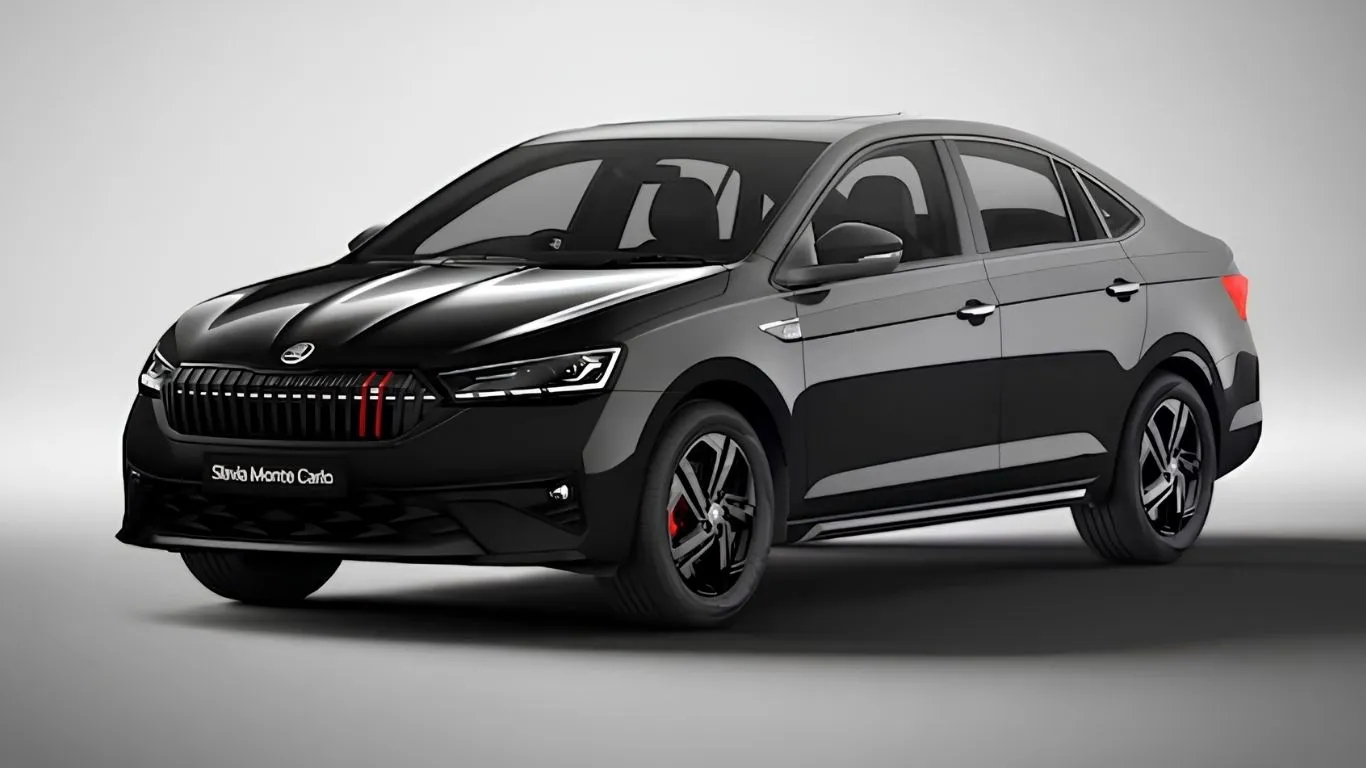
The Monte Carlo continues with its blacked-out treatment, red accents and red brake callipers.
Exterior Design: Subtle but Noticeable Refresh
Skoda has retained the Slavia’s overall three-box sedan shape, long bonnet and familiar proportions. The company has focused most of the changes on the front and rear sections to give the sedan a cleaner and more modern appearance.
At the front, the larger grille now gets vertical chrome-finished slats and a thicker chrome surround. The company has kept the surround unlit, unlike the related Kushaq facelift. The LED headlamps now feature a revised daytime running light pattern. LED fog lamps and a redesigned bumper complete the front-end changes. The bumper also gets a wider lower opening with geometric detailing and a slim chrome strip.
New multi-spoke 16-inch alloy wheels give the side profile a fresh look. At the rear, sharper angular LED tail-lamps now feature sequential turn indicators. A black strip with SKODA lettering runs across the boot lid. Skoda has also redesigned the rear bumper and added a honeycomb-style lower section with a chrome accent.
These changes give the Slavia a fresher road presence while keeping the elegant design that defines the sedan.
Interior and Technology: Bigger Screens, Segment-First Comfort
The dashboard layout remains familiar. Skoda continues with a dual-tone cabin theme that combines light upholstery on the seats and lower sections with a black upper dashboard. Textured surfaces and gloss-black elements add contrast to the interior.
The biggest technology upgrade comes in the form of a 10.1-inch touchscreen, up from the earlier 10-inch unit. The screen gets refreshed graphics and a segment-notable AI Assistant powered by Google Cloud.
The AI Assistant understands English, including Indian accents, and responds to voice commands. Drivers can use it to control functions such as the climate system and volume along with other features.
Higher variants now receive a 10.25-inch fully digital instrument cluster, which replaces the smaller unit offered earlier.
One of the biggest highlights comes at the back. Skoda has introduced a rear-seat massage function, which the company claims as a segment first. The company previously introduced this feature on the Kushaq facelift.
Front seats offer electric adjustment and ventilation on relevant variants. The Slavia also gains a 360-degree Area View camera, replacing the earlier rear-only camera. Skoda describes this feature as a first for an India 2.0 programme vehicle.
Other additions include multi-colour ambient lighting, wireless Android Auto and Apple CarPlay, wireless charging, an auto-dimming interior mirror and automatic climate control as standard across the range.
The Slavia continues to offer a single-pane sunroof and an improved audio system. The cabin also retains useful storage spaces and a spacious layout that provides enough room for both the driver and rear passengers.
Powertrain and Performance: Proven Engines, Smoother Automatic
Skoda has retained the existing engines and their power outputs.
- 1.0-litre three-cylinder TSI turbo-petrol: This engine produces 115 bhp and 178 Nm. Buyers can choose between a six-speed manual gearbox and the new eight-speed torque-converter automatic. The new automatic replaces the previous six-speed unit. Skoda has designed the new gearbox to deliver smoother gear changes and better efficiency, particularly in city traffic.
- 1.5-litre four-cylinder TSI turbo-petrol: This engine produces approximately 150 bhp and 250 Nm. Skoda pairs it exclusively with a seven-speed DSG dual-clutch automatic gearbox. The 1.5-litre versions also receive rear disc brakes.
Claimed fuel efficiency remains in the 18–20 kmpl range, depending on the variant and transmission, although official figures still await confirmation.
The Slavia continues to deliver strong mid-range performance, stable high-speed behaviour and the refined European driving experience that has become one of its key strengths. The sedan also shares its platform with the Volkswagen Virtus.
The dimensions remain unchanged. The Slavia measures 4,541 mm in length, 1,752 mm in width and 1,507 mm in height. It has a 2,651 mm wheelbase and 179 mm of unladen ground clearance. The sedan continues to offer a class-leading 521-litre boot.
Safety and Driver Assistance
Skoda continues to offer a strong standard safety package. The equipment includes six airbags, electronic stability control, traction control, hill-hold assist, electronic differential lock, tyre pressure monitoring, multi-collision braking and ISOFIX mounts.
The outgoing Slavia received a five-star Global NCAP rating for adult and child occupant protection. The facelift should continue to offer strong structural protection.
Skoda has added front parking sensors and a 360-degree camera with Park Pilot to the updated model.
However, the Slavia still does not offer a Level 2 ADAS package. Features such as adaptive cruise control, lane-keep assistance and autonomous emergency braking remain unavailable. This could disappoint buyers who consider advanced driver assistance a priority.
Expected Pricing and On-Road Costs
The pre-facelift Slavia carried a price range of roughly ₹10 lakh to ₹18.19 lakh, ex-showroom. The facelift should command a modest premium because of the additional equipment and the new transmission. Reports suggest that prices could increase by up to around ₹85,000 for the higher variants.
Skoda will reveal the exact prices in early October.
On-road prices will vary from city to city because of differences in RTO charges, insurance and other costs. In major metro cities, higher automatic variants of the previous model had already reached the low-to-mid ₹20 lakh range on-road.
Buyers should also consider festive discounts, extended warranties and finance offers after Skoda announces the final prices.
The TSI engines can help control running costs because of their efficiency. Buyers also benefit from the availability of parts through the Volkswagen Group network and the strong resale values that these cars generally maintain in the segment.
How It Compares: Closest to the Volkswagen Virtus
The Slavia shares its MQB A0 IN platform, engines, transmissions and much of its mechanical hardware with the Volkswagen Virtus. The two cars mainly differ in styling, ride tuning and feature packaging.
The Slavia follows a more elegant design approach with chrome accents, while the Virtus takes a sharper and sportier approach, particularly in its GT version. The Slavia also often gets preference for its comfortable ride.
Both sedans offer large boots, good ground clearance for their class and strong safety credentials.
Against the Hyundai Verna, the Slavia competes with its European driving dynamics and new rear massage seats. The Verna generally offers a larger feature list and provides ADAS. It also offers a more powerful turbo option on some variants.
The Honda City continues to attract buyers with its refined naturally aspirated engine, strong hybrid option and established reliability. However, it does not match the Skoda and Volkswagen sedans in outright performance and boot space.
The Slavia continues to rank among the most spacious and stable-feeling cars in the midsize sedan segment, especially for long-distance travel.
Who Should Buy the Facelifted Slavia — and Who Might Look Elsewhere
Ideal for: Families and individuals who prefer a traditional sedan over an SUV and want better driving dynamics, a lower centre of gravity and easier parking. The Slavia also suits buyers who value ride comfort, boot space and European engineering. Those who want the smoother new eight-speed automatic or the additional comfort of rear-seat massage can also consider the facelifted model. Existing Skoda and Volkswagen customers may also find it a natural upgrade.
Consider alternatives if: Advanced ADAS features are essential, a maximum number of features is the top priority, or a hybrid powertrain matters more than other considerations. Buyers who want the higher seating position, greater practicality and all-terrain ability of an SUV may also prefer other options.
Ownership Notes and Market Context
Skoda says the Slavia continues to hold a meaningful share of the midsize sedan segment, with monthly sales volumes contributing to the company’s overall performance. The company continues to support sedans because of their practicality, even as SUVs dominate the market.
Skoda’s service network expansion and localisation efforts under the India 2.0 programme also support ownership confidence.
Potential buyers should test-drive both the 1.0-litre automatic and 1.5-litre DSG versions before making a decision. They should also check rear-seat comfort with the massage function in use and assess real-world fuel economy. Dealer service and ownership experience can also vary between cities, so buyers should evaluate their local dealership.
Warranty options, extended service packages and insurance costs will become clearer after Skoda finalises the prices.
The 2026 Skoda Slavia facelift does not completely change the sedan. Instead, Skoda has strengthened the areas that already work well. The updated model continues to offer space, ride comfort, safety and strong driving dynamics while adding useful modern features such as the eight-speed automatic gearbox, larger digital displays, 360-degree camera and segment-first rear massage seats.
For buyers who still prefer a well-engineered midsize sedan, the facelifted Slavia offers a more refined package ahead of its festive-season deliveries.
Prices, final variant-wise equipment lists and official ARAI mileage figures will complete the picture in October. Until then, open bookings allow interested buyers to reserve their place in the queue.
