
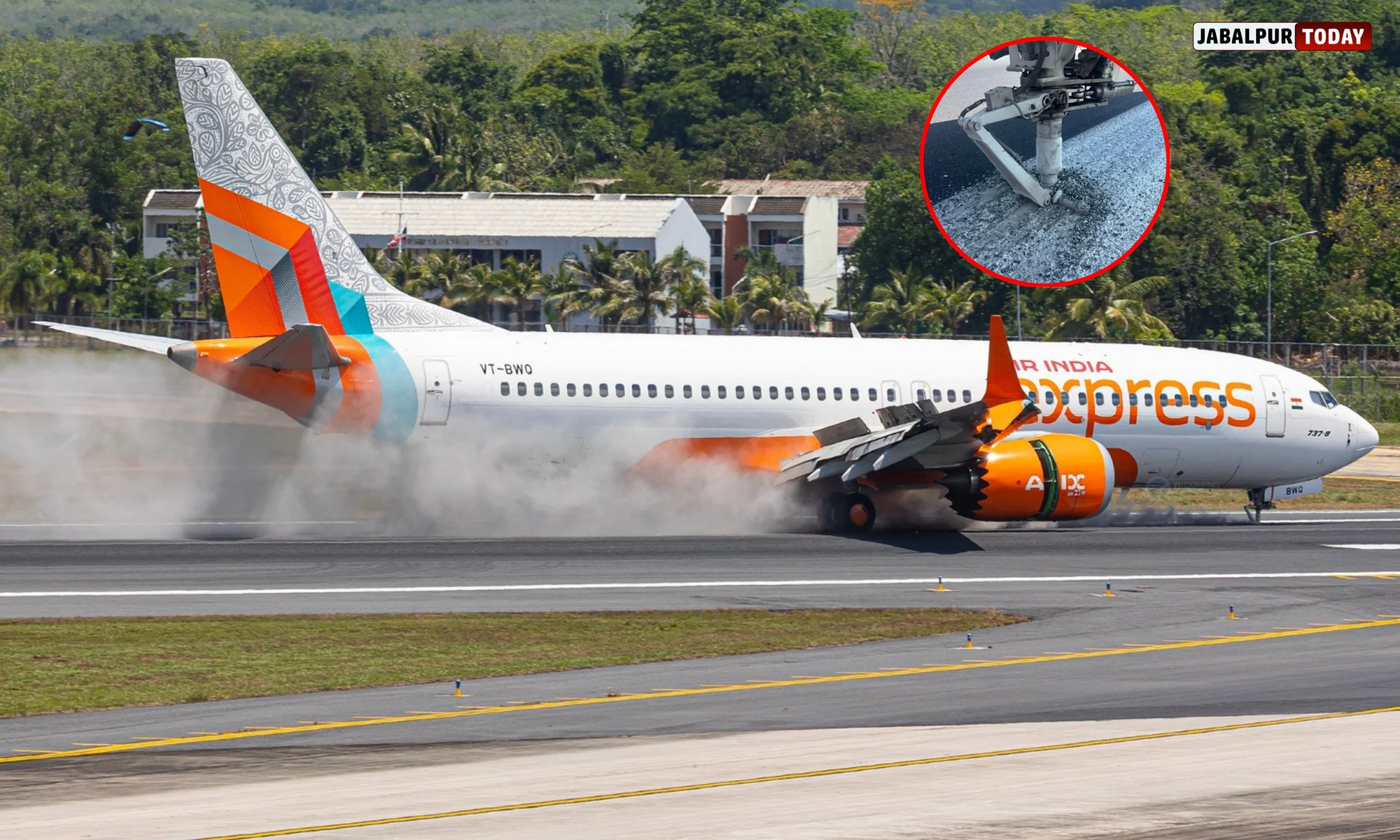
A Air India Express Boeing 737 MAX 8 suffered a nose-gear collapse during landing, forcing authorities at Phuket International Airport to close RWY 09/27 for several hours as the disabled aircraft remained on the runway
Phuket: A routine holiday flight from Hyderabad triggered a major emergency at Phuket International Airport on Wednesday after an Air India Express Boeing 737 MAX 8 suffered a nose-landing-gear collapse during touchdown. The aircraft skidded along the runway with its nose scraping the surface, forcing the airport’s only runway to shut for nearly six hours and disrupting multiple flights. Rescue teams and cabin crew safely evacuated all 140 passengers and crew members on board, and everyone remained uninjured.
What Happened?
Flight IX938 landed on Runway 09 at Phuket at 11:24 AM local time, about 16 minutes ahead of schedule. The flight had departed from Rajiv Gandhi International Airport, Hyderabad, at 6:42 AM IST.
Just moments after the aircraft touched down, passengers heard a loud thud, followed by grey smoke rising outside the plane. The nose landing gear suddenly collapsed, causing the aircraft’s front wheels to detach. The plane’s nose dipped toward the runway and it slid for several hundred metres, with sparks visible before it finally came to a stop on the active runway.
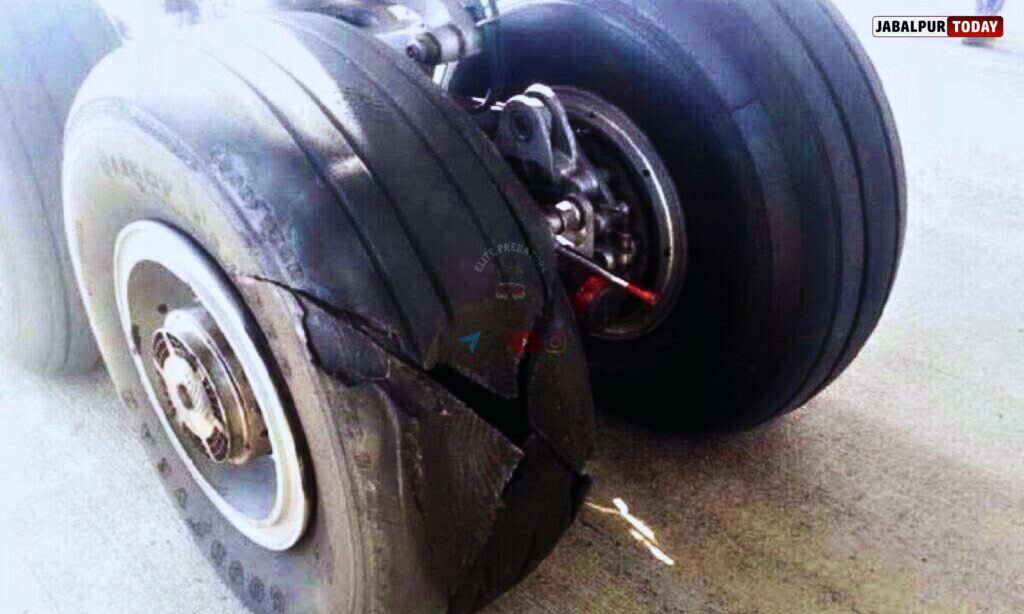
Videos from passengers inside the aircraft and from people near the airport quickly spread on social media, showing the bounce during landing, the collapse of the front gear, and the plane sliding to a halt.
Passenger Experience: Panic Inside the Cabin
Passengers described the moment as extremely frightening.
Another passenger recorded the moment on a mobile phone, capturing the hard landing and sudden slowing of the aircraft.
Despite the panic, the cabin crew acted quickly and professionally. The cabin crew immediately initiated emergency evacuation procedures. They safely evacuated 131 passengers, two infants, and seven crew members from the aircraft and moved them to the airport terminal within minutes. No one suffered any injuries.
Airline Statement
In an official statement, Air India Express said:
“We confirm that our Hyderabad–Phuket flight on March 11 experienced an issue with the nose wheel at Phuket Airport. The crew followed all standard procedures and safely deplaned all guests. We thank our guests, the Phuket airport authorities, and all stakeholders for their cooperation.”
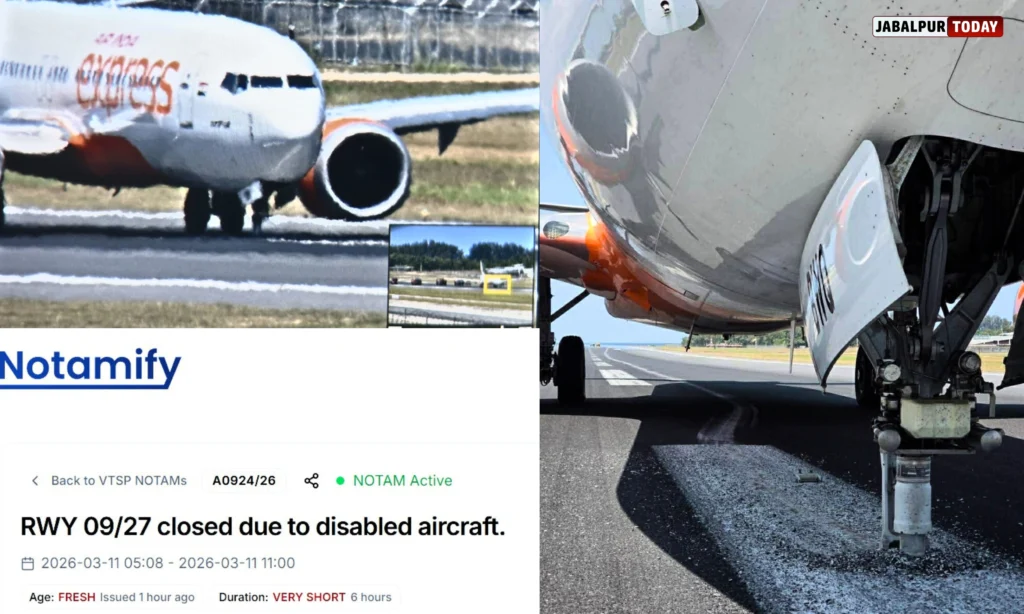
Phuket Airport Disruption
The incident caused major disruption at Phuket International Airport, one of Thailand’s busiest airports for Indian tourists.
Airport authorities immediately issued a Notice to Airmen (NOTAM) and closed the runway from 12:08 PM to 6:00 PM local time. Since the airport has only one runway, the closure stopped all landings and take-offs for several hours.
Incoming flights had to circle in the air or divert to other airports. Emergency teams used cranes and towing equipment to remove the damaged Boeing 737 MAX 8 (registered VT-BWQ) and conducted safety checks before reopening the runway at Phuket International Airport.
The six-hour shutdown affected dozens of flights during the busy tourist season, highlighting how vulnerable single-runway airports can be during emergencies.
Technical Insight: Why Nose Gear Failed?
The nose landing gear of an aircraft plays a crucial role during landing. On a Boeing 737 MAX 8, it helps with steering and supports the aircraft’s weight during the early stage of touchdown.
Experts believe a hard landing triggered the incident by placing excessive stress on the landing gear. If the force exceeds design limits, the gear structure may fail and collapse.
The aircraft involved was delivered in 2019 and had no previously reported technical issues. Aviation experts also clarified that this incident is not related to the earlier MCAS software problems that caused the global grounding of the 737 MAX in 2019.
Safety Record and Past Incidents
While this incident ended safely, Air India Express has faced scrutiny in the past. The most serious case was the Air India Express Flight 1344 crash, where a plane overshot the runway at Kozhikode Airport and 21 people lost their lives.
Since that tragedy, the airline has strengthened pilot training and safety procedures. Aviation experts say the quick response by the crew and the safe evacuation of all passengers in this incident demonstrate improved safety standards, especially on the popular Hyderabad–Phuket tourist route.
Investigation Begins
India’s aviation regulator, the Directorate General of Civil Aviation, has been informed about the incident.
However, the main investigation will be conducted by Thai aviation authorities, who will examine the cockpit voice recorder (CVR) and flight data recorder (FDR).
Early indications suggest the aircraft experienced a hard landing followed by a bounce, which may have caused the nose gear collapse. Final findings — including details about pilot handling, weather conditions, and maintenance history — are expected in the coming weeks.
Aftermath: Passengers Assisted, Aircraft Under Inspection
Passengers were given assistance and alternative travel arrangements after the incident.
Technicians are conducting a technical inspection on the aircraft in Phuket and will fly it back to India for repairs once authorities grant safety clearance. Airport authorities have advised travellers to check their flight status before heading to the airport.

Mansi Sharma is a journalist covering Global Affairs, and wellness, known for turning complex ideas into sharp, engaging narratives. Her work is driven by curiosity, depth, and a constant urge to question and explore. When she’s not writing, you’ll often find her diving into new ideas—preferably with a cup of coffee in hand, one sip at a time.