
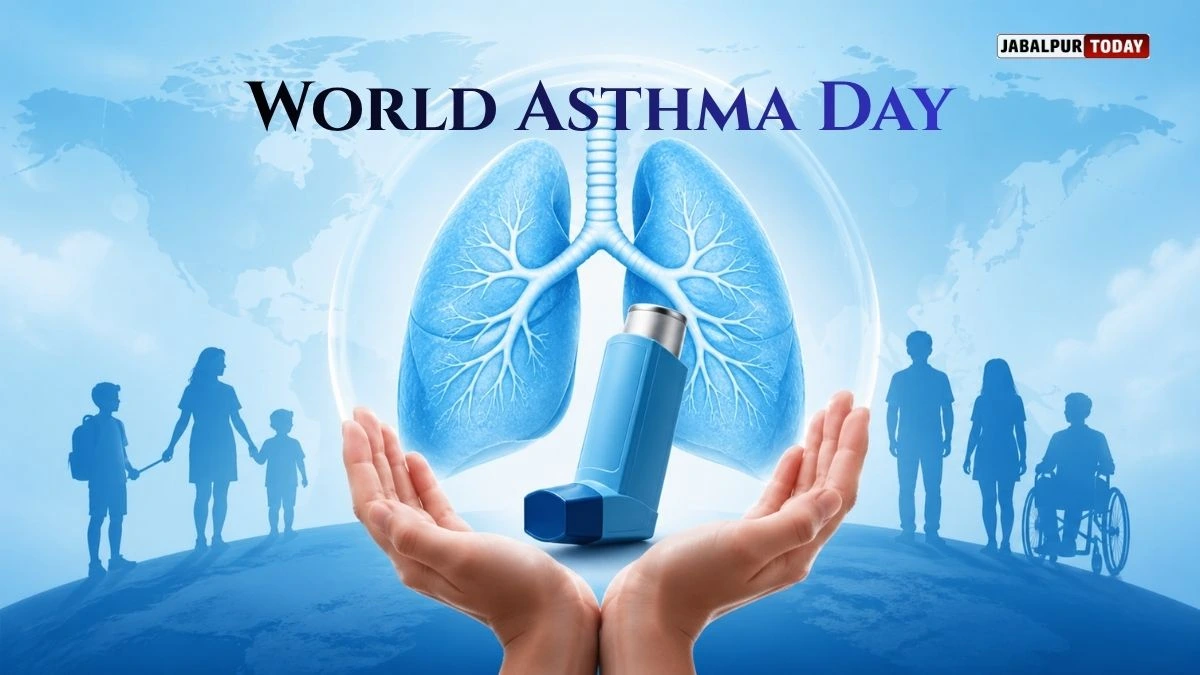
New Delhi: Every year on the first Tuesday of May, the world pauses to shine a light on asthma- a condition that touches over 300 million lives globally and still kills more than 450,000 people annually, most of them needlessly. This year’s theme cuts straight to the point: access to anti-inflammatory inhalers remains an urgent, unmet need.
Theme 2026: Access to inhalers for everyone
The official theme is “Access to anti-inflammatory inhalers for everyone with asthma – still an urgent need.” It emphasizes that inhaled corticosteroids (often in combination with a quick-acting reliever in a 2-in-1 inhaler) control underlying inflammation, reduce asthma attacks, prevent hospitalizations, and save lives.
Despite proven effectiveness, millions—especially in low- and middle-income countries—lack access due to cost, availability, or under-diagnosis.
GINA calls on governments, healthcare providers, and communities to ensure universal access to these essential medicines
What Asthma actually feels like
Asthma is one of the most common chronic non-communicable diseases, affecting over 260–363 million people globally. It causes significant distress through attacks and leads to over 450,000 deaths annually, most of which are preventable with proper care.
Signs and Symptoms of Asthma
- A persistent whistling or wheezing sound when breathing out
- Shortness of breath that appears suddenly or with mild exertion
- A tight, heavy feeling in the chest — as if someone is sitting on it
- A cough that is worst at night or first thing in the morning
- Symptoms that flare up around allergens, smoke, cold air, exercise, or stress
- Rapid breathing or speaking in short sentences during an episode
The intensity of symptoms varies, and they can be sometimes or always present. If these affect your daily routine or sleep, contact a physician.
How Doctors confirm Asthma
There is no single blood test or scan that can definitively confirm, “Yes, this is asthma.” Diagnosis is a process that involves the patient’s medical history, a physical examination, and precise measurements of lung function. These are the most commonly used methods:
- Spirometry — The gold standard. You breathe into a machine that measures how much air you can force out and how quickly. It is the primary test for anyone aged five and above.
- Peak flow meter — A small hand-held device that tracks how your airflow varies across the day or week. Significant variability points strongly toward asthma.
- Bronchodilator reversibility test — Spirometry is done before and after a dose of a reliever inhaler. If lung function improves meaningfully, it supports an asthma diagnosis.
- Exhaled nitric oxide (FeNO) — Measures inflammation in the airways. Elevated levels suggest eosinophilic (allergic-type) asthma and help guide treatment.
- Allergy testing — Skin-prick or blood tests identify specific triggers such as dust mites, pollen, animal dander, or mould.
- Methacholine challenge test — Used when diagnosis is uncertain. A low dose of methacholine is inhaled to deliberately provoke mild airway narrowing in a controlled clinic setting.
- Blood eosinophil count and IgE levels — Particularly useful in severe or allergic asthma to guide biologic therapy decisions.
Doctors may also use chest X-rays or other tests to rule out conditions like COPD or infections.
Treatment: Non-Surgical and Surgical Options
Non-Surgical (Primary Approach):
- Inhaled corticosteroids (anti-inflammatory controllers) — Cornerstone for long-term control.
- Combination inhalers (corticosteroid + long-acting bronchodilator or reliever).
- Short-acting bronchodilators (e.g., albuterol) for quick relief.
- Biologics (injections for severe allergic/eosinophilic asthma).
- Oral medications (e.g., leukotriene modifiers, theophylline in some cases).
- Asthma action plan for daily management and exacerbations.
Surgical:
For severe, treatment-resistant asthma, bronchial thermoplasty reduces the thickness of the airway’s smooth muscles using radiofrequency heat delivered via a bronchoscope, thereby reducing constriction and flare-ups. It is FDA-approved for adults aged 18 and older with severe persistent asthma and offers long-term benefits when other options have failed.
Why is Asthma growing?
Asthma cases have increased a lot in the last 40 years, and there are many reasons behind this that are linked to each other. Scientists point to several factors that are coming together.
- Urban Air pollution
- Westernised Diets
- Indoor allergens
- Climate Change
- Sedentary Lifestyle
- Reduced Microbial Diversity
- Occupational Exposures
- Rising Obesity rates
Notably, asthma is more common in high-income countries, but the burden of death falls almost entirely on lower-income settings.
Prevention that actually works
- Identify and reduce your specific triggers — whether pollen, pets, mould, or occupational chemicals
- Keep indoor air clean: use allergen-proof mattress covers, vacuum with HEPA filters, and control humidity to prevent mould growth
- Never smoke, and avoid secondhand smoke — it is the single most damaging inhaled irritant for asthmatic airways
- Get an annual influenza vaccine and stay up to date with respiratory vaccines — viral infections are a leading trigger for severe attacks
- Exercise regularly (with a proper warm-up), as physical fitness improves lung reserve and reduces sensitivity to triggers
- Maintain a healthy weight — obesity significantly worsens asthma control and reduces response to standard treatments
- Pregnant women should avoid tobacco smoke and air pollution, as early-life exposure raises a child’s risk of developing asthma
- Work with your doctor to create a written Asthma Action Plan so you know exactly what to do when symptoms worsen
Global Impact
Asthma imposes a heavy burden: high healthcare costs, missed school/work days, reduced quality of life, and preventable mortality. It affects children most commonly but impacts all ages. Disparities are stark—urban vs. rural, rich vs. poor nations. Economic costs run into billions annually, with uncontrolled asthma driving hospitalizations and emergency visits.
World Asthma Day 2026
If you have symptoms, get tested. If you have asthma, review your inhaler technique with a pharmacist or nurse. If you are a policy maker, ensure anti-inflammatory inhalers are affordable and accessible in your country. With the right care, asthma does not have to limit anyone’s life.

Amulya Shrivastav is a journalist who loves cricket and enjoys telling stories around it. Her interest in the sport is what led her to choose journalism as a career. She holds a Master’s degree in Journalism and writes mainly on sports, while also exploring topics like politics, health, tech, and lifestyle. Her work focuses on simple, engaging storytelling that connects with readers.