
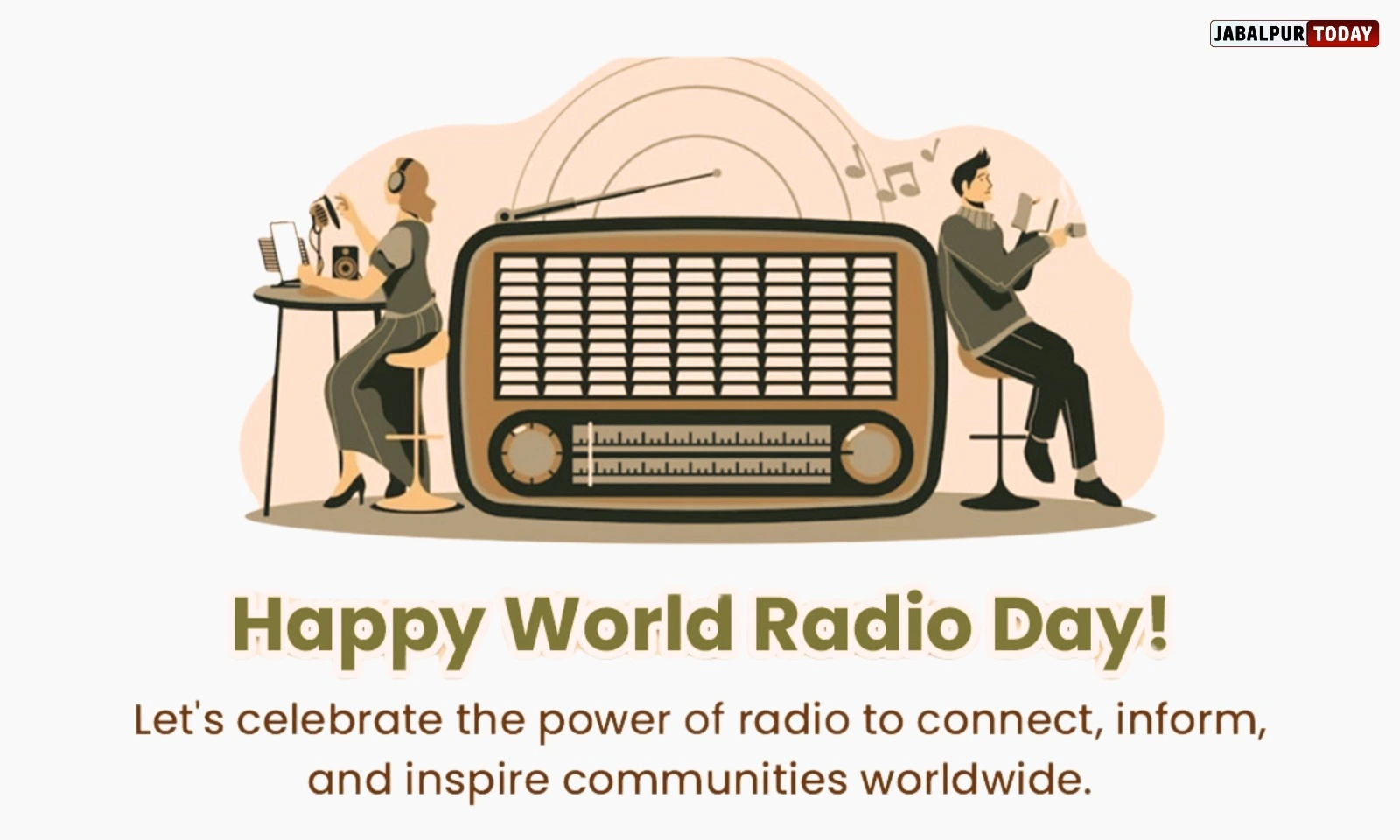
World Radio Day 2026 celebrates radio’s human voice in the AI era, honoring its history, resilience, and role in connecting generations worldwide.
New Delhi: As the world celebrates World Radio Day today, we honor a powerful medium that has connected people across borders, cultures, and generations for more than a century. From early crackling transmissions to today’s crystal-clear digital streaming, radio has constantly adapted to change while keeping its most important strength alive — the human voice.
World Radio Day was proclaimed by UNESCO in 2011 and later adopted by the United Nations General Assembly in 2012. The date marks the launch of United Nations Radio on February 13, 1946, created after World War II to promote global dialogue and understanding.
The 2026 theme — “Radio and Artificial Intelligence: AI is a tool, not a voice” — highlights a key message: while AI can improve broadcasting, the heart of radio must remain human.
The Journey of Radio: From Scientific Discovery to Global Influence
Radio began as a scientific experiment in the late 19th century. In 1893, Nikola Tesla demonstrated wireless transmission, laying the foundation for modern communication. Soon after, Guglielmo Marconi successfully sent radio signals across long distances and later received the Nobel Prize in Physics in 1909.
In 1906, Reginald Fessenden made the first voice and music broadcast. By 1920, commercial radio had arrived when KDKA in the United States aired presidential election results, marking the birth of mass broadcasting.
The invention of FM radio by Edwin Armstrong in the 1930s improved sound quality. In the 1950s, transistor radios made listening portable and affordable.
In India, broadcasting began in 1927 and later evolved into All India Radio (AIR) in 1936, which today reaches nearly the entire population. The 1990s introduced internet radio, blending traditional broadcasting with online streaming.
Why Radio Still Matters Today
Despite the rise of television, smartphones, and social media, radio continues to reach more than 95% of the global population. It crosses barriers of language, literacy, geography, and income.
In times of crisis, radio often becomes the most reliable source of information. During floods, earthquakes, and other disasters, radio continues to function even when power grids or mobile networks fail.
Radio also supports education. During health crises like Ebola in Sierra Leone, educational radio programs helped children continue learning when schools were closed. Around the world, community radio stations give marginalized groups a voice and create space for discussion and social change.
In India, radio plays a unique role in public communication. Prime Minister Narendra Modi addresses the nation through Mann Ki Baat, sharing ideas on social reform, innovation, and national development with millions of listeners.
Radio builds trust because it feels personal. The warmth of a presenter’s voice creates connection in a way few other platforms can.
Legendary Stations and Voices That Shaped Radio
Over the decades, iconic stations and personalities have shaped radio’s influence. International broadcasters like the BBC World Service and Voice of America reach hundreds of millions with news and cultural programming.
Music stations such as Z100 in New York and India’s Radio Mirchi and Red FM have become household names.
Radio legends have also left a lasting mark. Orson Welles stunned audiences with his 1938 broadcast of “War of the Worlds.” Howard Stern redefined talk radio, while Terry Gross became known for thoughtful interviews.
In India, Ameen Sayani made Binaca Geetmala a cultural phenomenon. Ram Singh Bouddh, known as the “Radio Man of India,” earned global recognition for preserving radio history. These stories prove that radio’s strength lies not just in technology, but in storytelling and human emotion.
Radio in the Age of Artificial Intelligence
Artificial Intelligence is transforming many industries, including broadcasting. AI can help with editing, translation, voice recognition, and personalized content recommendations. It can make radio production faster and more efficient.
However, as UNESCO emphasizes, AI should remain a support system — not replace the authenticity of human voices. Trust, empathy, and connection cannot be automated.
The future of radio is hybrid. Traditional AM/FM broadcasting now works alongside streaming platforms and podcasts. The global radio industry continues to grow, especially in digital audio and podcast markets, which attract younger audiences. Yet, even as formats evolve, radio’s core strength remains the same: live, local, and human.
A Voice That Unites Generations
World Radio Day 2026 reminds us that radio is not a relic of the past. It is a resilient, adaptable, and deeply human medium. Whether through a vintage transistor set, a car stereo, or a smart speaker, radio continues to inform, educate, entertain, and unite.
In an era dominated by algorithms and artificial intelligence, radio stands as a reminder that technology works best when guided by humanity.
Today, as we tune in, we celebrate not just a device — but a voice that has shaped history and continues to shape our shared future.
