
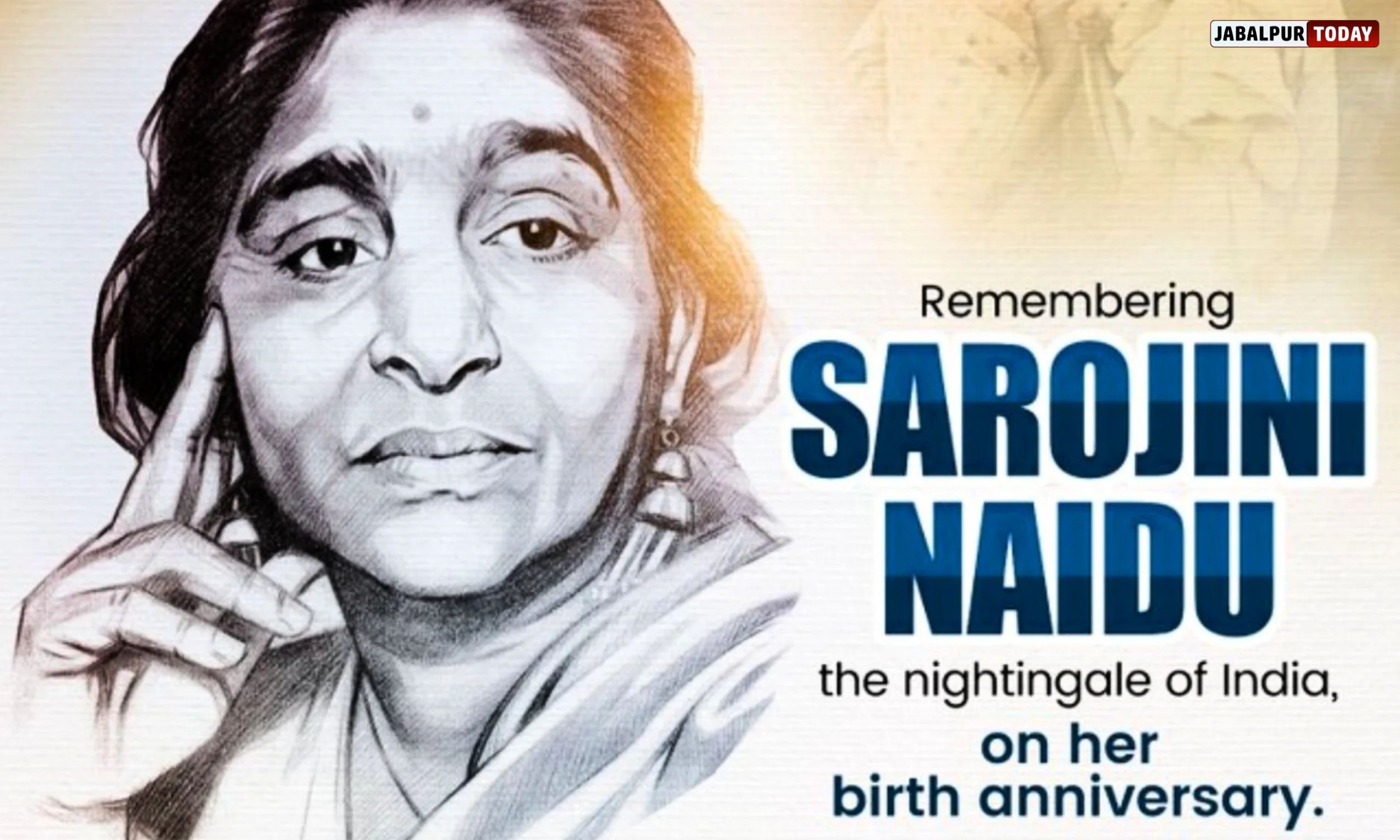
On Sarojini Naidu’s 147th birth anniversary, celebrated as National Women’s Day, this article highlights her historic role as India’s first woman governor and traces the journey of women governors who have shaped leadership and gender equality in India since Independence.
New Delhi: On the 147th birth anniversary of Sarojini Naidu, celebrated as National Women’s Day in India, the country remembers her historic role as the first woman governor of independent India.
She was appointed Governor of the United Provinces (now Uttar Pradesh) on August 15, 1947 — the day India became independent. Her appointment opened the doors for women to hold high constitutional posts. Since then, more than two dozen women have served as governors in India. As of 2026, their work continues to inspire the country in its journey toward gender equality in leadership.
Sarojini Naidu: The First Woman Governor of Independent India
Sarojini Naidu was born on February 13, 1879, in Hyderabad. She was not only a political leader but also a famous poet and a strong supporter of women’s rights. She studied at King’s College in London and Girton College, Cambridge. In 1898, she returned to India and married Dr. Govindarajulu Naidu in an inter-caste marriage, which challenged social traditions at the time.
Because of her beautiful and powerful poetry, Mahatma Gandhi called her the “Nightingale of India.” Her poetry collections, such as The Golden Threshold (1905) and The Bird of Time (1912), expressed love for India and hope for freedom.
She joined the Indian National Congress in 1905. In 1925, she became the first Indian woman to serve as its president at the Kanpur Session. She actively participated in major freedom movements like the Non-Cooperation Movement (1920), the Salt Satyagraha (1930), and the Quit India Movement (1942). She was jailed several times and spent more than 21 months in prison.
Sarojini Naidu also worked strongly for women’s rights. In 1917, she co-founded the Women’s Indian Association along with Annie Besant. She supported women’s voting rights and helped bring limited voting rights for women under the Government of India Act, 1919.
On August 15, 1947, she became the Governor of the United Provinces, making history as India’s first woman governor. She served until her death on March 2, 1949. During her time as governor, she promoted education, healthcare, social welfare, and unity among people. Her appointment showed that independent India believed in giving women equal leadership opportunities.
Growth of Women Governors After Independence
Sarojini Naidu’s appointment was the first step. Over time, more women became governors in different states.
In 1956, her daughter Padmaja Naidu became the Governor of West Bengal. She served for over 10 years, the longest term by a woman governor in India. She worked to protect culture and improve social welfare.
Vijaya Lakshmi Pandit served as Governor of Maharashtra from 1962 to 1964. She had earlier represented India internationally and used her experience to support education and development.
In the 1980s and 1990s, more women from different backgrounds entered governorship:
• Fathima Beevi became Governor of Tamil Nadu (1988–1990). She was also India’s first woman Supreme Court judge and worked for minority rights.
• Sarla Grewal became Governor of Madhya Pradesh (1982–1988) and was the first woman IAS officer to become a governor.
• V. S. Ramadevi served as Governor of Himachal Pradesh and Karnataka and was India’s first woman Chief Election Commissioner.
Women Governors in the 21st Century
In the 2000s and 2010s, women continued to rise to high positions.
Pratibha Patil served as Governor of Rajasthan before becoming India’s first woman President (2007–2012).
Since 2014, several women have been appointed governors. Droupadi Murmu served as Governor of Jharkhand (2015–2021) and later became India’s President in 2022 — the first tribal woman to hold the post.
Tamilisai Soundararajan became the first woman Governor of Telangana in 2019.
Other notable women governors include:
• Margaret Alva, who worked in several states and supported women’s political participation.
• Mridula Sinha, who promoted literature and education in Goa.
• Najma Heptulla, who focused on ethnic harmony and women’s health in Manipur.
• Anandiben Patel, Governor of Uttar Pradesh since 2019, who supports girl child education and programs like “Beti Bachao Beti Padhao.”
• Baby Rani Maurya, who emphasized rural women’s empowerment in Uttarakhand.
Impact on Women’s Empowerment
Women governors have helped shape policies and inspire change. Sarojini Naidu’s early efforts for women’s voting rights helped build the foundation for universal adult voting in India in 1950.
Their leadership challenged traditional views that politics is only for men. Their presence in high offices encouraged women to participate in local governance and public service. Today, millions of women serve in local bodies across India.
Milestones like Droupadi Murmu becoming President show progress for women from marginalized communities. These steps also support global goals for gender equality.
Women governors have addressed issues like child marriage, women’s education, healthcare, and social welfare. Although India still faces challenges in closing the gender gap, progress continues.
The Situation in 2026: Achievements and Challenges
As of 2026, women have held about 10–15% of governor positions historically. While this shows improvement, there is still a long way to go. Only a few women serve as chief ministers in India.
Even so, the legacy of Sarojini Naidu and the women who followed her remains strong. They have shown that women can lead with strength, compassion, and vision.
Sarojini Naidu once said, “We are the mothers of the race.” Her words continue to inspire generations of women leaders who are shaping India’s future and working toward equal representation in governance.

Mansi Sharma is a journalist covering Global Affairs, and wellness, known for turning complex ideas into sharp, engaging narratives. Her work is driven by curiosity, depth, and a constant urge to question and explore. When she’s not writing, you’ll often find her diving into new ideas—preferably with a cup of coffee in hand, one sip at a time.