
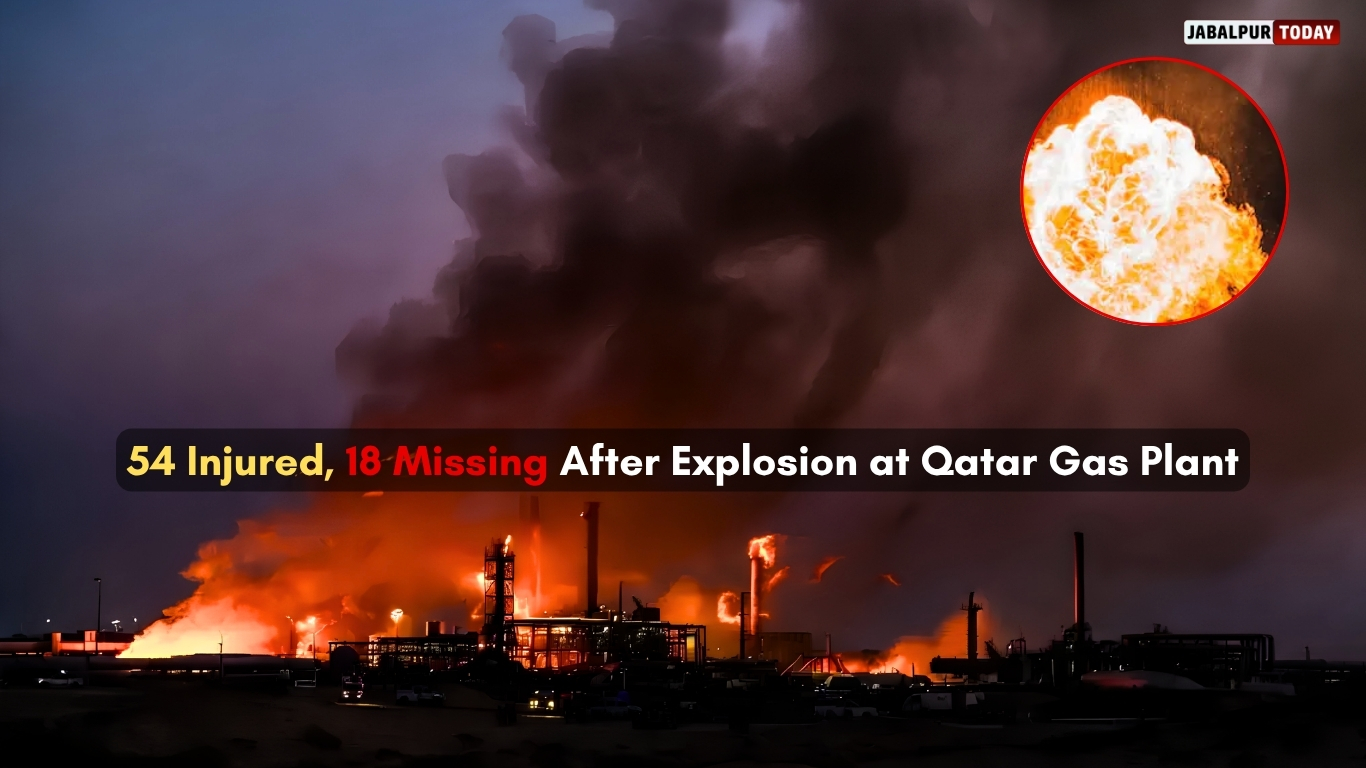
The explosion that shook Ras Laffan on Sunday night was not an act of war. It happened during a failed restart—and that may be even more worrying
Ras Laffan, Qatar: Iran spent months trying to destroy Qatar’s position as a global energy giant. It launched missiles and drones and helped choke traffic through the Strait of Hormuz. Tehran used every tool it had against one of the world’s most important gas producers. Yet Qatar’s biggest setback came not during the attacks but while trying to recover.
On the night of Sunday, June 21, 2026, engineers at the Barzan gas plant in Ras Laffan Industrial City began restarting systems that had remained shut down for months because of the war. During that process, the facility exploded.
The blast injured at least 54 people. Authorities also reported 18 people missing several hours later. Emergency teams brought the fire under control, but the explosion raised serious questions that remain unanswered.
What Happened—Minute by Minute
The explosion took place on Sunday evening inside Ras Laffan Industrial City, Qatar’s largest industrial hub, located north of the capital, Doha.
QatarEnergy, the state-owned company that operates the facility, confirmed that the explosion happened while engineers were restarting operations at the Barzan plant. This was not a routine maintenance accident or a random equipment failure. Workers were carefully bringing the plant back into service after months of shutdown.
In its official statement, QatarEnergy said:
“Operational Incident in Ras Laffan Industrial City. QatarEnergy confirms the occurrence of an operational incident during the start of operations in Ras Laffan Industrial City, which led to an explosion and fire at the Barzan factory, used for local gas needs, on the evening of Sunday, June 21, 2026. Emergency response teams were immediately deployed to contain the fire, which was brought under control.”
At first, Qatar’s Ministry of Interior said the incident had caused no injuries. A few hours later, officials revised the numbers sharply. They confirmed that 54 people had suffered injuries, while 18 others remained missing.
Authorities deployed the Qatari International Search and Rescue Group along with civil defence teams to search the damaged facility.
The Interior Ministry said that a technical malfunction caused the explosion. Officials also assured the public that the incident had not created any dangerous gas leak, easing fears about a larger disaster at one of Qatar’s biggest energy facilities.
A witness in Doha, several kilometres south of Ras Laffan, said they heard a powerful explosion echo across the capital.
The Barzan Plant Is Much More Than an Export Facility
Many reports have focused on how the explosion could affect global energy markets. While that is important, it overlooks something even more urgent.
The Barzan gas plant does much more than produce gas for export.
The facility can process nearly 1.4 billion standard cubic feet of sales gas every day, making it one of the foundations of Qatar’s domestic energy system. It supplies fuel to the country’s electricity network. Even more importantly, it powers the desalination plants that provide drinking water to one of the driest countries on Earth.
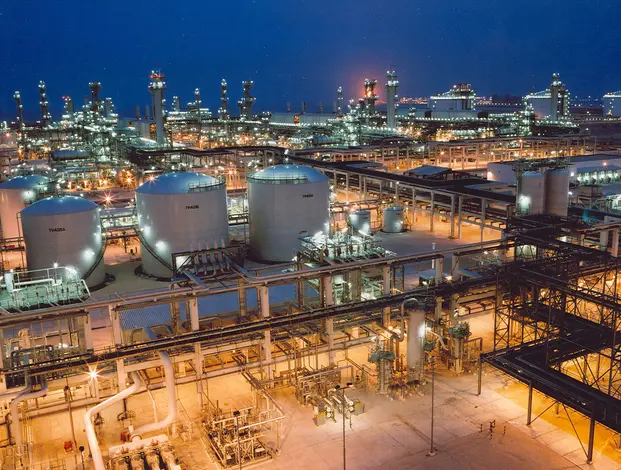
Qatar has almost no natural freshwater. It depends almost entirely on desalination to produce drinking water.
If the Barzan plant stops operating, desalination plants lose a critical source of fuel. That means drinking water production can slow down. In a country where summer temperatures regularly climb above 45°C (113°F), any disruption to water production quickly becomes a public safety issue rather than just an infrastructure problem.
That is why Sunday’s explosion deserves far more attention than it has received. The blast did not only shake global LNG markets. It also damaged a facility that millions of people inside Qatar rely on every day.
Qatar owns almost the entire Barzan plant. ExxonMobil holds a small minority stake but had not issued any public statement when this article was published.
Qatar Had Already Suffered Months of Damage
To understand why this explosion matters so much, it is important to look at everything Qatar has already faced in 2026.
In early March, Iran’s Revolutionary Guard carried out its threats to attack Gulf energy infrastructure after Israel struck Iran’s South Pars gas field, which Qatar shares with Iran beneath the Persian Gulf.
Iranian missiles and drones hit QatarEnergy facilities in both Ras Laffan Industrial City and Mesaieed Industrial City.
The attacks immediately shook global energy markets.
European benchmark gas prices jumped by almost 50 percent overnight. Asian LNG prices increased by nearly 39 percent. QatarEnergy declared force majeure across its LNG operations because it could no longer meet its contractual obligations.
A second Iranian missile hit Ras Laffan in mid-March and caused what QatarEnergy described as “sizable fires and extensive further damage.”
QatarEnergy CEO Saad Sherida Al-Kaabi, who also serves as Qatar’s Minister of State for Energy Affairs, later told Reuters that the attacks had knocked out about 17 percent of Qatar’s LNG export capacity, equal to roughly 12.8 million tonnes of LNG every year.
He warned that repairs could take three to five years. The company estimated annual revenue losses at nearly $20 billion. Long-term LNG supply agreements with Italy, Belgium, South Korea, and China also came under force majeure.
At the same time, Iran’s pressure on the Strait of Hormuz created another major problem.
Around 20 percent of the world’s seaborne LNG passes through this narrow waterway. As Iran tightened its control over the route, Qatar could not ship gas even from facilities that remained operational.
Then everything went quiet.
For months, one of the world’s largest LNG exporters remained largely inactive. Its facilities sat damaged. Shipping routes stayed blocked. Workers waited while repairs continued.
The Cruel Irony of the Restart
Eventually, the situation began to improve. Negotiations between Iran and the United States in Switzerland eased tensions around the Strait of Hormuz.
As shipping conditions improved, Qatar finally had a chance to restart its damaged facilities. QatarEnergy began the difficult process of bringing Ras Laffan back online. The world expected Qatar’s comeback.
Instead, the restart itself ended in disaster. This is the part of the story that many headlines have missed. Iran did not directly cause Sunday’s explosion.
Authorities have found no evidence so far that a missile or sabotage caused the blast. Instead, the explosion happened because of a technical malfunction during startup.
Restarting a large industrial facility after months of war damage is one of the most difficult tasks engineers can perform. Equipment may have suffered hidden damage. Systems must work together perfectly. Every step requires careful testing.
When engineers rushed—or simply struggled—to restart complex infrastructure that had already survived missile attacks, something went terribly wrong.
The Ministry of Interior referred to the incident as an operational error, according to a source familiar with the investigation.
Whether the failure came from human error, equipment failure, or both, something broke down at the worst possible moment.
What This Means for Global Energy—Once Again
The timing could hardly be worse. Qatar supplies about 20 percent of the world’s LNG exports. Europe and Asia had expected Qatari gas exports to recover as the conflict eased.
European countries, still dealing with reduced Russian gas supplies after the Ukraine war, closely watched negotiations over the Strait of Hormuz.
Major LNG buyers in South Korea, China, and Japan also expected Qatar to restore supplies. Sunday’s explosion has thrown those expectations into doubt. Officials still do not know how badly the Barzan facility has been damaged.
The fact that 18 people remain missing suggests that the blast may have caused serious structural destruction. Even if engineers repair the physical damage quickly, the failed restart creates a major psychological and operational setback.
Earlier this year, energy consultancy Wood Mackenzie warned that a prolonged disruption in Qatar could fundamentally reshape global gas markets.
Kristy Kramer, the company’s Head of LNG Strategy, said after the March attacks:
“Market expectations had been for a short disruption, with a controlled restart restoring supply to pre-conflict levels by mid-2026. That outlook now appears increasingly unlikely.”
Sunday’s explosion has made that warning look even more accurate.
The Human Cost Is Still Growing
Behind every market report and geopolitical analysis are real people. On Sunday night, 72 workers became victims of the disaster.
Authorities confirmed that 54 people suffered injuries, while 18 others remained missing as rescue teams searched through the damaged facility.
The Ministry of Interior has not released details about the condition of the injured workers.
The Qatari International Search and Rescue Group continues working alongside civil defence teams inside an industrial complex that still faces structural damage and lingering fire hazards.
These missing and injured people were not soldiers. They were engineers, technicians, and plant operators. They came to work to restart a gas facility after months of war damage. The explosion happened while they were doing exactly that.
A Small Nation That Carries Global Weight
Qatar has fewer than three million people, yet it plays an outsized role in world affairs. The country hosted the 2022 FIFA World Cup. It built Al Jazeera into one of the world’s most influential news networks. It has also acted as a mediator in several major international conflicts, including the ongoing Iran-US talks in Switzerland.
Most importantly, Qatar has become one of the world’s most important suppliers of natural gas. Europe and Asia depend heavily on its LNG exports. That success has also made Qatar vulnerable. When Ras Laffan suffers, energy markets around the world feel the impact. On Sunday night, Qatar hoped to close the chapter on three months of war damage.
Instead, another explosion lit up the desert sky. The restart failed. Rescue teams are still searching for the missing. Meanwhile, difficult questions continue to grow. Was the Barzan facility still too badly damaged by the March missile strikes to restart safely?
Did engineers rush technical inspections?
Did Qatar have enough international expertise on site to manage such a difficult post-war restart?
Qatar’s authorities have promised to “continue to communicate the available information.”
The world will keep watching because what happens next at Ras Laffan will affect far more than Qatar alone.
As of the time of publication, search and rescue operations remain underway. Authorities have not yet confirmed the full extent of the damage at the Barzan facility. This story will be updated as more information becomes available.
