
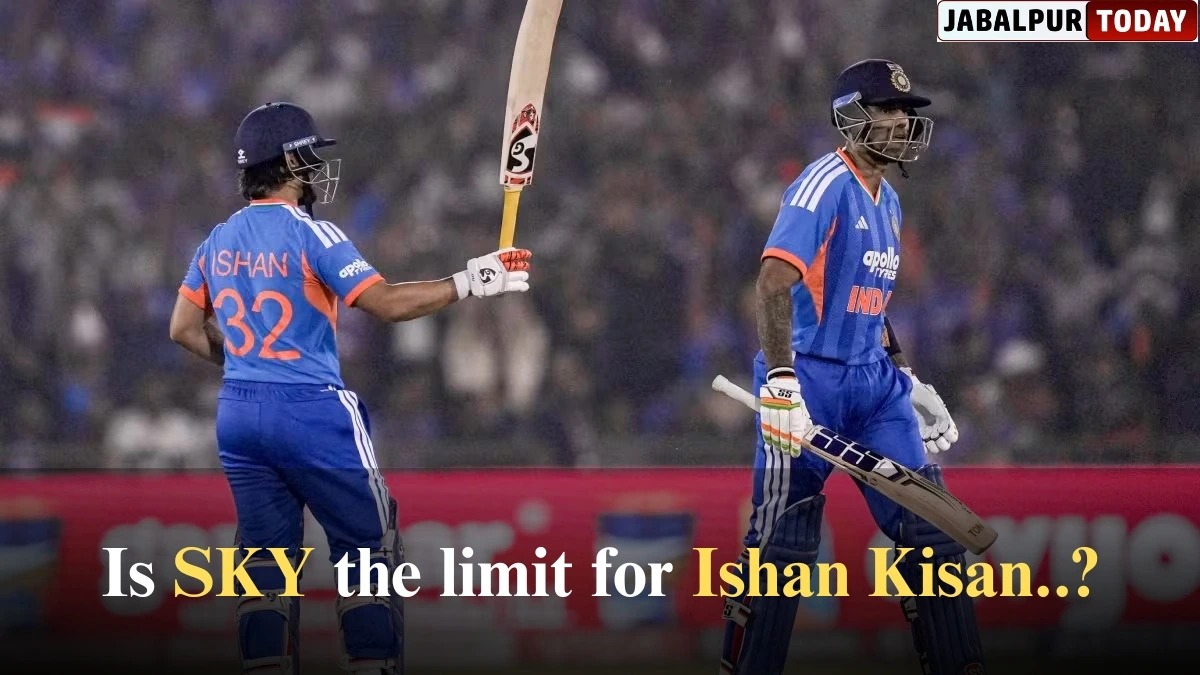
Ishan Kishan and Suryakumar Yadav, once questioned after a difficult 2025, deliver with the bat in India’s first T20I series against New Zealand
New Delhi: For most of 2025, Suryakumar Yadav and Ishan Kishan were viewed as liabilities in India’s T20 squad. A sequence of underwhelming performances, growing pressure, and constant scrutiny led to doubts over their form, roles, and long-term relevance—especially with the 2026 T20 World Cup on the horizon.
As India enters its first T20I series of 2026, however, that narrative is beginning to unravel—decisively and publicly.
Why SKY and Ishan were labelled liabilities in 2025
Suryakumar Yadav, India’s T20 captain and one of the most innovative batters of the modern era, endured a rare dip in consistency during the 2025 season. While his strike rate remained impressive, he struggled to produce match-defining innings across multiple bilateral series. Critics began questioning not just his form, but also his ability to lead under pressure.
Ishan Kishan faced even sharper criticism. After an inconsistent 2025, his recall to the T20 setup sparked intense debate. Analysts argued that his aggressive style lacked stability, particularly at No. 3, a position demanding balance rather than volatility. By the end of the year, both players had become focal points of selection debates rather than automatic choices.
First Series of 2026: A direct response with the bat
The opening T20I series of 2026 has provided SKY and Ishan the platform they needed—and they have responded emphatically.
In the T20I against New Zealand in Raipur, India was set a daunting target of 208 runs, a scenario many believed would expose the very flaws critics had highlighted. Early miscommunication between the pair briefly hinted at tension, reinforcing old doubts.
What followed, however, changed the narrative entirely.
Ishan Kishan produced one of his most complete T20 innings, smashing 76 off 32 balls, including a 21-ball fifty. His innings combined controlled aggression with intelligent shot selection—exactly what critics claimed he lacked.
At the other end, Suryakumar Yadav played a captain’s knock. Calm under pressure, SKY anchored the chase before accelerating effortlessly, finishing unbeaten on 82 off 37 balls. Together, they stitched a 122-run partnership in just 48 balls, dismantling New Zealand’s bowling attack.
India won the match with nearly five overs to spare.
What this means for India’s T20 World Cup plans
This performance was not just about runs—it was about relevance.
The criticism of 2025 was rooted in form, temperament, and role clarity. In the first series of 2026, both players addressed those concerns directly. Ishan Kishan showed he can control high-pressure chases from No. 3, while Suryakumar Yadav demonstrated leadership without sacrificing impact.
While one series does not erase a difficult year, it does reshape perception. SKY and Ishan are no longer defending their place in the squad; they are redefining their value within it.
As India builds momentum toward the 2026 T20 World Cup, the debate around these two has fundamentally changed. What was once framed as a liability issue is now evolving into a conversation about match-winners peaking at the right time.
Read more stories on Jabalpur Today
