
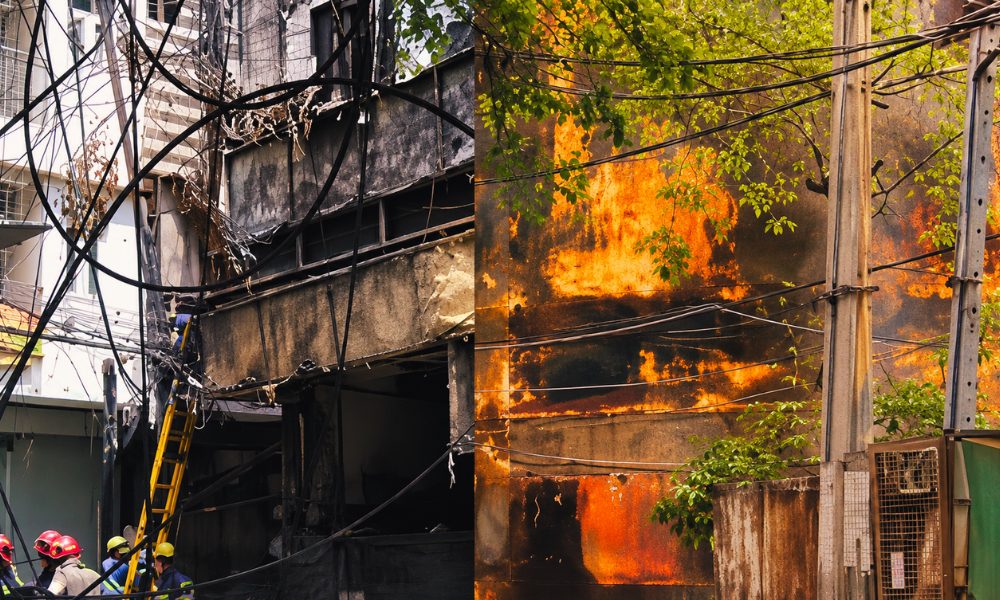
The Lemon Green fire in South Delhi did not just kill 21 people — it exposed problems that had been growing quietly for years
New Delhi: On the morning of Wednesday, June 3, 2026, at around 8:30 a.m., a fire spread through the multi-storey Lemon Green Restaurant in Hauz Rani, Malviya Nagar, South Delhi. By the time firefighters controlled the blaze, 21 people had died. Some of the victims were foreign nationals. According to AAP MLA Somnath Bharti, who represents the Hauz Rani constituency, many of them were South African citizens. Rescue teams saved at least 37 people, including some trapped in the basement. Authorities evacuated another 40 people. But this tragedy is not only about the fire — it tells a much larger story.
The Morning of the Fire
The fire started before most of the city had fully woken up.
The Delhi Fire Service (DFS) received an emergency call at about 9:45 a.m. By then, flames had already spread through the basement and moved upward inside the multi-storey building. Officials quickly sent ten fire tenders to the site. Divisional Officer Ravinder from the Nehru Place fire station arrived to lead rescue operations.
In the early rescue efforts, firefighters pulled three people out of the basement, which had become the most dangerous part of the building because of thick smoke and heat. CATS ambulances rushed them to a nearby hospital. However, many people inside no longer had enough time to escape.
Some people jumped from the upper floors to save themselves. Images of thick smoke rising from a restaurant in a crowded South Delhi neighbourhood and rescue workers struggling to reach trapped victims quickly spread. For many Delhi residents, the scenes looked painfully familiar because the city has witnessed many deadly fires before.
A Building That Should Never Have Been So Dangerous
The Lemon Green Restaurant was not a small roadside eatery. It operated as a large commercial building in one of South Delhi’s busy areas. Yet the fire started in the basement — the lowest and most enclosed part of the building, where escape becomes hardest during emergencies.
Authorities have not yet confirmed the exact cause of the fire. Early reports suggest that an electrical short circuit may have started it. Even hours after firefighters controlled the blaze, teams from the Delhi Police and fire department continued to inspect the site to find out what exactly caused the disaster.
But the bigger question is not what started the fire. The real question is why 21 people could not escape once the fire began.
If a building has working emergency exits, proper fire safety systems, clearly marked escape routes, and trained staff, a basement fire should not kill over twenty people on a Wednesday morning. The fact that it did suggests not a simple accident, but a chain of serious failures in the building and the system around it.
Foreign Nationals Among the Victims
One shocking detail in this tragedy is that foreign nationals were among those who died.
AAP MLA Somnath Bharti was one of the first public officials to speak about this. He posted on X that most of the victims appeared to be South African nationals.
This detail raises difficult questions.
For years, Hauz Rani and nearby parts of Malviya Nagar have attracted many African students and professionals. Affordable housing, nearby educational institutions, and strong community networks have encouraged many to settle there. For them, local restaurants, hostels, and shared buildings are not temporary stops — they are part of everyday life.
At the time of writing, officials had not officially confirmed the nationality of every victim, and identification efforts were still ongoing. However, the presence of foreign nationals inside the building raises serious concerns. Authorities must examine whether some commercial buildings in the area are being used for purposes beyond their legal permissions and whether officials have ignored such practices.
A Pattern Delhi Keeps Repeating
This is not the first time a building fire in Delhi has caused avoidable deaths.
In May 2022, a fire in a commercial building in Mundka, West Delhi, killed 27 people. Authorities later found that the building lacked fire department clearance and did not even have fire extinguishers. Police registered the case as culpable homicide.
In December 2024, students at a coaching institute in Rajouri Garden jumped from a restaurant building to escape another fire. In June 2025, a man and his two children died after jumping from a burning apartment building in Dwarka.
Delhi keeps repeating the same pattern. Fires break out in crowded, poorly ventilated, mixed-use buildings. People either become trapped or jump to survive. Deaths follow. Authorities announce investigations. Leaders offer condolences. Then, after a few months, another similar tragedy happens.
The Official Response
Political leaders reacted quickly to the Malviya Nagar fire, as they usually do after such tragedies.
Prime Minister Narendra Modi’s office released a statement expressing grief. The government also announced financial help from the Prime Minister’s National Relief Fund — ₹2 lakh for the family of each person who died and ₹50,000 for every injured victim.
Delhi Lieutenant Governor Vinai Kumar Saxena said he felt “deeply distressed” and instructed officials to provide immediate medical treatment and carry out a full investigation. Delhi Chief Minister Rekha Gupta also expressed condolences and said the government was closely monitoring the situation.
Jitendra Kumar, the Sub-Divisional Magistrate of DDMA South District, said officials activated all Emergency Operations Centres as soon as they received information about the fire. He had planned to attend a training programme that morning but postponed it so he could reach the site.
In other words, the emergency response system acted quickly. The safety system that should have prevented this disaster failed.
Questions the Investigation Must Answer
As Delhi mourns, investigators must answer several urgent questions.
Did the Lemon Green Restaurant have a valid fire No Objection Certificate (NOC) from the Delhi Fire Service?
Did people use the basement for living or sleeping, or for activities not allowed under commercial building rules?
When did authorities last inspect the building’s electrical system, and who conducted that inspection?
Did the building have working fire exits, smoke alarms, and fire suppression systems?
Most importantly, were people staying overnight inside the restaurant building, even though restaurant licences normally do not permit this?
In the 2022 Mundka tragedy, investigators discovered that the building lacked fire clearances and basic firefighting equipment. Police treated that case as culpable homicide. The way authorities handle accountability in this case will show whether Delhi has truly learned anything.
21 Lives Lost, 37 Saved — And a City That Must Ask Why
By Wednesday afternoon, firefighters had completely put out the flames. Search teams finished checking the building. Officials confirmed 21 deaths, while hospitals across South Delhi treated the injured. Authorities still worked to identify foreign nationals among the victims, while families in at least one other country waited for answers.
For Hauz Rani residents, the sight of thick smoke rising over their neighbourhood turned an ordinary Wednesday into something unforgettable. For the families of the 21 victims — Indians and foreigners alike — it became the last normal day they would ever remember.
At its heart, the Lemon Green fire shows what happens when accountability fails to keep pace with growth. Buildings become taller, but safety systems do not improve. Commercial licences fail to match how buildings actually operate. A city of 33 million people continues to learn, through repeated tragedies, that it still has not built enough systems to protect the people living and working inside it.
The question is not only who started the fire.
The question is: who allowed the conditions that led to 21 deaths?
