
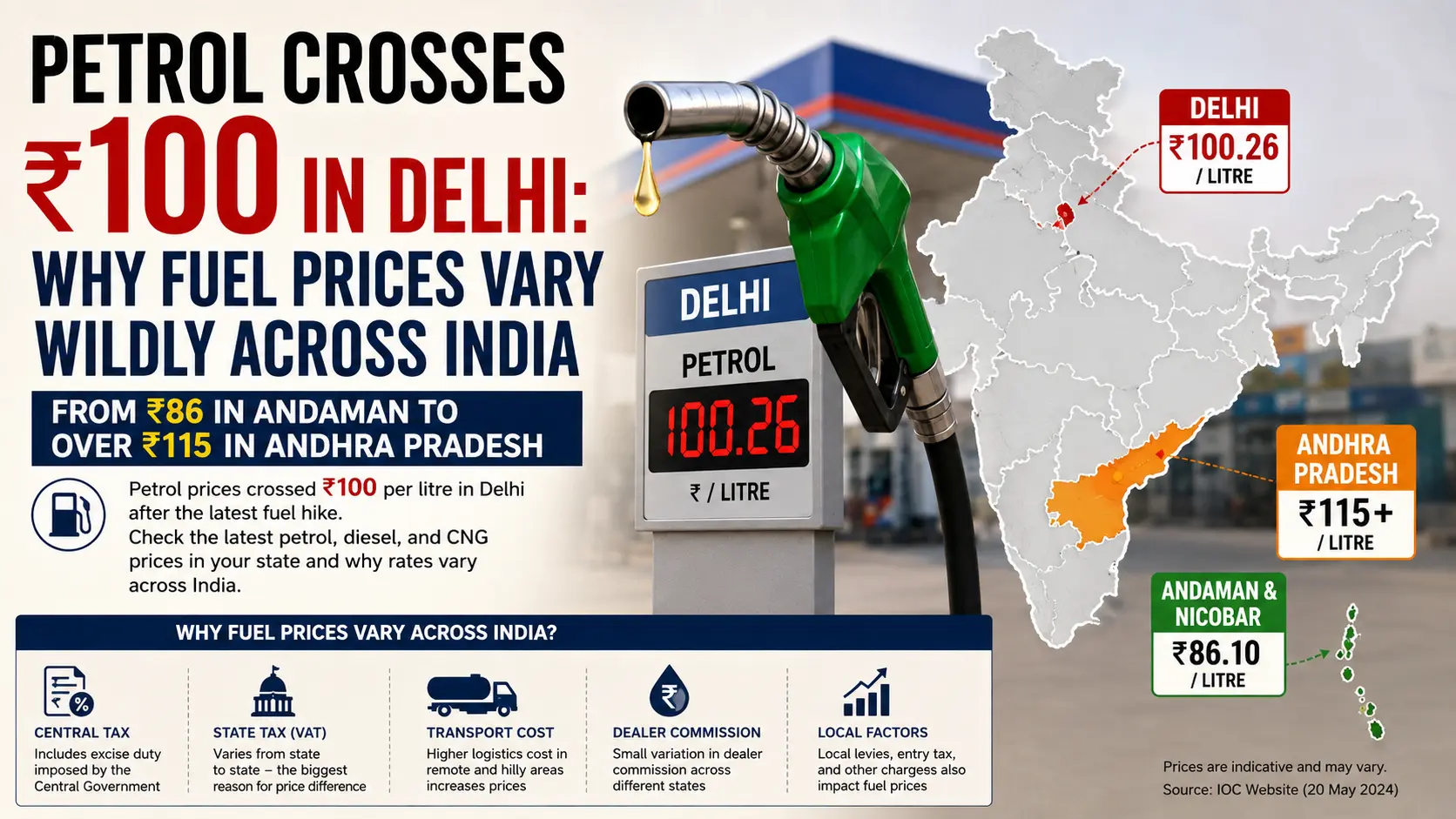
Petrol prices crossed ₹100 per litre in Delhi after the latest fuel hike. Check the latest petrol, diesel, and CNG prices in your state and why rates vary across India
New Delhi: Petrol prices in Delhi crossed the ₹100 mark for the first time in the latest fuel hike cycle, reaching ₹102.12 per litre after a fresh increase of ₹2.61, while diesel prices climbed to ₹95.20 per litre. The latest revision marked the fourth increase in just 11 days, taking the cumulative rise in fuel prices to nearly ₹7.50 per litre since mid-May. A sharp rise in global crude oil prices, triggered by tensions in West Asia, drove the increase.
The development in the national capital drew nationwide attention and highlighted not only the overall rise in fuel prices but also the sharp regional differences in fuel costs across India.
What Determines Fuel Prices in India?
Oil marketing companies — Indian Oil, Bharat Petroleum, and Hindustan Petroleum — revise fuel prices daily under the pricing mechanism introduced in 2017. The pricing structure includes:
• Base cost of imported crude oil, with India importing nearly 85% of its requirement.
• Refining costs, transportation expenses, and dealer margins.
• Central excise duties, which remain uniform across the country.
• State-specific VAT and sales taxes, which create the biggest differences in fuel prices.
Petrol and diesel do not fall under the Goods and Services Tax (GST) regime, allowing states to impose their own VAT rates. These rates range from low single digits in some Union Territories to over 30% in other states. The federal taxation structure, combined with logistics expenses, creates India’s uneven fuel pricing system.
State-Wise Fuel Prices Snapshot (As of May 25, 2026)
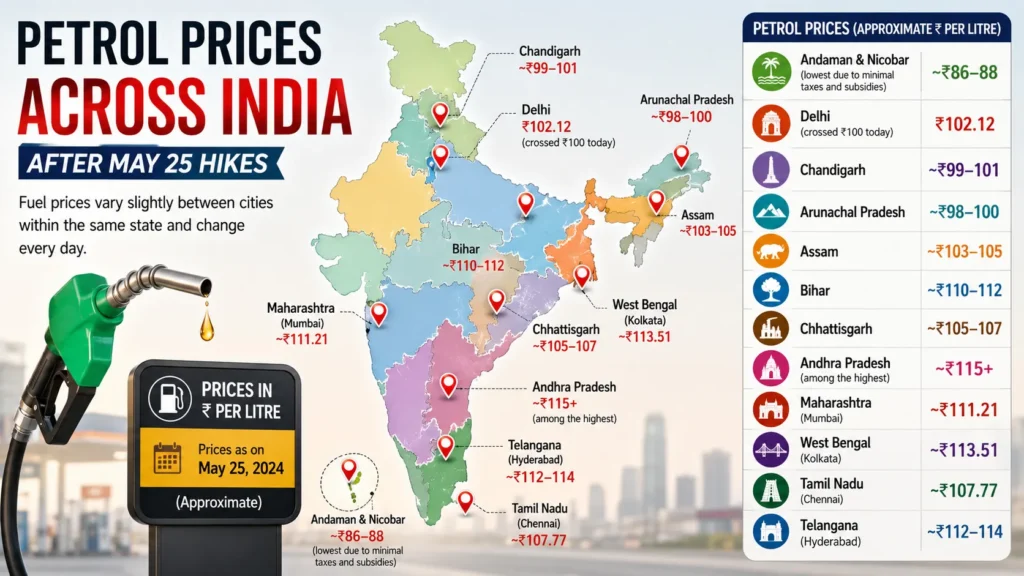
Fuel prices vary slightly between cities within the same state and change every day. Here is the latest overview after the May 25 hikes:
Petrol Prices (Approximate ₹ Per Litre)
• Andaman & Nicobar: ~₹86–88 (lowest due to minimal taxes and subsidies)
• Delhi: ₹102.12 (crossed ₹100 today)
• Chandigarh: ~₹99–101
• Arunachal Pradesh: ~₹98–100
• Assam: ~₹103–105
• Bihar: ~₹110–112
• Chhattisgarh: ~₹105–107
• Andhra Pradesh: ~₹115+ (among the highest)
• Maharashtra (Mumbai): ~₹111.21
• West Bengal (Kolkata): ~₹113.51
• Tamil Nadu (Chennai): ~₹107.77
• Telangana (Hyderabad): ~₹112–114
Southern and eastern states generally record higher fuel prices because they impose higher VAT rates and face higher transportation costs from refineries. Northern states and certain Union Territories benefit from lower taxes or closer proximity to supply points.
Diesel Prices (Approximate ₹ Per Litre)
Diesel prices usually remain ₹7–15 lower than petrol prices.
• Delhi: ₹95.20
• Mumbai: ~₹97.83
• Kolkata: ~₹99.82
• Chennai: ~₹99.55
CNG Prices (Approximate ₹ Per Kg in Major Cities)
• Delhi: ₹81.09 (recently increased by ₹2)
• Mumbai: ~₹84–85
• Gujarat: ~₹80–82
• Andhra Pradesh: ~₹91–92
• Hyderabad: ~₹97–98
• Kolkata: ~₹93–94
CNG continues to remain cheaper than petrol in most cities, and authorities continue promoting it as a cleaner transport fuel. However, recent hikes also pushed up CNG prices.
Why Do Fuel Prices Vary So Much? State Taxes and Logistics Play a Major Role
State VAT policies remain the biggest reason behind the huge price variations. High-tax states such as Andhra Pradesh, Maharashtra, and West Bengal impose substantial levies that push retail prices significantly higher. Low-tax regions such as Andaman & Nicobar benefit from special concessions that keep prices comparatively lower.
Logistics costs also widen the gap. States located far from refineries, including many northeastern states and island territories, face higher freight expenses, although some regions receive central support. While the Centre keeps excise duties uniform, states continue adding their own taxes to generate revenue. Over the years, the Centre has periodically adjusted excise duties, but states have retained autonomy over VAT structures.
Historical Timeline: From Price Freeze to Rapid Hikes
After a long period of price stability, oil companies began the May 2026 hike cycle on May 15 by increasing fuel prices by up to ₹3.29 per litre. Further revisions followed on May 19, May 23, and May 25. This became the first major nationwide fuel price increase in nearly four years. Oil companies stated that they had absorbed losses caused by soaring global crude oil prices, with Brent crude crossing $110–120 per barrel.
India witnessed similar volatility during 2021–22 before fuel prices entered a prolonged freeze period. The latest hikes have once again revived discussions on bringing petrol and diesel under GST to create more uniform pricing across the country.
Real Impact on Citizens and the Economy
The crossing of the ₹100 mark in Delhi has directly affected daily commuters, auto-rickshaw drivers, transport operators, and households. Residents in states where petrol prices already exceed ₹110 face an even heavier burden. Rising fuel prices have also increased operational costs for trucking and logistics companies, which may eventually push up the prices of goods and contribute to inflation.
Meanwhile, more consumers in cities like Delhi have shifted toward CNG vehicles because they still offer relative savings despite recent price hikes.
The Road Ahead: Growing Calls for Reform
The May 2026 fuel price surge has intensified demands for greater pricing uniformity and reduced dependence on imported crude oil. While global crude prices continue to influence overall fuel costs, state tax policies determine how heavily consumers in different regions feel the impact.
Consumers should regularly check daily fuel rates through official oil marketing company apps or government portals such as PPAC for the most accurate local prices.
The latest fuel price crisis once again shows how deeply global energy markets and India’s federal tax structure affect everyday citizens — with the burden varying sharply depending on where people live.
Read More: Why Petrol and Diesel Prices Jumped ₹3 in a Single Day — And Is the Worst Still to Come?

Mansi Sharma is a journalist covering Global Affairs, and wellness, known for turning complex ideas into sharp, engaging narratives. Her work is driven by curiosity, depth, and a constant urge to question and explore. When she’s not writing, you’ll often find her diving into new ideas—preferably with a cup of coffee in hand, one sip at a time.