
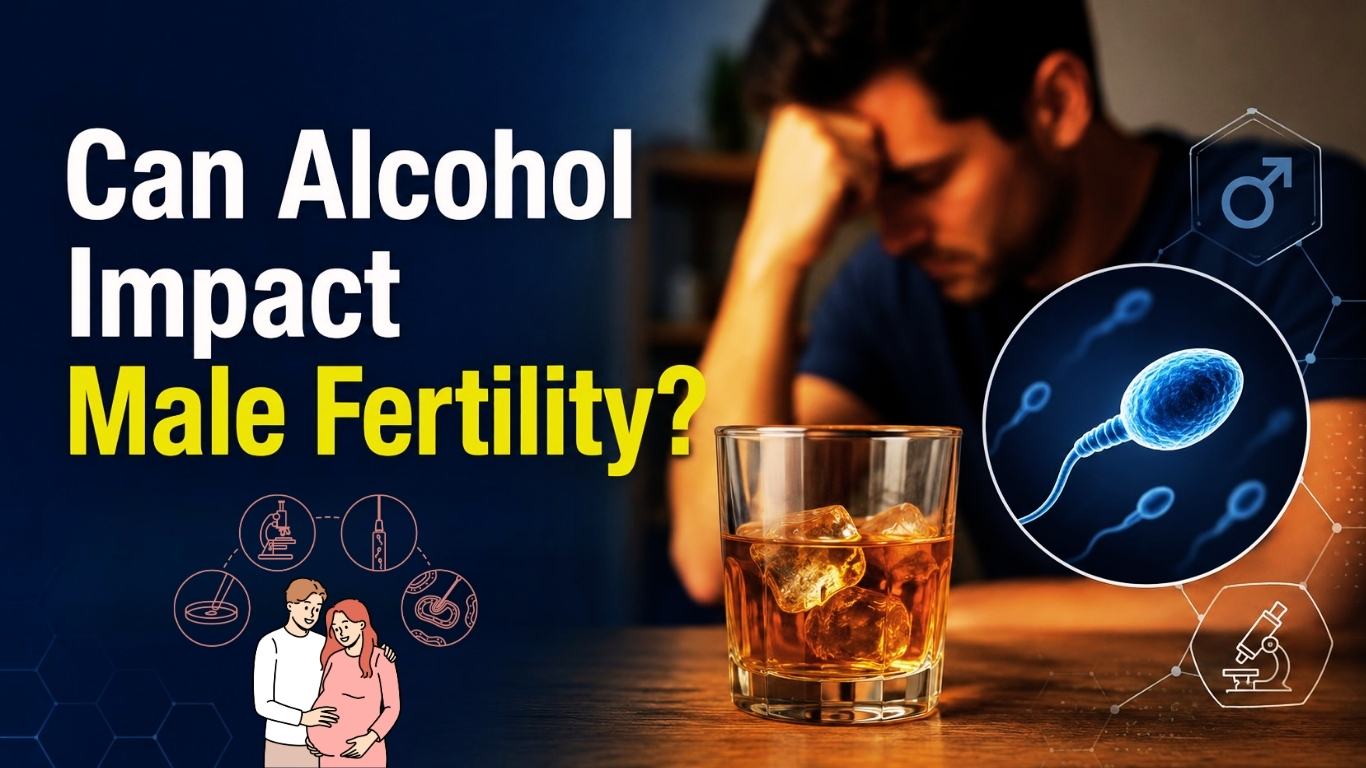
“Paternal health matters,” says Dr. Michael Golding of Texas A&M University—yet male fertility risks often go unnoticed
New Delhi: Every year, millions of couples visit fertility doctors to understand why they are unable to conceive. In most cases, the discussion quickly shifts to the woman—her hormones, her eggs, and her age. The man, who may regularly drink alcohol to manage stress, rarely considers himself part of the problem.
Science is now steadily changing that perception.
Researchers across universities and medical journals are focusing on one of the most common social habits among men: drinking alcohol. Their findings show that not only heavy drinking but even regular, seemingly normal drinking habits can negatively affect a man’s ability to father a child. More importantly, the damage does not disappear immediately after a man stops drinking. It stays in the body longer than previously believed.
This warning does not apply only to men who consume large amounts of alcohol daily. It also applies to men who drink moderately—those who have a few beers on weekends or a couple of glasses of wine and believe their habits are harmless.
The Scale of the Problem Nobody Talks About
To understand the impact of alcohol, it is important to first recognise the scale of male infertility.
The World Health Organisation states that around 17.5% of adults worldwide—approximately one in six people—experience infertility at some point in their lives. This represents a significant global health issue.
Despite this, many people still consider infertility primarily a woman’s problem. However, data shows otherwise. Male-related factors contribute to nearly 50% of infertility cases worldwide.
A Global Burden of Disease study reported that the prevalence of male infertility increased by 76.9% between 1990 and 2019. These numbers have risen significantly over decades, yet public awareness has not kept pace.
Alcohol adds to this already serious issue. Because drinking is socially accepted and widespread, many men do not even mention it when discussing their lifestyle with doctors.
What Actually Happens Inside the Body
To understand how alcohol affects fertility, it is important to understand how sperm develops.
The body produces sperm continuously through a process that takes about 60 days. This process depends on a delicate balance of hormones, enzymes, and cellular functions. Alcohol disrupts this balance at multiple levels.
The Hormone Problem
Long-term alcohol consumption disrupts reproductive hormones. It lowers testosterone levels, which reduces sperm count, sperm quality, sperm movement, and can also cause sexual dysfunction.
At the same time, alcohol increases levels of estradiol, a form of estrogen. Although men naturally produce small amounts of estrogen, excessive levels disturb the hormonal balance required for sperm production.
Studies show that heavy drinkers often have higher levels of follicle-stimulating hormone (FSH) and luteinizing hormone (LH), along with significantly lower testosterone. FSH and LH normally regulate sperm and testosterone production. When alcohol disrupts this system, the body receives incorrect signals, leading to poor sperm production.
A 2015 study found that chronic alcohol consumption can reduce testosterone levels by more than 80%, significantly affecting fertility.
The Oxidative Stress Problem
Alcohol also harms sperm through oxidative stress.
It produces reactive oxygen species in the body, which damage the tissues of the testes. When these harmful molecules accumulate, they begin to damage sperm DNA.
This damage is particularly serious because it affects not just fertilisation but also what happens afterward. Even if sperm with damaged DNA fertilises an egg, it increases the risk of miscarriage, failed IVF cycles, and developmental problems in children.
The Sperm Quality Problem
A large meta-analysis published in May 2023 reviewed 40 studies involving 23,258 individuals across five continents. It found that alcohol consumption reduces semen volume and lowers antioxidant levels in semen.
A 2021 study further showed that chronic alcohol use damages sperm DNA, reduces sperm concentration and motility, lowers testosterone levels, and increases oxidative stress—all of which contribute to fertility problems.
Higher alcohol consumption was also strongly linked to lower sperm count.
How Much Is Too Much?
This is one of the most important questions for most men.
A 2017 meta-analysis of 17 studies found that occasional alcohol consumption does not significantly affect male fertility. However, a 2023 meta-analysis found that men who consume more than seven units of alcohol per week experience reduced semen volume and antioxidant levels.
Men who consume less than seven units per week—classified as moderate drinkers—showed no significant measurable changes in sperm parameters.
Seven units per week is roughly equal to three and a half pints of regular beer or three and a half glasses of wine. Many men exceed this limit without realising it.
The research suggests a threshold: below seven units per week, measurable harm is limited; above that level, damage becomes evident, and with heavy drinking, the impact becomes severe.
The Part No One Warned Fathers About
For many years, medical discussions around pregnancy and fertility focused almost entirely on women. Conditions like fetal alcohol syndrome were considered the result of maternal alcohol consumption, and fathers were rarely included in the conversation.
This understanding has changed.
Research from Texas A&M University shows that alcohol consumption by fathers before conception can negatively affect fetal development. Studies have linked paternal drinking to problems in placenta development, brain and facial abnormalities associated with fetal alcohol syndrome, and reduced IVF success rates.
In December 2023, Dr. Michael Golding and his research team published findings that significantly changed scientific understanding of recovery timelines.
Their research showed that alcohol’s effects on sperm last much longer than previously believed—longer than one month.
Dr. Golding explained that when a person stops drinking, the body goes through a withdrawal process during which it learns to function without alcohol. During this period, sperm remains negatively affected.
He stated, “A father’s sperm are still negatively impacted by drinking even during the withdrawal process, meaning it takes much longer than we previously thought for the sperm to return to normal.”
Based on this, Dr. Golding recommends that men stop drinking for at least three months before trying to conceive.
He explained this timeline clearly: sperm takes about 60 days to form, and the withdrawal process takes at least one month. Together, this leads to a recommended waiting period of at least three months.
This means men should plan well in advance, rather than stopping just a few days or weeks before trying to conceive.
“The big takeaway from my research is that paternal health matters,” Dr. Golding emphasised.
The IVF Angle: It Affects More Than Just Natural Conception
Many couples turn to IVF when they face difficulty conceiving naturally. Some believe IVF can overcome lifestyle-related fertility issues. However, research shows that male alcohol consumption can still affect outcomes.
One study found that for men, each additional alcoholic drink per day increased the risk of not achieving a live birth by 2.28 to 8.32 times, depending on timing.
Researchers believe this may be due to a higher risk of miscarriage when men consume alcohol in the period leading up to and during IVF treatment.
This means that even during IVF—when women undergo intensive medical procedures—the male partner’s alcohol consumption can significantly reduce the chances of success.
The Long Shadow: Even After Quitting, the Damage Stays
Stopping alcohol consumption does not immediately reverse all effects.
A 2023 study found that 15% of former heavy drinkers still had high levels of reactive oxygen species in their semen even after one year without alcohol. This indicates that some damage can persist long-term.
The recovery process generally follows a timeline. In the first few weeks after quitting, liver function improves and semen volume begins to recover. Over the next few months, sperm concentration increases, abnormal sperm forms decrease, and motility improves.
By three months, most men recover around 90% of normal sperm function. However, for long-term heavy drinkers, some damage—especially at the DNA level—may not fully reverse.
What the Doctors Say Men Should Do
Medical experts broadly agree on clear guidelines based on current research.
Men who plan to have a child should stop drinking alcohol at least three months before trying to conceive. This recommendation reflects the time required for sperm production and recovery, as well as the impact of alcohol on sperm DNA.
Men undergoing fertility treatments such as IVF should completely avoid alcohol during the process, as research shows it can negatively affect success rates and increase the risk of miscarriage.
For men who are not yet trying to conceive, understanding the seven-unit-per-week threshold can help manage risk. Consumption below this level appears to carry limited measurable risk, while higher intake leads to clear negative effects.
A Conversation Long Overdue
This research highlights a long-standing imbalance in how society views fertility.
For decades, women have carried the responsibility for maintaining health before and during pregnancy. They receive detailed guidance on diet, supplements, and lifestyle changes.
Men, however, have largely remained outside this conversation.
Scientists now understand that sperm carries biological signals influenced by a father’s lifestyle. Alcohol creates oxidative stress in the body, which affects sperm and can increase the risk of chronic health conditions in children.
This is not about assigning blame. It is about recognising biological reality and updating medical advice accordingly.
Everyday habits—drinking after work, social drinking on weekends, or regular alcohol consumption—may seem unrelated to fatherhood. However, for men planning to have children, these choices have direct consequences.
Note: All research cited in this article is sourced from peer-reviewed journals and institutional publications including work published in Andrology, Heliyon, Basic and Clinical Andrology, and findings from Texas A&M University, the World Health Organisation, and the Global Burden of Disease Study.
Also Read: What Happens When a Country Believes the Myths? Japan’s HPV Vaccine Story Should Worry Us All

Mansi Sharma is a journalist covering Global Affairs, and wellness, known for turning complex ideas into sharp, engaging narratives. Her work is driven by curiosity, depth, and a constant urge to question and explore. When she’s not writing, you’ll often find her diving into new ideas—preferably with a cup of coffee in hand, one sip at a time.