
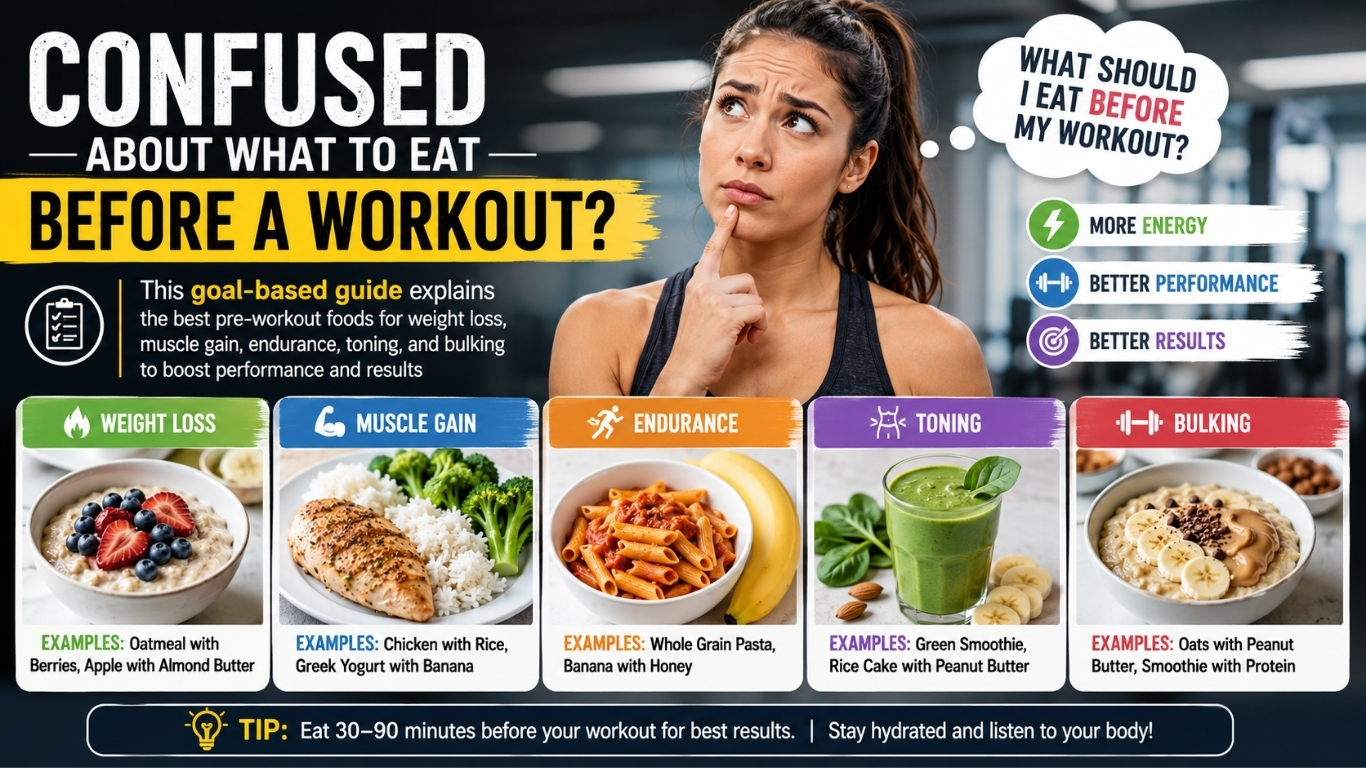
Confused about what to eat before a workout? This goal-based guide explains the best pre-workout foods for weight loss, muscle gain, endurance, toning, and bulking to boost performance and results
New Delhi: You tie your shoes, grab whatever food is available—maybe a banana or sometimes nothing—and head to the gym thinking that effort is all that matters. But experts in nutrition and exercise have been saying something important for years: what you eat before your workout decides how your body performs. It does not just help a little—it affects everything.
Pre-workout nutrition is not just a trend or marketing term. Your body needs the right fuel before exercise to perform well. Still, most people either eat the wrong food, eat at the wrong time, or ignore their fitness goal completely. Someone trying to lose weight and someone trying to build muscle should not eat the same thing. Science makes this clear, but people still get it wrong.
Here is a complete, goal-by-goal guide to what you should eat before your workout.
The Fasting Myth That Hurts Your Performance
Many people still go to the gym on an empty stomach because they believe it helps burn more fat. Research does not support this idea. When you work out without eating, your energy drops quickly, your workout becomes weaker, and your body starts breaking down muscle for energy.
This leads to shorter workouts and a slower metabolism over time. You actually burn fewer calories, not more.
Experts suggest a balanced approach. Eat enough to fuel your workout but not so much that you feel heavy. Timing also matters. Eat a full meal 2–3 hours before exercise. If you do not have time, eat a light snack 30–60 minutes before.
Goal 1: Weight Loss — Burn More Calories Effectively
People trying to lose weight often make two mistakes: they eat too much or they eat nothing before a workout. Your goal should be to fuel your body enough for a longer, stronger session without adding extra calories.
Eat low-glycaemic carbohydrates with lean protein. This combination keeps your blood sugar steady, prevents energy crashes, and protects your muscles.
What you can eat:
• Oatmeal with berries
• Banana with a little peanut butter
• Two boiled egg whites with whole-wheat toast
• Low-fat Greek yogurt with muesli
• Yogurt with fruit for a lighter option
What to avoid:
• High-fat foods
• Heavy meals
Fat digests slowly and can make you feel sluggish.
You can also drink green tea or black coffee 30 minutes before your workout. Caffeine helps your body burn fat by increasing metabolism.
Goal 2: Muscle Building — Fuel Before You Train
Building muscle requires two steps: stress the muscle during exercise and rebuild it stronger afterward. Pre-workout food helps you perform better and reduces muscle breakdown.
Eating protein before training improves performance and protects muscle. You should eat 15–25 grams of protein along with complex carbohydrates.
What you can eat:
• Two eggs with whole-grain toast
• Grilled chicken with brown rice
• Greek yogurt with granola
• Protein shake with oats and banana
• Sprouts or chana chaat (for vegetarians)
What to avoid:
• Training on an empty stomach
Your body needs protein before exercise, not just after.
Timing:
Eat a full meal 2–3 hours before. If you are short on time, eat a light protein snack 30–45 minutes before.
Goal 3: Weight Gain (Bulking) — Eat Smart, Not Just More
To gain muscle, you need to eat more calories than you burn. But eating anything is not enough. You need high-quality, nutrient-rich food.
Carbohydrates are essential because your body uses them for energy during heavy workouts.
What you can eat:
• Oats with milk and nut butter
• Brown rice with chicken or lean meat
• Mass gainer shake
• Whole milk
• Nuts and nut butter
Nuts are especially useful because they provide healthy fats, calories, and nutrients.
What to avoid:
• Junk food and processed food
These may add calories but do not help your body recover or build muscle properly.
Goal 4: Toning and Shaping the Body
Toning requires losing fat and building muscle at the same time. This needs balanced nutrition.
You need:
• Enough carbs for energy
• Enough protein for muscle
• Calories close to maintenance
What you can eat:
• Egg sandwich with whole-wheat bread
• Yogurt with muesli
• Banana with yogurt
• Oatmeal with seeds
• Protein smoothies
Key idea:
Consistency matters most. Your body needs the right nutrients every day to lose fat and build muscle together.
Goal 5: Endurance and Stamina — Focus on Carbohydrates
For activities like running, cycling, or swimming, your body needs glycogen (stored energy). Carbohydrates help fill these energy stores.
If glycogen runs out, your performance drops suddenly.
What you can eat:
• Oatmeal with banana
• Brown rice or whole-grain pasta
• Energy bar or banana before workout
• Toast with peanut butter and honey
For long workouts, include electrolytes:
• Coconut water
• Banana (rich in potassium)
What to avoid:
• High-fat or heavy meals before exercise
These slow digestion and may cause discomfort.
Rules That Apply to Everyone
- Stay hydrated
Drink enough water before, during, and after your workout. Dehydration reduces performance.
- Eat at the right time
Eat a full meal 2–3 hours before exercise. Avoid heavy meals right before your workout.
- Do not depend only on supplements
Supplements can help, but they are not the foundation. Proper food, sleep, and hydration matter more.
Your Food Guides Your Results
Food is not just about taste or habit. Before a workout, it acts like instructions for your body.
If you eat the wrong food, your body performs poorly. If you eat nothing, your body struggles even more.
Each fitness goal needs a different approach. Fat loss, muscle gain, endurance, and toning all require different nutrition.
The gym is where you put in effort. The kitchen is where you create results.
Disclaimer: This article is for informational purposes only. Consult a qualified nutritionist or dietitian for personal advice.
