
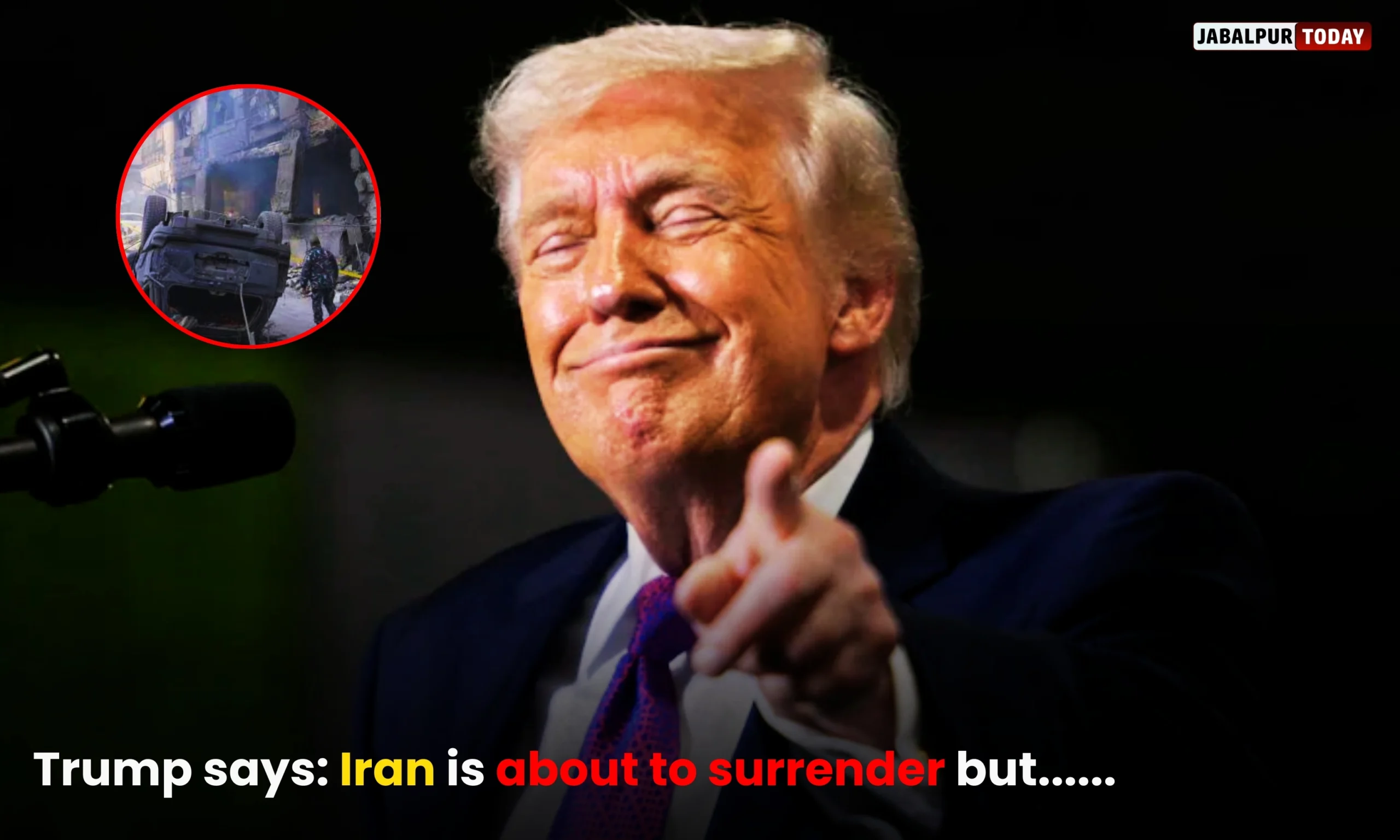
Donald Trump told Group of Seven leaders that Iran was close to surrendering in the war, but hours later a Boeing KC-135 Stratotanker crashed in Iraq, killing four US crew members.
Washington/ Iraq: On March 12, 2026, US President Donald Trump told leaders of the Group of Seven during a virtual meeting that Iran was “about to surrender” in the ongoing US-Israeli military campaign known as Operation Epic Fury.
However, only hours later, American forces faced a serious setback when a Boeing KC-135 Stratotanker crashed in western Iraq, killing four crew members.
Trump’s Confident Message to G7 Leaders
During the Wednesday virtual call with Group of Seven leaders, President Donald Trump expressed strong confidence about the direction of the war.
According to three officials from G7 countries who were briefed on the discussion and later cited by Axios, Trump told the leaders that Iran was “about to surrender.”
He reportedly praised the results of the military operation and said he had “got rid of a cancer that was threatening us all.”
Donald Trump also suggested that the conflict had badly disrupted Iran’s leadership system. He reportedly told the leaders that “nobody knows who is the leader, so there is no one that can announce surrender.”
The White House did not comment on the details of the conversation.
Leaders from the G7 countries asked Trump to end the conflict quickly and highlighted the importance of protecting the Strait of Hormuz, which Iran has repeatedly threatened to block.
Trump said the situation there was improving and encouraged commercial ships to start moving again, even as reports appeared that tankers had been attacked near Iraq’s coast.
Iran’s New Leader Rejects Surrender
Trump’s claim that Iran was close to surrendering sharply contrasted with Iran’s own statements.
Iran’s new supreme leader, Mojtaba Khamenei, gave his first public remarks around the same time. In his statement, he promised continued resistance against the United States and Israel.
He also spoke about taking revenge for fallen “martyrs,” opening new fronts in the conflict, and continuing threats against the Strait of Hormuz.
Iran has not announced any surrender, and its leadership has publicly said it will continue fighting as the war moves into its third week.
KC-135 Crash in Iraq Kills Four US Crew Members
On the same day as the G7 call, the US military confirmed a deadly aviation accident in Iraq.
A Boeing KC-135 Stratotanker, used for mid-air refueling of combat aircraft, crashed in western Iraq while supporting Operation Epic Fury.
The United States Central Command (CENTCOM) said the incident involved two KC-135 aircraft. One aircraft crashed, while the second landed safely.
According to CENTCOM, the crash happened in “friendly airspace” and was not caused by enemy fire or friendly fire. Officials have started an investigation to find the cause.
The aircraft carried six crew members. Authorities have confirmed four deaths, while rescue teams continued searching for the remaining two crew members in the latest updates.
Fourth US Aircraft Loss in the Conflict
This crash became the fourth publicly reported loss of a US aircraft during the conflict.
Last week, **Kuwait’s forces accidentally shot down three Boeing F-15E Strike Eagle fighter jets in a friendly fire incident.
The Boeing KC-135 Stratotanker, which is based on the Boeing 707 design, has served in the US Air Force for decades. It plays a critical role by refueling fighter jets and other military aircraft in the air, which makes its loss operationally important.
Wider Impact of the War
Operation Epic Fury, the joint US-Israeli campaign against Iran, began in late February 2026 and has involved intense airstrikes and other military actions.
The conflict has increased tensions across the Middle East and pushed global oil prices above $100 per barrel, mainly because of threats to shipping through the Strait of Hormuz.
While President Donald Trump has repeatedly projected confidence — even previously demanding “unconditional surrender” from Iran — the situation on the ground shows growing US losses and no clear sign that Iran is preparing to surrender.
As rescue operations continue in Iraq and diplomatic tensions remain high, the contrast between Trump’s confident message to the G7 leaders and the deadly aircraft crash highlights how unpredictable and costly the ongoing war has become.
