
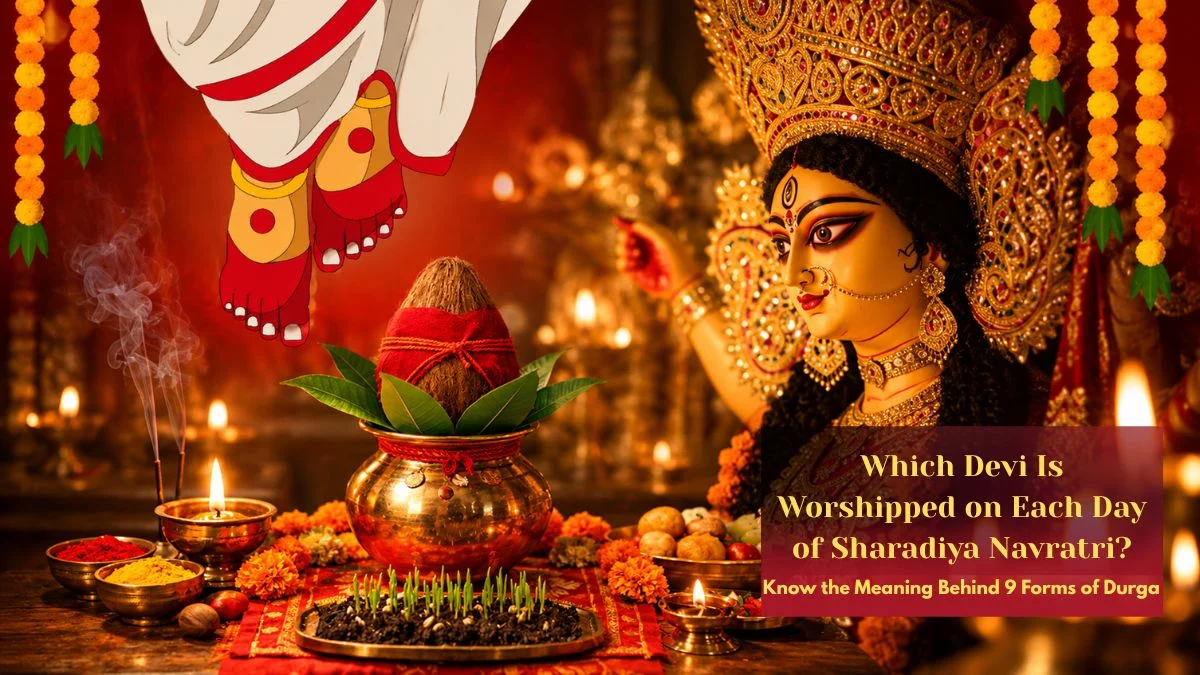
Sharadiya Navratri 2026 celebrates the 9 forms of Durga. Know their mythology, symbols, iconography and significance across the nine sacred days
New Delhi: Navratri is not only a festival of fasting, prayers and celebrations. Across its nine sacred nights, devotees worship Maa Durga in nine distinct forms, with each one carrying a different story and spiritual message. From Shailputri’s grounded strength to Siddhidatri’s promise of spiritual fulfilment, the Navadurga tradition takes devotees through a journey of courage, discipline, protection and inner growth. As Sharad Navratri 2026 begins on October 11, here is a simple guide to the nine forms of Maa Durga, their mythology, symbolism and significance.
Navadurga at a glance
| Day | Devi | Meaning of the Name | What She Represents |
|---|---|---|---|
| Day 1 | Maa Shailputri | Daughter of the Mountain | Strength, stability |
| Day 2 | Maa Brahmacharini | The one who practises penance | Discipline, perseverance |
| Day 3 | Maa Chandraghanta | She who wears a bell-shaped moon | Courage, fearlessness |
| Day 4 | Maa Kushmanda | The Goddess linked with the cosmic egg and creative energy | Creation, life force |
| Day 5 | Maa Skandamata | Mother of Skanda, or Kartikeya | Motherhood, nurturing strength |
| Day 6 | Maa Katyayani | Daughter of Sage Katyayana | Warrior power, righteous action |
| Day 7 | Maa Kalaratri | The dark night or destroyer of time | Fearlessness, destruction of negativity |
| Day 8 | Maa Mahagauri | The greatly radiant one | Purity, peace, forgiveness |
| Day 9 | Maa Siddhidatri | Bestower of siddhis | Wisdom, fulfilment, spiritual completeness |
Day 1: Maa Shailputri
Who is she?
Maa Shailputri opens the Navadurga sequence. Her name means “daughter of the mountain,” because tradition identifies her as the daughter of Himavan, the personified Himalayan mountain king.
Her mythology
Hindu tradition connects Shailputri with the rebirth of Sati as Parvati. After Sati’s death, the Goddess took birth in the house of Himavan and began a new chapter of her divine story. Devotees therefore see Shailputri as a form that combines divine power with the strength and stability of the mountains.
What she represents
Shailputri represents steadiness, inner strength and a firm beginning. Her position on the first day reminds devotees to build spiritual growth on a strong foundation.
Her iconography
She traditionally rides Nandi, the bull, and carries a trident in one hand and a lotus in the other. Her calm appearance balances the power of the trident with the purity associated with the lotus.
Why devotees worship her
Devotees seek her blessings for stability, courage and a strong beginning. Many people also connect her worship with staying grounded while beginning the nine-day spiritual journey.
One interesting fact
Shailputri carries an important link between two major names of the Goddess: Sati and Parvati. Her story therefore presents rebirth not simply as an ending, but as the beginning of another divine chapter.
Day 2: Maa Brahmacharini
Who is she?
Maa Brahmacharini represents the second stage of Navadurga. She appears as the Goddess in an ascetic form and embodies patience, devotion and determination.
Her mythology
Tradition says that Parvati undertook severe penance to win Lord Shiva as her husband. She continued her austerities despite difficult conditions and remained focused on her goal. This story gives Brahmacharini her association with tapas, or disciplined spiritual effort.
What she represents
She represents discipline, patience, devotion and perseverance. Her story encourages devotees to remain committed even when the desired result takes time.
Her iconography
Brahmacharini usually walks barefoot and carries a japa mala in one hand and a kamandalu, or water pot, in the other. Her simple appearance reflects her life of austerity.
Why devotees worship her
Devotees turn to Brahmacharini for determination and inner strength. Her worship reminds people that patience and consistent effort can become forms of spiritual power.
One interesting fact
Her name combines “Brahma”, which can refer to the pursuit of higher truth or spiritual knowledge, with “charini,” meaning one who follows or practises.
Day 3: Maa Chandraghanta
Who is she?
Maa Chandraghanta forms the third stage of Navadurga. She presents the Goddess as a powerful warrior while retaining grace and composure.
Her mythology
Tradition connects this form with Parvati after her marriage to Lord Shiva. She wears a crescent moon on her forehead, and devotees associate the moon’s bell-like shape with the name Chandraghanta.
What she represents
Chandraghanta represents courage, confidence and fearlessness. Her form shows that spiritual strength can also take a protective and warrior-like shape.
Her iconography
Artists commonly portray her with a golden complexion and ten arms, riding a tiger or lion. Her hands carry different weapons and sacred objects, showing her readiness to confront evil.
Why devotees worship her
Devotees seek her blessings to overcome fear and obstacles. Her worship also inspires people to face difficult situations with courage rather than hesitation.
One interesting fact
The name Chandraghanta directly describes her most recognisable symbol: the crescent moon on her forehead resembles a bell, or ghanta.
Day 4: Maa Kushmanda
Who is she?
Maa Kushmanda appears on the fourth day and represents the creative energy that sustains life and the universe.
Her mythology
A popular tradition says Kushmanda brought light into the cosmic darkness through her radiant smile. Her name often receives a symbolic explanation through “ku,” “ushma” and “anda,” linking the idea of a small source of warmth or energy with the cosmic egg.
What she represents
She represents creative power, energy, warmth and the life force behind creation. Her story reminds devotees of the power that can emerge from even the smallest spark of energy.
Her iconography
Kushmanda often appears with eight arms, which gives her the name Ashtabhuja. She carries different weapons and sacred objects, including a rosary, and rides a lion. Some traditions also connect her with the energy of the Sun.
Why devotees worship her
Devotees seek her blessings for vitality, strength and positive energy. Her worship also symbolises the desire to bring light and creativity into everyday life.
One interesting fact
Among the Navadurga, Kushmanda stands out for her close association with cosmic creation and sunlight, rather than primarily focusing on battle or austerity.
Day 5: Maa Skandamata
Who is she?
Maa Skandamata appears on the fifth day as the mother of Skanda, another name for Kartikeya, the warrior son of Shiva and Parvati.
Her mythology
Tradition says that when Parvati became the mother of Skanda, devotees began to worship her in this maternal form. Skanda’s role as a divine warrior adds another layer to her story: the Goddess combines tenderness with the strength needed to protect her child.
What she represents
She represents motherly love, protection and nurturing strength. Her form shows that compassion and power can exist together.
Her iconography
Skandamata generally sits on a lion while holding infant Skanda on her lap. Artists commonly depict her with four arms, with lotus flowers appearing among the objects she carries.
Why devotees worship her
Parents and families especially seek her blessings for the wellbeing and protection of children. Devotees also pray to her for wisdom, compassion and emotional strength.
One interesting fact
Her name literally places Skanda before the mother: “Skandamata” means the mother of Skanda. Her identity therefore centres strongly on motherhood.
Day 6: Maa Katyayani
Who is she?
Maa Katyayani represents the sixth stage of Navadurga and takes the Goddess into her powerful warrior form.
Her mythology
Tradition says that Sage Katyayana performed intense penance and wished for the Goddess to take birth as his daughter. The Goddess fulfilled this wish and became known as Katyayani. Another major tradition connects her with the divine battle against Mahishasura.
What she represents
Katyayani represents righteous strength, courage and action against injustice. Her story presents power as something that serves dharma rather than power for its own sake.
Her iconography
She usually appears with four arms and rides a lion. Her weapons underline her warrior identity and her readiness to confront destructive forces.
Why devotees worship her
Devotees seek courage, confidence and the strength to stand against wrongdoing. Her worship encourages people to act with determination when they face injustice.
One interesting fact
Do not confuse Katyayani’s parentage with Shailputri’s. Shailputri is traditionally linked with Himavan, while Katyayani gets her name from Sage Katyayana.
Day 7: Maa Kalaratri
Who is she?
Maa Kalaratri represents the seventh and fiercest stage of the Navadurga sequence. Her frightening appearance carries a deeper message of protection and the destruction of darkness.
Her mythology
Traditions describe Kalaratri as a fierce manifestation of the Goddess who confronts demonic forces and destroys fear and negativity. Her dark form symbolises the night and the forces that exist beyond ordinary human understanding.
What she represents
She represents fearlessness, destruction of evil and the removal of inner darkness. Although her appearance can seem frightening, devotees also call her Shubhankari, the auspicious one.
Her iconography
Kalaratri traditionally has a dark complexion, dishevelled hair and a fierce expression. She often rides a donkey and carries weapons associated with her protective and destructive power.
Why devotees worship her
Devotees pray to Kalaratri for protection from fear and negativity. Her worship encourages people to confront their deepest fears rather than allow fear to control them.
One interesting fact
Her name combines the ideas of “Kala,” or time, and “Ratri,” or night. The name therefore carries a powerful sense of time, darkness and transformation.
Day 8: Maa Mahagauri
Who is she?
Maa Mahagauri represents the eighth stage and brings a striking change from Kalaratri’s fierce appearance to a calm and radiant form.
Her mythology
According to traditional stories, Parvati performed prolonged penance. After Shiva’s blessing, her form became radiant and exceptionally fair, giving her the name Mahagauri, or “the greatly radiant one.”
What she represents
Mahagauri represents purity, peace, serenity and forgiveness. Her story also carries the idea that spiritual discipline can lead towards clarity and renewal.
Her iconography
She traditionally wears white, rides a bull and carries a peaceful expression. Artists commonly show her with four arms, giving her a gentle and serene appearance.
Why devotees worship her
Devotees seek peace, forgiveness and emotional cleansing from Mahagauri. Many also turn to her during Durga Ashtami, an important observance within Navratri.
One interesting fact
Mahagauri’s imagery creates a deliberate contrast with Kalaratri. The sequence moves from the Goddess’s darkest and fiercest appearance to one associated with brightness, calm and purity.
Day 9: Maa Siddhidatri
Who is she?
Maa Siddhidatri completes the traditional Navadurga sequence. Her name means “the giver of siddhis,” referring to spiritual attainments or extraordinary powers.
Her mythology
One tradition says that Siddhidatri granted siddhis to Lord Shiva. This story also connects her with the image of Ardhanarishvara, in which Shiva and Shakti appear as two complementary halves of one divine form.
What she represents
Siddhidatri represents wisdom, fulfilment, spiritual growth and completeness. She marks the point at which the nine-day journey reaches its spiritual culmination.
Her iconography
Siddhidatri generally sits on a lotus and appears with four arms. Traditional depictions show her holding sacred objects that symbolise divine knowledge and power.
Why devotees worship her
Devotees seek her blessings for wisdom, spiritual progress and a sense of fulfilment. Her worship encourages people to look beyond material achievements towards inner growth.
One interesting fact
The Ardhanarishvara connection gives Siddhidatri a distinctive philosophical meaning. It presents Shiva and Shakti not as competing forces, but as complementary aspects of one divine reality.
The journey of Navadurga
The nine forms of Maa Durga create more than a day-by-day list of deities. Shailputri begins the journey with grounded strength, Brahmacharini adds discipline, Chandraghanta brings courage, and Kushmanda represents creative energy. Skandamata introduces nurturing love, Katyayani brings righteous action, Kalaratri destroys fear, Mahagauri brings peace and Siddhidatri completes the journey with spiritual fulfilment.
As devotees move through Navratri 2026, each form offers a different way to understand Shakti as strength, patience, courage, creation, compassion, protection, transformation, purity and wisdom. Together, the nine forms create a spiritual journey from finding one’s foundation to discovering inner completeness.
Also Read: When are Navratri 2026 and Durga Puja? Find out the complete dates and significance
