
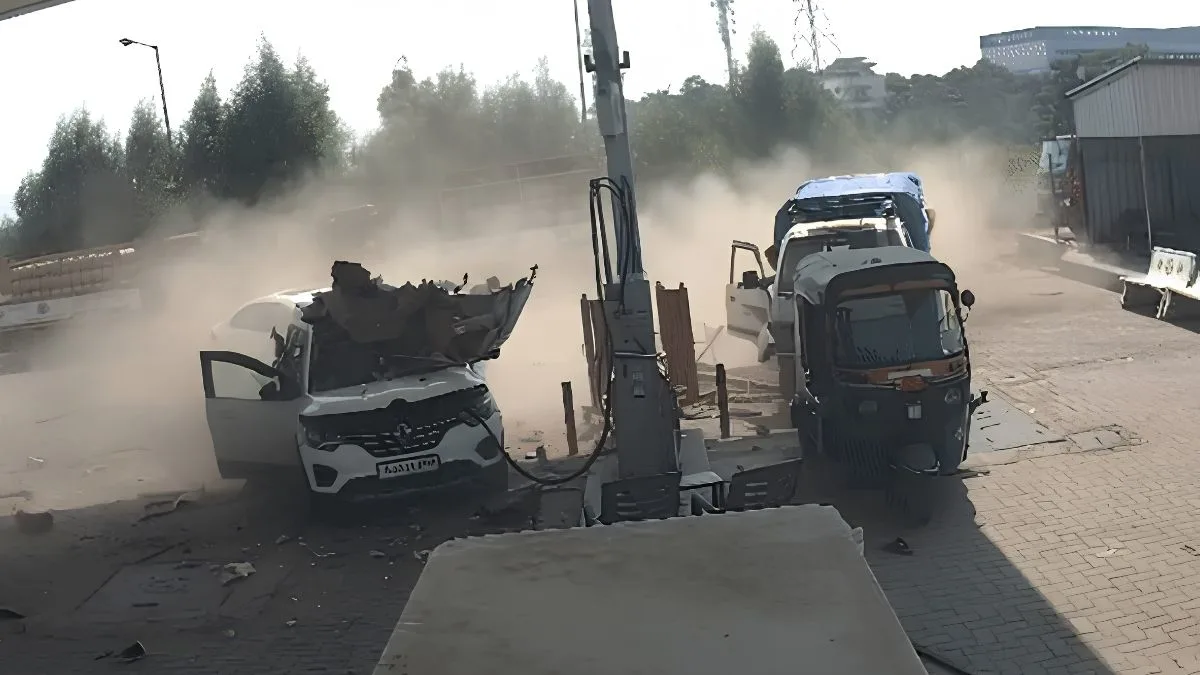
A CNG cylinder exploded during refuelling at a Karjan fuel station on NH-48, severely damaging the car and two nearby vehicles
Gujarat/New Delhi: On October 1, a CNG cylinder inside a passenger car exploded at a fuel station on NH-48 near Karjan in Gujarat’s Vadodara district. The blast severely damaged the car and also affected two other vehicles nearby. There were no reports of fatalities, and most accounts suggest the incident could have been far worse had the occupants not stepped away from the vehicle while it was being refueled. However, reports vary regarding whether or not anyone was injured.
A sudden blast at a Karjan fuel station
The incident took place at a CNG refuelling station on National Highway 48 near Karjan. Local Gujarati reports identified the location as an Indian Oil-linked CNG pump near the Tibia Company landmark, while other reports described it more generally as a CNG station on NH-48.
The car had arrived at the station for CNG refuelling when its onboard cylinder suddenly ruptured. The explosion triggered panic among people at the station and caused significant damage to vehicles around the car.
How the explosion unfolded
According to reports and footage circulating after the incident, the cylinder burst while CNG was being filled into the vehicle. The force split the cylinder into two pieces.
One section reportedly remained near the pump, while another section was thrown into the air before landing some distance away. The sudden release of pressure also severely damaged the vehicle carrying the cylinder.
The force of the blast: what it damaged
The blast caused extensive damage to the car, particularly around its rear and middle sections. Body panels and pieces of glass scattered around the refuelling area.
Two other vehicles parked or waiting nearby also suffered damage. Reports mention shattered windows and damage to their body panels. The incident therefore affected more than just the vehicle whose CNG cylinder ruptured.
Was anyone hurt? Conflicting early reports
The casualty details remain unclear because reports have not given a consistent account.
Most major English-language coverage has indicated that no serious injuries occurred. The reports note that people had stepped out of the car during CNG refuelling, following the standard safety practice at CNG stations. The Times of India report on the incident did not report confirmed casualties in its initial coverage.
However, Gujarati-language coverage, including TV9 Gujarati, reported that one person suffered injuries. Another report circulating online also mentioned an injured person. These accounts have not been uniformly confirmed across all reports, so the exact injury count remains unclear.
What caused it? The investigation so far
Authorities have not established the exact cause of the cylinder failure. Preliminary accounts have pointed towards a possible technical problem or excessive pressure during the refuelling process.
Investigators are expected to examine the cylinder, the vehicle’s CNG system and the refuelling equipment. Possible factors under examination include a defective or damaged cylinder, problems with the vehicle’s CNG installation or excessive pressure during filling. These remain possibilities under investigation and should not be treated as established causes.
Police and fire officials examined the site after the incident.
Panic at the pump: eyewitness scenes
The sudden blast sent people at the station rushing away from the affected vehicle. The explosion happened in an area where vehicles and customers were present, which added to the immediate concern.
Videos and images from the scene showed the damaged car and debris around the refuelling area. The cylinder’s separation into two pieces also indicated the force generated during the rupture.
Fire and police response
The Karjan Fire Department and local police responded after receiving information about the blast. Fire personnel and police teams checked the site and examined the pump area and equipment as a safety precaution.
Officials also assessed the surrounding area before allowing normal activity to resume. The investigation will help determine whether the cylinder, vehicle system or refuelling process contributed to the rupture.
CCTV footage surfaces online
CCTV footage showing the incident has surfaced online and has circulated widely on social media. The footage captures the vehicle at the station before the sudden explosion and shows people moving away from the area immediately afterwards.
Such footage may help investigators establish the sequence of events, although it cannot by itself determine why the cylinder failed.
CNG safety: what drivers should know
CNG users should follow basic precautions every time they refuel. The Petroleum and Natural Gas Regulatory Board advises customers to ensure that nobody remains inside the vehicle during refuelling, to switch off the ignition, avoid smoking and avoid using mobile phones or RFID devices at the CNG station. It also advises drivers to use a valid, hydro-tested CNG cylinder and have the CNG kit and cylinder checked regularly for leaks through an authorised service provider.
The Petroleum and Explosives Safety Organisation has also issued guidance requiring the validity of a CNG cylinder test certificate to be checked before filling CNG.
The safety requirements do not indicate that a cylinder failure occurred because of any particular maintenance issue in this case. Investigators will have to establish that separately.
The exact cause of the Karjan blast remains under investigation. Authorities are also expected to clarify the reported injury and determine whether any technical or maintenance issue contributed to the cylinder rupture.
