
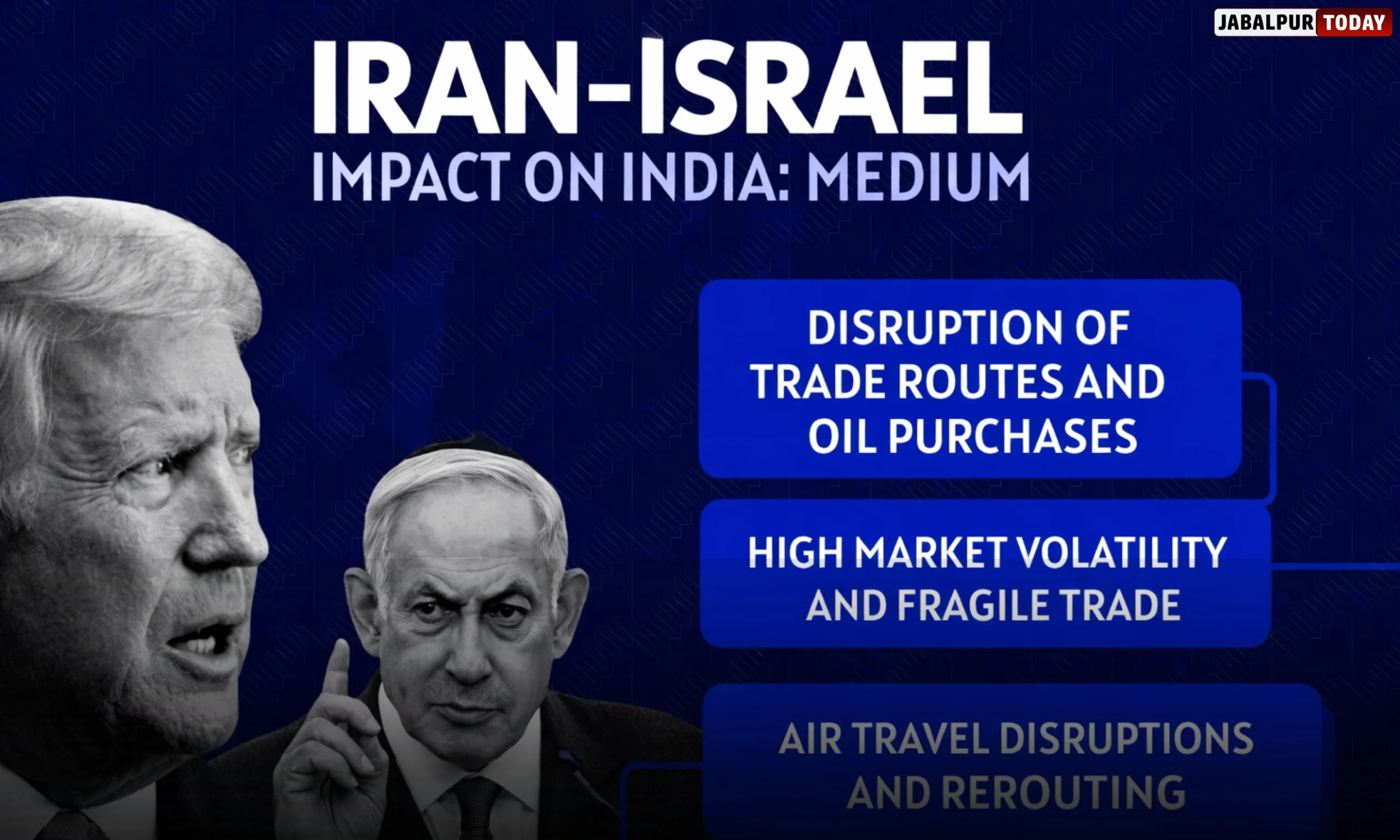
Operation Epic Fury has escalated tensions in the Middle East, disrupting oil supplies and impacting India’s economy, diaspora, and foreign policy. Explore the economic risks, security concerns, and geopolitical shifts shaping India’s response.
New Delhi: As the US and Israel’s “Operation Epic Fury” enters its fourth day on March 3, 2026, the Middle East is facing extreme instability. What started with joint airstrikes on February 28 — which killed Iran’s Supreme Leader, Ayatollah Ali Khamenei — has now grown into a major regional conflict. In response, Iran has launched missile and drone attacks targeting Israel and US military bases in Gulf countries such as Bahrain, Kuwait, Saudi Arabia, the United Arab Emirates, and Qatar. The Strait of Hormuz — a critical route for global oil shipments — has been severely disrupted, causing crude oil prices to rise above $120 per barrel.
Although India has taken a neutral position, the impact of this war is strongly affecting its economy, security, and foreign policy. Nearly 9 million Indians live and work in the Gulf region, and India depends on the Middle East for about half of its oil supply. This situation creates serious risks. This article looks beyond the headlines to examine hidden supply chain weaknesses and long-term geopolitical changes that could reshape India’s future.
Economic Impact: Rising Costs and Trade Disruption
The most immediate effect on India is economic, especially in the energy sector. India imports more than 46% of its crude oil from the Middle East. The Strait of Hormuz, through which about 20% of the world’s oil passes, is now unstable. If the disruption continues, oil shipments could slow or stop completely. Experts warn that if oil prices increase by $10 per barrel for a long period, India’s current account deficit could widen by 0.5% of GDP, leading to higher inflation and pressure on the rupee.
Oil and Gas Shock
Almost half of India’s oil and two-thirds of its liquefied natural gas (LNG) come from this region. With oil prices already up by 9%, fuel prices in India could increase by 20–30%. This would raise transportation costs and make manufacturing more expensive.
Trade Problems
Around 15% of India’s merchandise exports go to Gulf countries, worth billions of dollars. Because ships are being rerouted and insurance costs are rising, exports such as textiles, medicines, and gems could face delays. At the same time, India may face shortages of fertilizers and petrochemicals imported from the region.
Remittances at Risk
Gulf countries send more than one-third of India’s $135 billion annual remittances. This money equals about 3% of India’s GDP and supports millions of families in states like Kerala and Uttar Pradesh. If the situation worsens and evacuations increase, these remittances could decline sharply.
Market Volatility
Stock markets may also suffer. The Nifty50 index could fall due to global uncertainty. Economists estimate that Asia’s GDP growth could decline by 0.2–0.3%, with India being particularly vulnerable.
If the conflict continues for 4–5 weeks as predicted, India may try to increase oil imports from Russia or African nations. However, in the short term, economic difficulties seem unavoidable.
Human Impact: Indians Caught in the Crisis
Beyond economic damage, the war threatens nearly 9 million Indians living in the region. Many are stuck due to airport closures and restricted airspace. Some face direct danger from attacks, such as drone strikes in parts of Dubai.
Evacuation Difficulties
Indian airlines like IndiGo and Air India are operating relief flights from cities like Jeddah and Muscat. However, with airspace restrictions and closed borders, a full evacuation may not be possible unless tensions reduce. Reports of stranded Indian students and workers highlight the urgency.
Humanitarian Concerns
If Iran becomes unstable internally, refugee flows could rise, affecting regional stability. There is also concern about possible security risks if proxy groups become active in nearby areas.
Personal Struggles
Indian workers living in affected areas, including damaged residential buildings in Bahrain or disrupted districts in the UAE, show the human cost of the conflict — a side often overlooked in global political discussions.
India’s Ministry of External Affairs has urged all sides to show restraint, but this crisis is a serious test of India’s ability to manage emergencies abroad.
Geopolitical Changes: A Delicate Balancing Act
This war forces India to carefully balance its relationships. India has strong defense ties with Israel, economic and strategic interests in Iran (including the Chabahar port project), and a strategic partnership with the United States.
Prime Minister Narendra Modi has called for de-escalation, reflecting India’s cautious diplomatic approach.
If Iran’s Regime Changes
If Iran’s leadership collapses, it could strengthen US influence over global oil markets, reducing India’s negotiating power. At the same time, instability similar to Syria’s past crisis could increase security risks across West Asia and South Asia.
IMEC Corridor Challenges
The proposed India–Middle East–Europe Economic Corridor (IMEC) may face delays, forcing India to consider alternative trade routes.
Alliances and Mediation
As a BRICS member alongside Iran, India may attempt diplomatic mediation. Stronger ties with Gulf countries could also create reconstruction opportunities after the war.
This crisis might also push India to invest more in domestic defense production, reducing dependence on imported military technology.
Impact on Key Sectors
The war’s effects are spreading across many Indian industries:
• Aviation: Flights to Europe and the US are being rerouted, increasing travel time and fuel costs. Tourism to the Gulf is declining.
• IT and Services: Indian companies operating in Dubai and other Gulf cities face disruptions. Remote services to Gulf clients may be affected.
• Agriculture: Fertilizer imports could become more expensive, increasing farming costs and affecting crop production.
• Defense and Pharmaceuticals: Defense supplies from Israel may be delayed. Pharmaceutical exports to Gulf nations could face logistical issues.
These impacts show how deeply connected India is to the Middle East.
India’s Response: Managing Risks and Seeking Opportunity
The Indian government is closely monitoring the situation. The Reserve Bank of India may intervene to stabilize the rupee if needed. India’s strategic oil reserves provide temporary protection against supply shocks.
Diplomatically, India’s call for dialogue positions it as a responsible global actor. In the long term, this crisis could accelerate India’s shift toward renewable energy and diversified trade partnerships.
A Defining Moment for India
The Iran–Israel–US conflict is not just a regional war — it is a major test for India’s economic strength, diplomatic skill, and crisis management. The economic impact could slow GDP growth, and millions of Indian lives are directly affected. De-escalation is critical.
At the same time, this crisis could push India toward greater energy independence and stronger global influence. How India responds now may shape its role in the 21st century.
Also Read on jabalpur today: Explainer on the 2026 US-Israel attack on Iran: Khamenei’s assassination, nuclear conflict roots, casualties, country roles, and global fallout

Mansi Sharma is a journalist covering Global Affairs, and wellness, known for turning complex ideas into sharp, engaging narratives. Her work is driven by curiosity, depth, and a constant urge to question and explore. When she’s not writing, you’ll often find her diving into new ideas—preferably with a cup of coffee in hand, one sip at a time.