
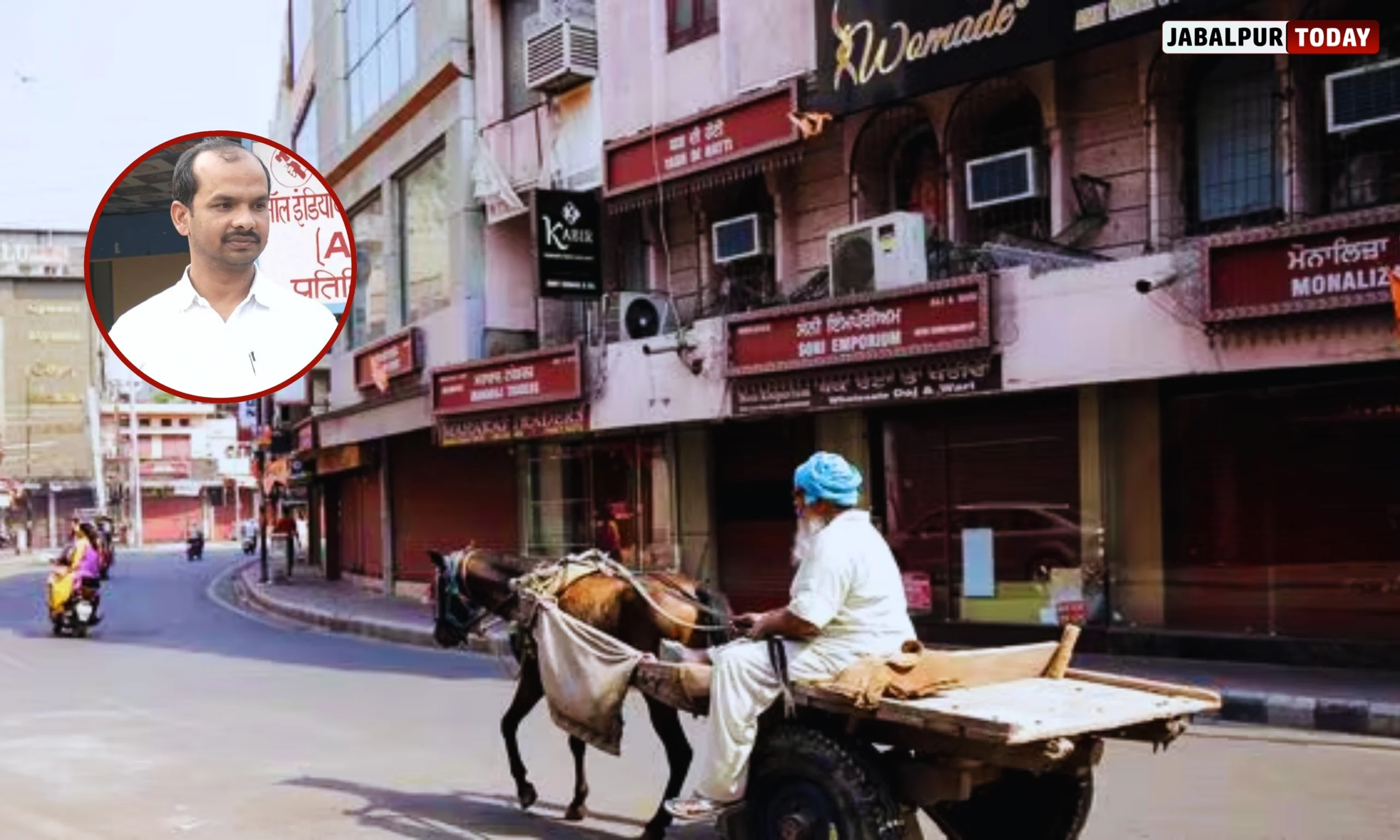
As farmers opposed the India-US interim trade deal and labour codes, MP leaders termed the Bharat Bandh politically driven, with banks, transport, and markets hit across states.
New Delhi: A nationwide Bharat Bandh was observed across India on Thursday, drawing mixed reactions from political leaders and protest groups. While farmer unions and several trade organizations mobilised demonstrations against the India-US interim trade agreement and recently implemented labour codes, leaders in Madhya Pradesh dismissed the strike as politically motivated and unlikely to create significant impact.
The Samyukt Kisan Morcha (SKM) issued the shutdown call, and ten central trade unions backed it. The bandh disrupted banking services, transport operations, and market activity across multiple states to varying degrees. Early estimates placed the economic loss between ₹10,000 crore and ₹15,000 crore.
Why the Bandh Was Called
The protest formed part of a broader mobilisation campaign conducted from February 4 to 11, 2026. Organisers said the objective was to unite farmers and workers against policies they believe could harm their economic security.
Central to the agitation is opposition to the interim trade deal between India and the United States. Negotiations began in February 2025, and the agreement was formally announced following a telephonic conversation between Prime Minister Narendra Modi and US President Donald Trump. Farmer organisations argue that the arrangement may allow subsidised American agricultural products — including dairy goods — to enter Indian markets. According to them, such imports could increase competition, reduce domestic prices, and adversely affect rural incomes.
Hannan Mollah, convenor of the SKM, alleged that the Centre had yielded to pressure from the United States. He called for the resignation of Commerce Minister Piyush Goyal and indicated that rural protests could intensify in the coming weeks.
Apart from the trade pact, unions are also raising objections to the four labour codes enacted in 2025. These codes replaced 29 previous labour laws. Critics claim the new framework reduces worker protections and simplifies hiring and termination procedures, potentially weakening job security.
Protest groups have additionally demanded the withdrawal of the Draft Seed Bill, the Electricity Amendment Bill, and the SHANTI Act. They have also called for the reinstatement of MGNREGA and the repeal of the Viksit Bharat – Guarantee for Rozgar and Ajeevika Mission (Gramin) Act, 2025.
Response from Madhya Pradesh Leaders
In Madhya Pradesh, political and union leaders expressed strong reservations about the bandh. Many maintained that the shutdown lacked broad public backing within the state.
Umang Bansal, National Coordinator of Fight for Right in Indore, described the strike as politically driven and said it would not significantly affect the nation. He emphasised that government welfare schemes are intended to benefit workers and suggested that dialogue would be more constructive than disruption. While acknowledging that certain rules might require refinement, he maintained that overall policies are aimed at development.
Similarly, Satendra Kumar from the All India Bank Employees’ Union in Bhopal argued that the strike was unnecessary. He said the government’s initiatives align with the broader vision of building a “Viksit Bharat.” Kumar further stated that the new labour codes expand Provident Fund coverage, encourage entrepreneurship, and strengthen the ‘Vocal for Local’ initiative.
Some farmer representatives within Madhya Pradesh also claimed that the bandh did not reflect widespread grassroots sentiment and alleged that political interests were influencing the protest narrative.
Government and Opposition Standpoints
The Union government defended the interim trade agreement, describing it as a milestone in bilateral relations. Commerce Minister Piyush Goyal stated that the pact reduces US duties on certain Indian exports, including textiles, from 50 percent to 18 percent, thereby improving market access. President Trump also publicly welcomed the agreement.
Government representatives reiterated that sensitive agricultural sectors and essential food items remain protected under the deal.
Opposition parties, however, staged demonstrations outside Parliament, referring to the agreement as a “trap deal.” They extended support to the Bharat Bandh. In Tripura, BJP leader Rabati Tripura criticised the strike and termed it unwarranted.
Impact of the Shutdown
Across several states, including Delhi and Karnataka, public sector banks and some government offices remained closed. Transport services were disrupted in certain areas, and many markets witnessed partial shutdowns. A few educational institutions suspended classes depending on local conditions.
Essential services such as hospitals continued to operate normally. Most private businesses functioned without interruption, and many employees opted for remote work arrangements.
In Madhya Pradesh, authorities and local leaders anticipated minimal disturbance, consistent with their position that the bandh lacked significant momentum within the state.
The events of the day underline the ongoing friction between farmer groups, labour unions, and the government as debates over economic reforms and trade policy continue.
Also Read: 8 Dead in Tumbler Ridge: Teen’s Fatal Shooting of Family Members Followed by School Library Carnage
