
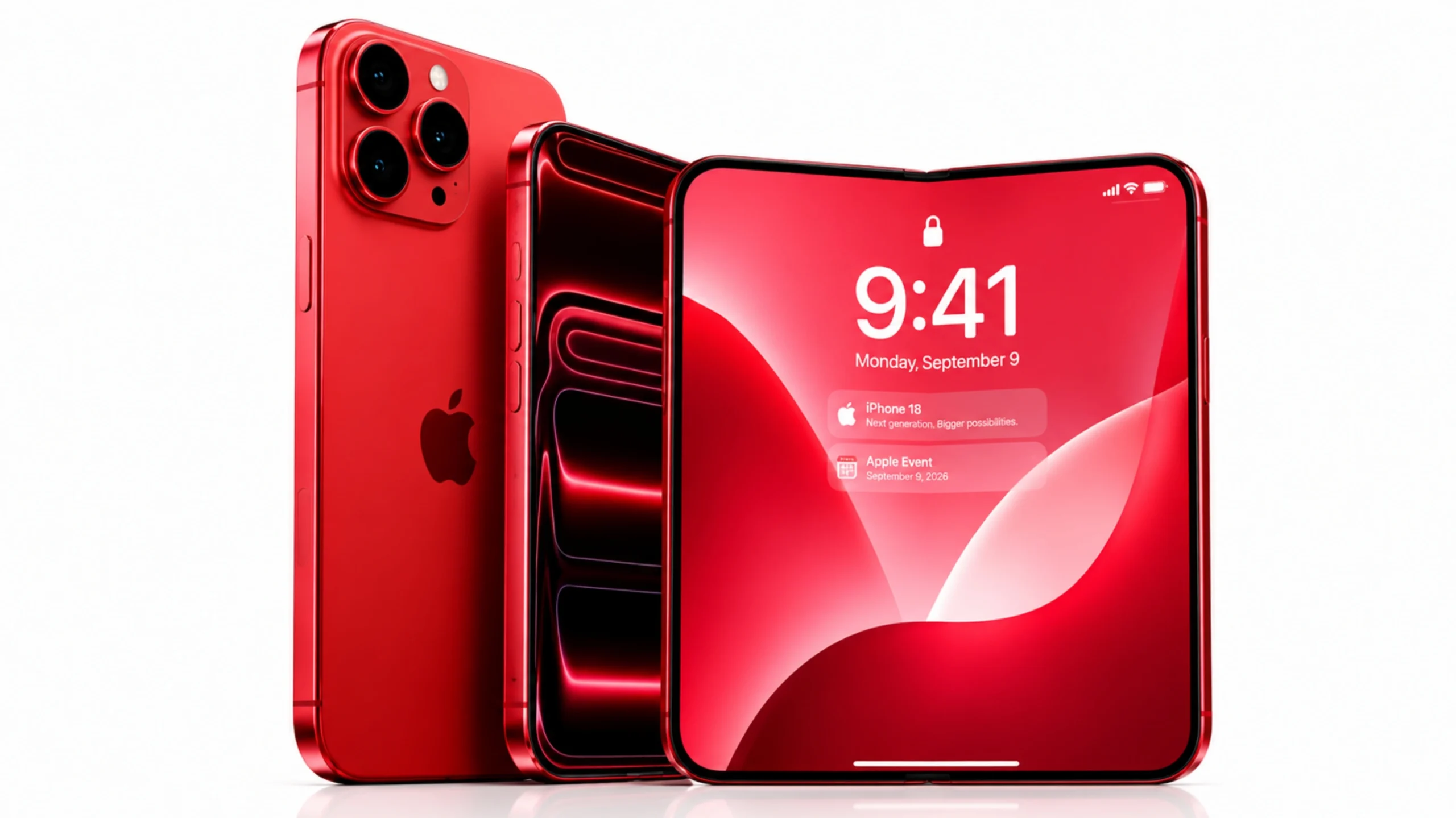
Apple breaks its traditional September launch cycle as it prepares to make its first foldable iPhone the centrepiece of its 2026 lineup
New Delhi: Apple is breaking with one of its longest-running iPhone traditions. For more than a decade, Apple has unveiled its new iPhone lineup together at a September event. In 2026, the company is expected to split that cycle, putting its premium devices at the center of its fall launch and delaying its mainstream models until early 2027.
Multiple supply-chain sources, contract manufacturers and analysts expect Apple to unveil the iPhone 18 Pro, iPhone 18 Pro Max and its first foldable iPhone in September. The standard iPhone 18, a lower-cost iPhone 18e and the second-generation iPhone Air are expected to follow in the first quarter of 2027.
The move goes beyond a change in timing. It signals Apple’s growing focus on premium devices and shows that the company sees foldable technology as a long-term part of the iPhone business rather than a one-off experiment.
What Apple Is Expected to Launch in September
Apple has scheduled its “Surprise and Shine” event for Wednesday, September 9, 2026, at 10 a.m. Pacific Time at the Steve Jobs Theater.
Reports from Bloomberg’s Mark Gurman, supply-chain analysts and manufacturers including Pegatron point to three main products:
- iPhone 18 Pro
- iPhone 18 Pro Max
- Apple’s first book-style foldable iPhone, widely referred to in leaks as the iPhone Ultra or iPhone Fold
Apple is expected to launch the standard iPhone 18, iPhone 18e and second-generation iPhone Air in spring 2027, with March or early April emerging as the likely window.
That would leave mainstream iPhone buyers facing a gap of roughly 18 months between the previous standard model and its successor.
Supply Shortages and Higher Margins Drive the Shift
Apple’s decision appears to reflect both supply-chain pressure and a deliberate push toward higher-margin products.
Memory-chip shortages and limited advanced-packaging capacity have forced technology companies to compete for critical components. That has made production planning more difficult for Apple and its suppliers.
Taiwanese lens maker Largan Precision’s chairman said publicly that a major U.S. customer had postponed a new product launch to the first quarter of 2027. Pegatron, one of Apple’s major assembly partners, later said during its earnings call that the Pro models and foldable remained on track for fall 2026 shipments, while the standard models had moved to a later schedule.
At the same time, Apple has a financial incentive to prioritize its most expensive products.
The first foldable iPhone could cost more than $2,000. Current estimates put the starting price between $2,099 and $2,300, with higher-storage versions likely to cost more.
Apple also expects its Pro models to become more expensive as it moves to a 2 nm-class A20 Pro chip and faces higher component costs.
By directing scarce components toward its premium lineup, Apple can protect average selling prices and revenue while gradually increasing production of the more difficult-to-manufacture foldable.
Foldable iPhone Faces Manufacturing Challenges
Apple’s first foldable has also faced engineering problems.
Reports earlier in 2026 pointed to concerns over hinge durability and display production yields. Those issues pushed mass production later than Apple had originally hoped.
Recent reports still point to a September announcement, but Apple could face tight supplies after launch. Initial availability could remain limited for weeks or months.
That could also explain why Apple has chosen to keep its mainstream models out of the fall event, allowing the company to concentrate its manufacturing resources and marketing attention on its premium products.
Apple’s First Foldable: What to Expect
Apple is entering the foldable market after years of development by Samsung, Google and Chinese smartphone makers.
Leaks and analyst reports describe a relatively short and wide book-style design rather than the taller, narrower shape seen on some earlier Galaxy Z Fold models.
Rumored specifications include:
- Cover display: about 5.3 to 5.5 inches
- Internal display: about 7.6 to 7.8 inches, with a tablet-like 4:3 aspect ratio
- Folded thickness: below 10 mm is the reported target, with some estimates ranging from about 4.9 mm to 9.8 mm depending on measurement method
- Hinge: titanium-based construction designed to reduce the visible crease
- Processor: A20 Pro, built on a 2 nm process
- RAM: 12 GB
- Cameras: dual rear cameras, with most reports indicating no telephoto lens in the first generation
- Front cameras: two cameras designed to work with the phone folded or unfolded
- Biometrics: Touch ID in the power button instead of Face ID, potentially helping Apple maintain a thinner design
- Software: iOS 27 is expected to add foldable-specific multitasking, split-screen apps and other iPad-like features
Apple has reportedly increased its initial foldable production target to about 10 million units.
That would mark a significant increase from earlier estimates, but it would still represent only a small share of Apple’s total iPhone production. The company therefore appears to view the foldable as a high-end halo product rather than a major volume seller in its first year.
Apple Is Already Developing Future Foldables
Apple’s plans extend beyond the first generation.
Bloomberg reports and tipster leaks suggest that the company has already started work on a second-generation foldable, identified in some reports by the codename V78.
Apple could launch that device in 2027 alongside an iPhone marking the product’s 20th anniversary.
The company is also discussing a third-generation foldable for 2028, with slightly larger internal and external displays reportedly under consideration.
The roadmap suggests Apple does not view the foldable as an experiment. Once Apple commits to a new product category, it typically follows with regular hardware and software improvements rather than leaving long gaps between generations.
Apple also appears confident that its software and services ecosystem can give its foldable an advantage, even though Samsung and Chinese manufacturers have led the hardware market for years.
What the New Launch Strategy Means for Buyers
The staggered launch will affect buyers differently.
Consumers who want Apple’s newest cameras, performance and design and can afford premium prices will have the Pro models and foldable to consider in September.
Buyers who normally choose the standard iPhone or wait for cheaper models may have to wait until early 2027.
Owners of older devices, including the iPhone 14 or earlier, could face a tougher choice if their phones are already showing their age. They may choose a new Pro model or buy a discounted previous-generation iPhone while waiting for the standard iPhone 18.
Apple Pushes Further Into the Premium Market
The strategy also fits Apple’s broader push toward premium smartphones.
Higher average selling prices have helped Apple drive profits even when overall iPhone unit growth remains limited. Prioritizing expensive models could help the company protect that trend while it manages higher component costs.
A successful foldable launch would also give Apple a product in a category that Samsung has dominated for years.
The move could expand Apple’s reach among consumers willing to pay more for premium smartphones and potentially increase the overall high-end smartphone market.
Samsung and Chinese Rivals Will Be Watching
Apple’s competitors will closely track the launch.
Samsung already separates its Galaxy S and Galaxy Z Fold and Z Flip launches. Apple’s new strategy would bring its product calendar closer to that model while giving the company a dedicated premium window in the fall.
Chinese foldable-phone makers could face even more pressure if Apple’s software, services and device ecosystem convince high-end consumers to switch.
The key question will be whether Apple can turn its ecosystem advantage into a meaningful reason for consumers to choose its foldable over established rivals.
Key Questions Remain
Apple has yet to confirm the products or the new launch schedule.
The company has not officially announced the model names, specifications, prices or the spring 2027 release plans.
Some earlier reports suggested that Apple could delay the foldable itself. More recent reports, however, point toward a September announcement, although supply could remain limited initially.
Several critical questions will remain unanswered until the device reaches reviewers and customers.
They include the visibility of the display crease, battery life, hinge durability, overall thickness and how well the phone performs in everyday use.
Price also remains uncertain. Rising component costs could push the final price above current estimates.
A Three-Year Reset for the iPhone
The staggered launch forms part of a broader redesign of Apple’s iPhone strategy.
The iPhone 17 Pro models and ultra-thin iPhone Air represented the first stage of Apple’s recent design changes. The foldable iPhone would mark the second stage in 2026.
The 2027 iPhone lineup, which will coincide with the iPhone’s 20th anniversary, could bring further major design changes, including greater use of curved glass and other experimental form factors.
Separating mainstream models from technology-focused products gives Apple more room to manage risk.
The company can scale complex new manufacturing processes without putting its core iPhone business under the same pressure. It can also create two major periods of consumer attention each year instead of relying almost entirely on its traditional September launch.
That could help Apple spread demand more evenly and give its sales organization new products to promote throughout the year.
The strategy’s success will ultimately depend on execution.
Apple must deliver a foldable that feels polished enough to justify its premium price, produce enough units to meet demand and convince mainstream buyers that waiting longer for the standard iPhone is worthwhile.
For now, the message from Cupertino is clear: Apple is putting premium and foldable hardware at the center of its 2026 iPhone strategy.
The company will have the opportunity to confirm its plans on September 9. Until then, supply-chain reports point to a major change in the iPhone cycle — the standard iPhone 18 is expected in 2027, while Apple’s first foldable will take the spotlight in 2026.

Mansi Sharma is a journalist covering Global Affairs, and wellness, known for turning complex ideas into sharp, engaging narratives. Her work is driven by curiosity, depth, and a constant urge to question and explore. When she’s not writing, you’ll often find her diving into new ideas—preferably with a cup of coffee in hand, one sip at a time.