
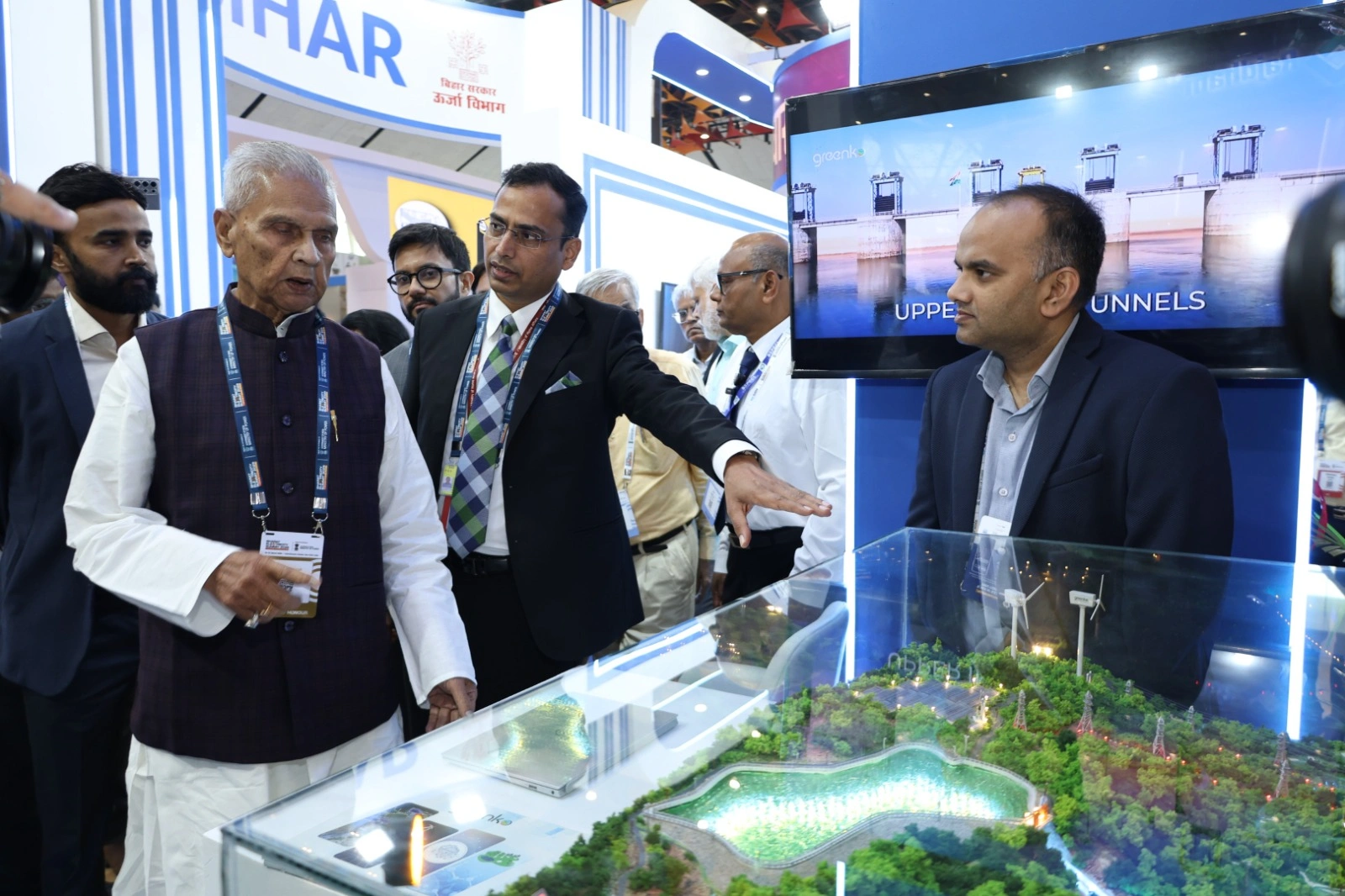
New Delhi: Bihar has made a confident and impactful presentation as the ‘Focus State’ at the India Electricity Summit 2026, underlining its emergence as a credible and attractive destination for energy sector investments. Participating in the global forum at Yashobhoomi, New Delhi, the state highlighted its achievements, policy direction and future-ready energy ecosystem while engaging actively with investors and industry leaders.
The Bihar pavilion remained a key point of engagement throughout the summit, drawing significant interest from delegates, industry representatives and visitors. Officials from the state’s power sector held detailed discussions with stakeholders, exploring opportunities for collaboration and investment. Several meaningful interactions took place with leading industry players, indicating strong interest in upcoming projects and partnerships.
The summit also witnessed encouraging international engagement, with representatives from various countries and institutions expressing interest in Bihar’s policy framework and progress in the energy sector. These interactions reinforced the state’s growing visibility on the global energy investment map.
Bihar’s current positioning is rooted in sustained transformation over the past two decades. From a power availability of less than 700 MW in 2005, the state now meets a demand exceeding 8,700 MW. Reliable, near round-the-clock electricity supply has been extended across urban and rural areas, with over 22 million consumers connected to the grid. Universal electrification has enabled new avenues for economic growth and development.
This progress has been supported by significant infrastructure expansion. Transmission capacity has increased nearly twenty-fold, while the distribution network has expanded more than five times. The number of grid substations has risen from 45 to 175, alongside a more than tenfold increase in transformers. Together, these developments have strengthened the state’s power network, making it capable of supporting industrial growth.
Operational and financial improvements in distribution companies have further reinforced sectoral stability. From a loss of ₹1,942 crore in FY 2021, the utilities have recorded a profit exceeding ₹2,000 crore in FY 2025. AT&C losses have been reduced to around 15 percent, and both DISCOMs have achieved ‘A’ ratings, reflecting improved efficiency and financial discipline.
Bihar has also made notable progress in digital transformation. More than 8.7 million smart prepaid meters have been installed, improving transparency and revenue realisation. Advanced systems such as ERP platforms, integrated IT dashboards and centralized command centres have enhanced operational efficiency and responsiveness.
Looking ahead, the state has outlined a comprehensive investment plan to upgrade energy infrastructure. An estimated ₹81,000 crore is proposed over the next five years under the TBCB mode. This includes ₹38,950 crore for power generation, ₹16,194 crore for transmission strengthening, and ₹22,951 crore for distribution improvements, along with ₹3,346 crore allocated for maintenance of existing infrastructure.
The state also presented key upcoming projects, including the Pirpainti project with an investment of around ₹30,000 crore and the Kajra solar and battery storage project. Under the pumped storage policy, investment proposals worth ₹13,000 crore have already been received within a short span, indicating growing investor confidence.
Under the Renewable Energy Policy 2025, Bihar has set a target of developing 24 GW of renewable energy capacity and 6.1 GW of energy storage by 2030. Investor-friendly provisions such as transmission charge exemptions, energy banking, single-window clearances and carbon credit mechanisms are expected to further enhance the state’s attractiveness as an investment destination.
Bihar’s participation at the India Electricity Summit 2026 reflects not only its progress but also its clear strategic direction. The state is positioning itself as a forward-looking energy hub, committed to driving investment, innovation and sustainable growth in the sector.
