
US retaliates with Operation Hawkeye Strike, hitting over 70 ISIS targets in Syria with precision airstrikes and artillery.
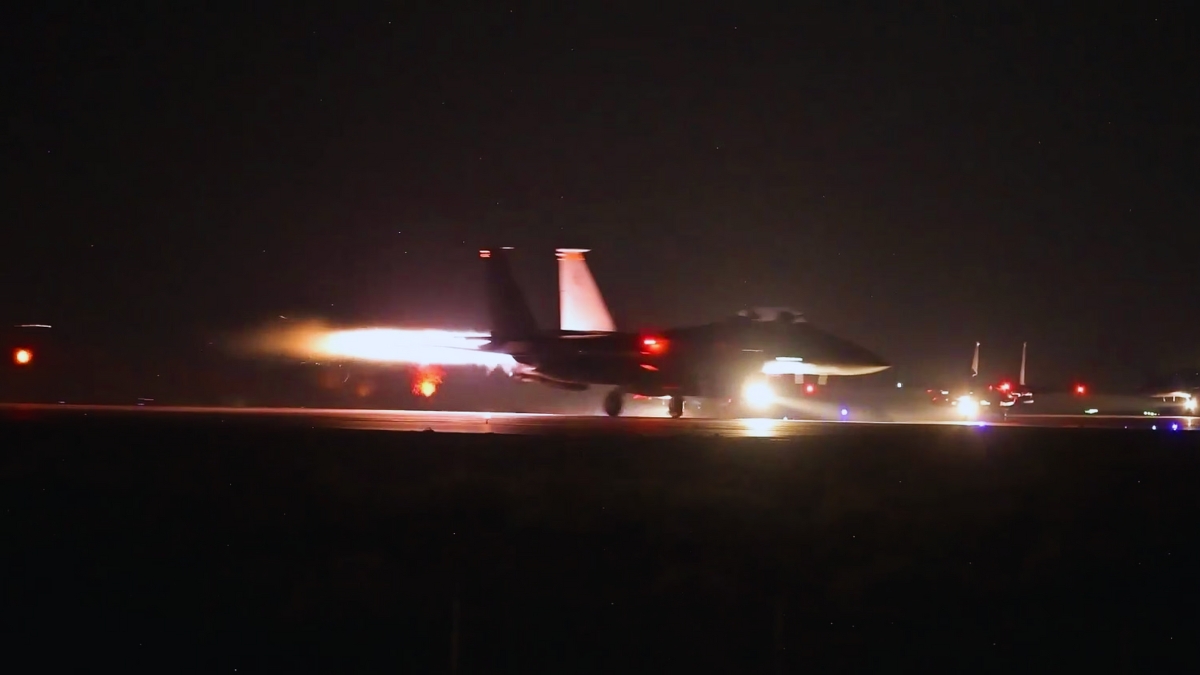
New Delhi: In a swift and forceful demonstration of military power, the United States launched Operation Hawkeye Strike on December 19, 2025. This large-scale offensive targeted over 70 Islamic State (ISIS) positions across central and northern Syria. The operation, involving fighter jets, attack helicopters, and artillery, was a direct response to a deadly ISIS ambush just days earlier, which killed two American soldiers and a civilian interpreter. Dramatic footage released by CENTCOM shows explosions lighting up the Syrian desert, highlighting the precision of the strikes.
How the Operation Unfolded?
The operation began at 4 pm Eastern Time (9 pm GMT) on December 19 and is expected to continue with further strikes. U.S. forces, supported by Jordanian aircraft, used more than 100 precision-guided munitions to destroy ISIS fighters, command centers, infrastructure, weapons storage sites, camps, and logistics hubs. Key areas targeted included the central Syrian desert near Bishri Mount, Deir ez-Zor province, Palmyra, and the eastern Raqqa desert.
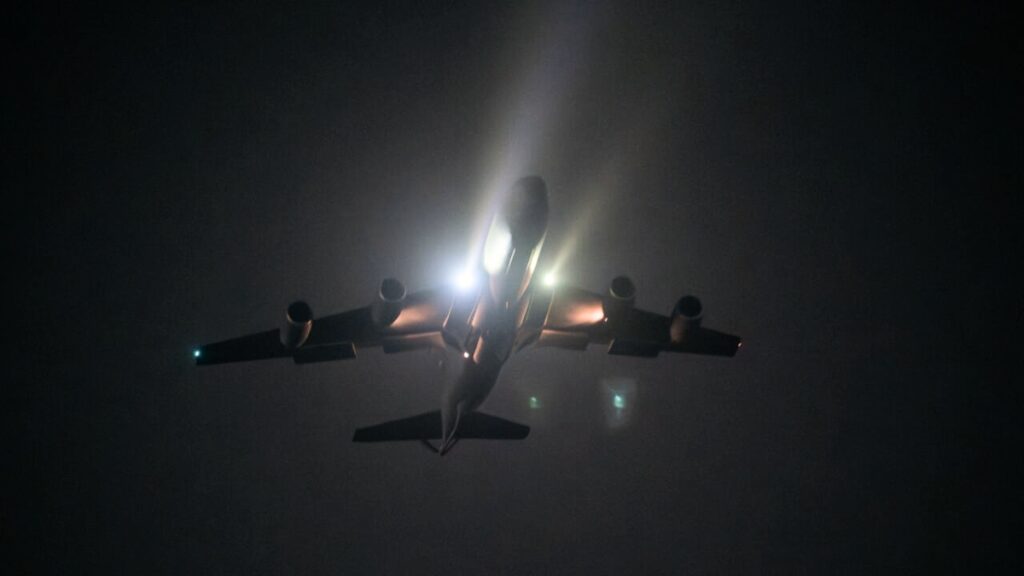
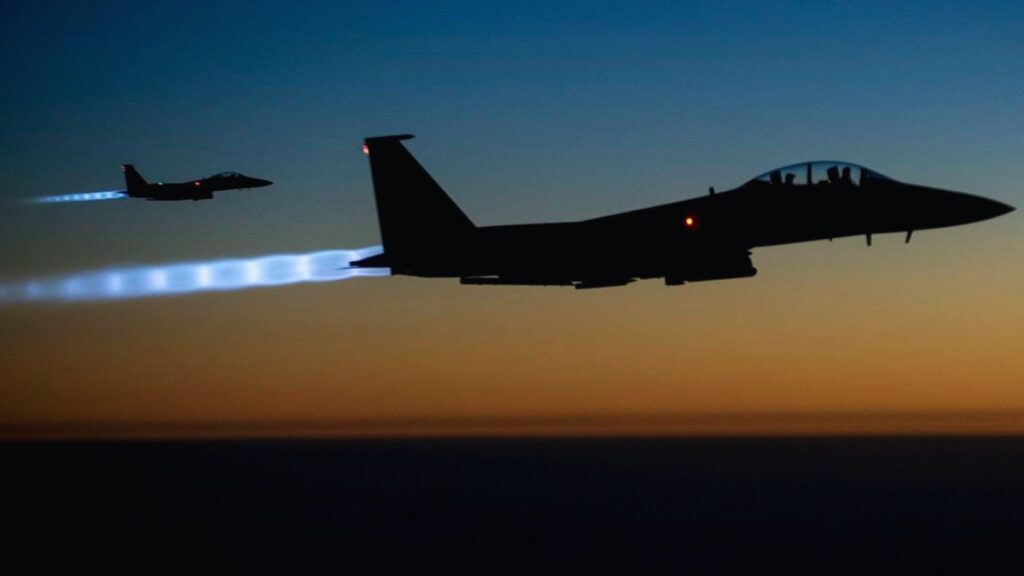
The attack involved an impressive array of military hardware: F-15E Strike Eagles from Jordan’s Muwaffaq Salti Air Base, A-10C Thunderbolt II jets from Al Dhafra Air Base in the UAE, Royal Jordanian F-16AM Fighting Falcons, US Army AH-64E Guardian attack helicopters, and heavy rocket artillery.
Reason Behind the Operation
The operation was prompted by an ISIS ambush on December 13, 2025, near Palmyra in central Syria. An ISIS gunman attacked a joint US-Syrian convoy, killing two Iowa National Guard soldiers and one civilian US contractor, and wounding three others. The attacker was neutralized on the spot.
While US officials blamed ISIS, reports from the Syrian Observatory for Human Rights (SOHR) suggested the gunman may have been part of Syria’s General Security forces. This incident marked the first American casualties in Syria since the fall of Bashar al-Assad’s regime in late 2024.
Statements from the White House
President Donald Trump called the strikes a “strong retaliation” against terrorists. Speaking at a rally in North Carolina on December 19, he praised the operation’s accuracy and success, saying, “We hit every target perfectly and are keeping peace through strength worldwide.” On Truth Social, he added that US forces struck ISIS fighters in Syria with the full support of the Syrian government under President Ahmad al-Sharaa. Trump stressed that the United States is hitting terrorists “more forcefully than ever before.”
US Defense Secretary Pete Hegseth called the operation “a declaration of vengeance”, noting that it is not the start of a war, but a targeted response to defend American citizens. CENTCOM Commander Admiral Brad Cooper added that the operation is essential to preventing ISIS from plotting attacks against the U.S. homeland.
Backing from Damascus
The strikes received full endorsement from the Syrian government, signaling a new phase in US-Syria relations after Assad’s ousting. President Ahmad al-Sharaa, removed recently from the US Specially Designated Global Terrorist list, met Trump at the White House in November 2025, marking a new era. Syria became the 90th member of the Global Coalition Against ISIS and pledged to eliminate terrorist safe havens.
The Syrian Foreign Ministry confirmed its commitment to fight ISIS and welcomed US and coalition support, though it’s unclear if Syrian forces took part directly.
Strike’s Immediate Effect
Early reports show a major setback for ISIS, with at least five militants killed, including a drone cell leader in Deir ez-Zor. Locals in Palmyra and Raqqa reported fighter jets and large explosions overnight, though US officials haven’t confirmed casualties.
The operation focused on sparsely populated desert areas to minimize civilian risks. White House spokesperson Anna Kelly confirmed that President Trump is “delivering on the promise” of retaliation.
On December 19, the U.S. military launched Operation Hawkeye Strike, a large-scale airstrike campaign targeting over 70 ISIS sites in central and eastern Syria (including Deir ez-Zor, Raqqa, and Homs provinces), using fighter jets, helicopters, artillery, pic.twitter.com/UOR4uKeuK9
— Proudly Ultra MAGA Don (@dbarton05) December 20, 2025
CENTCOM Releases Strike Clips
CENTCOM released infrared and black-and-white footage showing the impacts of munitions, large plumes of smoke, and explosions across the desert. Images also showed aircraft preparation, such as an A-10 Thunderbolt II taxiing and F-15E jets loading GBU-31 munitions. This visual material serves as both documentation and a deterrent, highlighting US military capabilities.
Understanding ISIS
ISIS emerged in Syria in 2014, declaring a caliphate and taking over large areas, including Palmyra, where it destroyed historic artifacts and carried out mass executions. By 2019, it lost most territory, but an estimated 5,000 to 7,000 fighters remain active in Syria and Iraq, exploiting instability in the Syrian desert. The fall of Assad in late 2024 created a power vacuum that ISIS has tried to exploit.
US Presence in Syria
The US has kept around 900–1,000 troops in eastern Syria since 2015 for counterterrorism, training the SDF, and preventing ISIS resurgence. In the six months before Hawkeye Strike, over 80 operations were conducted, and after the December 13 ambush, 10 joint missions killed or captured 23 terrorists, providing intelligence for the operation.
International Response
Jordan’s direct involvement underscores coalition unity. ISIS has not commented on the strikes. Global media covered the operation extensively:
• BBC described it as a “massive strike”
• Al Jazeera highlighted its precision and scale
• The New York Times noted the increase in attacks post-Assad
• WION focused on the released visuals
SOHR confirmed ISIS losses in Deir ez-Zor. Experts believe the operation increases pressure on the new Syrian government, the Kurdish-led SDF, the US, and Jordan to cooperate more effectively against ISIS.
Also Read: Delhi AQI Jumps to 425: CAQM Imposes GRAP Stage 3 – Here’s All You Need to Know
Strategic Importance
Operation Hawkeye Strike demonstrates a renewed US focus on counterterrorism under the Trump administration, potentially strengthening US-Syria relations while risking ISIS retaliation. Cooperation with Jordan, Israel, and other partners is crucial amid Syria’s fragile recovery following Assad’s fall.
Syria continues to face security and economic challenges after 14 years of civil war. Analysts warn that while eliminating ISIS is key to national stability, the power vacuum may allow militants to exploit vulnerabilities.
Clear Message to ISIS
The operation sends a strong warning: threats to American forces will be met with overwhelming, precise force. As ISIS remnants persist, Hawkeye Strike underscores the US commitment to protect its personnel and partners while maintaining pressure on terrorist networks across the region.
Also Read: Is MGNREGA Ending? New Bill Bill Triggers Nationwide Debate

Mansi Sharma is a journalist covering Global Affairs, and wellness, known for turning complex ideas into sharp, engaging narratives. Her work is driven by curiosity, depth, and a constant urge to question and explore. When she’s not writing, you’ll often find her diving into new ideas—preferably with a cup of coffee in hand, one sip at a time.