
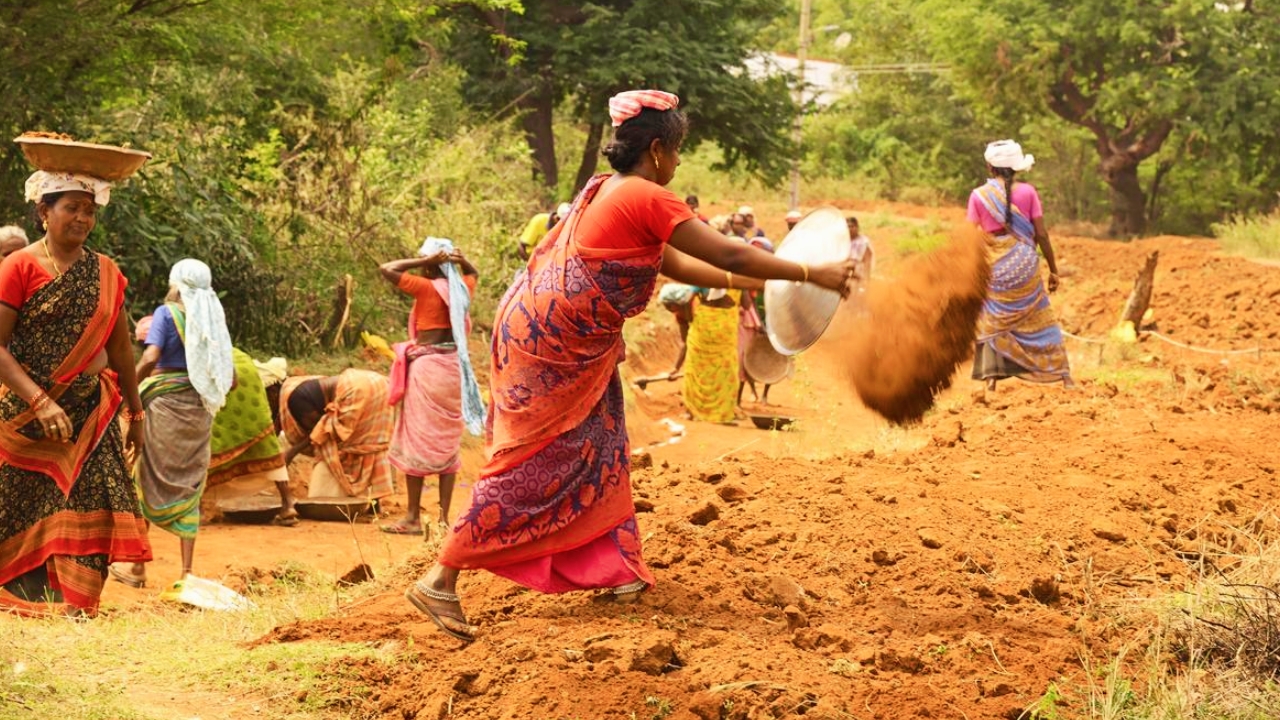
A new rural jobs mission may replace MGNREGA, promising 125 workdays, but people are raising concerns over funding pressure on states, the loss of legal rights, and the removal of Mahatma Gandhi’s name.
New Delhi: India’s most important rural employment scheme, the Mahatma Gandhi National Rural Employment Guarantee Act (MGNREGA), may be facing its biggest change in nearly 20 years. The central government has circulated a new bill that plans to repeal MGNREGA and replace it with a new system.
The government has introduced the Viksit Bharat—Guarantee for Rozgar and Ajeevika Mission (Gramin) Bill, 2025, also known as VB-G RAM G. It guarantees 125 days of wage work each year, up from 100 days under MGNREGA. However, the bill shifts many responsibilities and costs to state governments and removes Mahatma Gandhi’s name from the scheme.
This move has led to strong reactions across the country. Opposition parties say the government is weakening a law that gave rural people a legal right to work and is also trying to erase a Congress-era legacy. The government, on the other hand, says the new bill fits into its long-term plan of “Viksit Bharat 2047”, or a developed India by 2047.
The government shared the bill with Lok Sabha members on December 15 and plans to introduce it during the Winter Session of Parliament, which ends on December 19. People reacted strongly on social media. Many mocked the long and confusing new name, while others raised serious concerns about how the changes will affect poor rural workers and the balance of power between the Centre and the states.
MGNREGA’s Legacy: A Lifeline for Rural India
The UPA government passed MGNREGA in 2005. The law gives rural households a legal right to demand work. It guarantees every rural household 100 days of unskilled manual work each year at minimum wages. If the government does not provide work within 15 days, it must pay the worker an unemployment allowance. People can even challenge this right in court.
Over the years, MGNREGA has played a major role in supporting rural India. It has generated billions of person-days of employment, helped build long-lasting assets like ponds, water structures, and rural roads, and increased women’s participation in the workforce. More than 55% of workers under the scheme are women.
The scheme became especially important during emergencies. During the COVID-19 lockdown, demand for MGNREGA work rose sharply as migrant workers returned to villages and other income sources disappeared.
However, problems persist. Many states delay wages, households receive fewer than 50 workdays on average, and unpaid dues worth thousands of crores remain pending. These issues have prompted demands for reform, though few expected the government to repeal the law itself.
The New Bill: What Changes Under VB-G RAM G
The VB-G RAM G Bill completely repeals MGNREGA and replaces it with a mission-based programme under the Ministry of Rural Development. The new scheme promises 125 days of work for households that volunteer, with additional days in areas affected by droughts or disasters.
The focus of the new scheme is on areas such as water security, climate resilience, and linking rural work with other government programmes like PM Gati Shakti.
Major changes include:
• Funding Pattern:
Under MGNREGA, the Centre fully paid wages. Under the new bill, the Centre and states will share wages in a 60:40 ratio, while Northeast and Himalayan states are exempt. States must also pay for any extra workdays.
• Allocation System:
The scheme will no longer be based on demand. Instead, the Centre will decide how much work each state gets based on factors like population and poverty levels.
• Seasonal Suspension:
The government can stop work for up to 60 days during busy farming seasons to make labour available for agriculture.
• Digital Focus:
Aadhaar-linked payments, GPS-based work tracking, AI audits, and real-time dashboards will be mandatory to improve transparency.
• Advance Planning:
Gram Panchayats will have to prepare “Viksit Gram Plans” in advance, matching national infrastructure goals.
Rural Development Minister Shivraj Singh Chouhan has said this is an “upgrade” that reflects improvements in rural electricity, banking access, and job diversity.
Supporters’ View: Modernisation and More Work
Those in favour of the bill say it solves many old problems:
• 25% more guaranteed workdays can increase rural incomes.
• Technology can reduce corruption and leakages.
• Seasonal breaks help farmers during peak agricultural work.
• Focus on durable and climate-friendly assets supports long-term development.
Critics’ View: Loss of Rights and Pressure on States
Opposition parties and activists strongly oppose the bill. Their concerns include:
- • Loss of legal rights: Workers will no longer have a guaranteed right to demand work or seek compensation for delays.
- • State burden: Poor states may struggle to pay 40% of wages, leading to reduced work or discrimination against opposition-ruled states.
- • Central control: Fixed allocations may not match real needs during crises like droughts or migrations.
- • Digital exclusion: Aadhaar and tech requirements may leave out vulnerable workers due to errors or lack of access.
- Name change: The government removed Mahatma Gandhi’s name, which critics see as a political move to erase history.
Activist Nikhil Dey called it “the end of the right to work,” while economist Jean Drèze warned that exclusions and unrest could increase if the system fails.
Political Storm: Reform or Loss of Legacy?
The removal of Mahatma Gandhi’s name has sparked the biggest political debate. Congress leader Priyanka Gandhi Vadra asked why the government removed the name of one of the world’s greatest leaders. Other opposition leaders demanded that the government clear pending wages and increase daily pay to ₹500–₹1,000, considering rising inflation.
The government says times have changed and policies must evolve. Even some BJP allies, however, have quietly raised concerns about the financial load on states.
On X (formerly Twitter), people are deeply divided, with some supporting the reform and others calling it an insult to Gandhi and rural workers.
Impact on Rural India
The bill affects more than 7 crore workers, mostly women, Dalits, tribals, and landless labourers. While the scheme keeps the rule that at least one-third of workers must be women, experts warn that poor implementation could increase rural distress and unemployment.
Aspect MGNREGA (2005) VB-G RAM G (2025) Guaranteed Days 100 125 (+ extras) Wage Funding 100% Centre 60:40 Centre–States Nature Rights-based Mission-based Seasonal Break None Up to 60 days Technology Partial Mandatory Name Mahatma Gandhi No Gandhi reference
What This Means for Rural Jobs in India?
MGNREGA will not end immediately. The bill allows a transition period for states to adjust. Employment will continue, but without the strong legal protections that made MGNREGA unique.
With the NDA’s majority in the Lok Sabha, the bill is likely to pass, though protests, disruptions, and legal challenges are possible.
As Parliament debates the future of rural employment, 65% of India’s population waits to see whether this change will bring real development or weaken an essential safety net. The nationwide debate shows that MGNREGA is more than a scheme—it is a symbol of dignity, rights, and survival for rural India.
Also Read: Uttarakhand’s Kavita Chand Conquers Antarctica’s Highest Peak, Hoists Tricolour on Mount Vinson

Mansi Sharma is a journalist covering Global Affairs, and wellness, known for turning complex ideas into sharp, engaging narratives. Her work is driven by curiosity, depth, and a constant urge to question and explore. When she’s not writing, you’ll often find her diving into new ideas—preferably with a cup of coffee in hand, one sip at a time.