
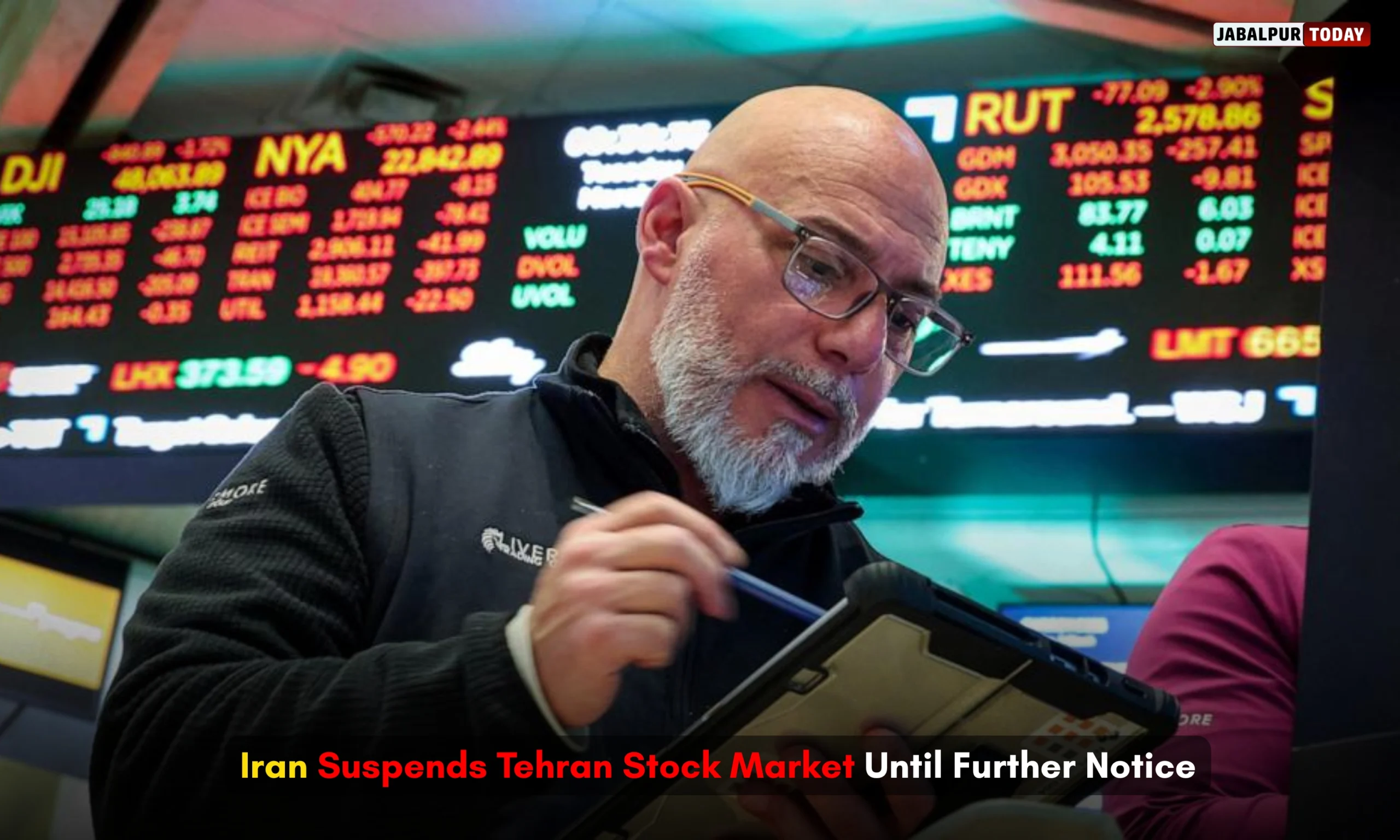
Authorities halted share trading in Iran’s main financial hub as conflict-related instability triggered concerns over investor safety and market volatility
Tehran: In a major step during the ongoing conflict, Iran has decided to keep its main stock market, the Tehran Stock Exchange (TSE), closed until further notice. Economy Minister Ali Madanizadeh confirmed the decision on Saturday and said the move is meant “to protect the assets of citizens and companies.” The market was first shut on February 28 after military strikes on Iran, but the suspension has now been extended as attacks by Israel and the United States continue to affect the capital.
This is not just a normal market pause. It shows how political conflict and war are deeply affecting Iran’s already struggling economy.
From Investor Panic to Market Shutdown
The problems had started weeks earlier. Between January 8 and February 21, 2026, the TSE’s main index, TEDPIX, fell by about 15%. During this period, small investors pulled out around 107.8 trillion rials (about $66.5 million) in just 24 trading sessions. One day in late February alone saw withdrawals of 41 trillion rials, the largest single-day outflow.
On February 28, trading began with the index rising more than 30,000 points. But soon after the market opened, explosions were reported in Tehran as Israeli and US forces carried out strikes in Tehran, Isfahan, and Qom. Trading was immediately stopped.
At the same time, Iran’s currency crashed. The Iranian rial fell to a record low of 1,749,500 rials per US dollar in the open market. Authorities also closed Iran’s airspace and mobile internet services in Tehran were disrupted.
In early March, the Iranian Securities and Exchange Organization (SEO) first said the market would stay closed “until next week.” But on March 7, the economy minister announced the closure would continue until further notice.
Investors Pulling Money Out
Iran’s stock market mainly depends on small retail investors. The money leaving the market before the shutdown shows how worried people had become.
- 107.8 trillion rials withdrawn in just 24 trading sessions
- Gold prices increased by 33% during the same period
- Gold-backed investment funds rose about 20%
- The rial crossed 1,650,000 per dollar, and reports suggested more people were shifting money into cryptocurrencies
Many families and businesses are choosing to keep their savings in physical assets like gold or foreign currency because they fear inflation and the impact of international sanctions.
Experts warn that when the market eventually reopens, there could be massive selling, which may further damage investor confidence.
Similar Market Closures in the Past
This is not the first time Iran has stopped trading during a crisis. The stock market was closed after the 2024 helicopter crash that killed President Ebrahim Raisi.
During the 2025 Iran–Israel 12‑day conflict, the TSE also remained shut for nine consecutive days under Article 23 of Iran’s Securities Market Law.
In both cases, authorities tried to prevent panic selling. But each time the market reopened, prices remained unstable.
Impact on Global Markets
The shutdown of Iran’s stock market is also affecting the wider region. Iran has warned it could block the Strait of Hormuz, a crucial shipping route through which about 20% of the world’s oil supply passes.
Because of these threats, oil prices have already increased. Markets in the United Arab Emirates were also closed for two days in early March due to rising tensions.
Global markets have reacted as well. Stock indices in the US and Europe saw intraday declines of around 1–2% as investors worried about the conflict spreading.
Before trading stopped, the TEDPIX index had last closed at 365,200 points on February 24, rising slightly that day but falling almost 9% during the previous month.
Long-term forecasts suggest the index could face more pressure in the coming months.
