
From its 1925 origins to Gandhi’s assassination, three bans and flag controversies, a look at the RSS’s debated history
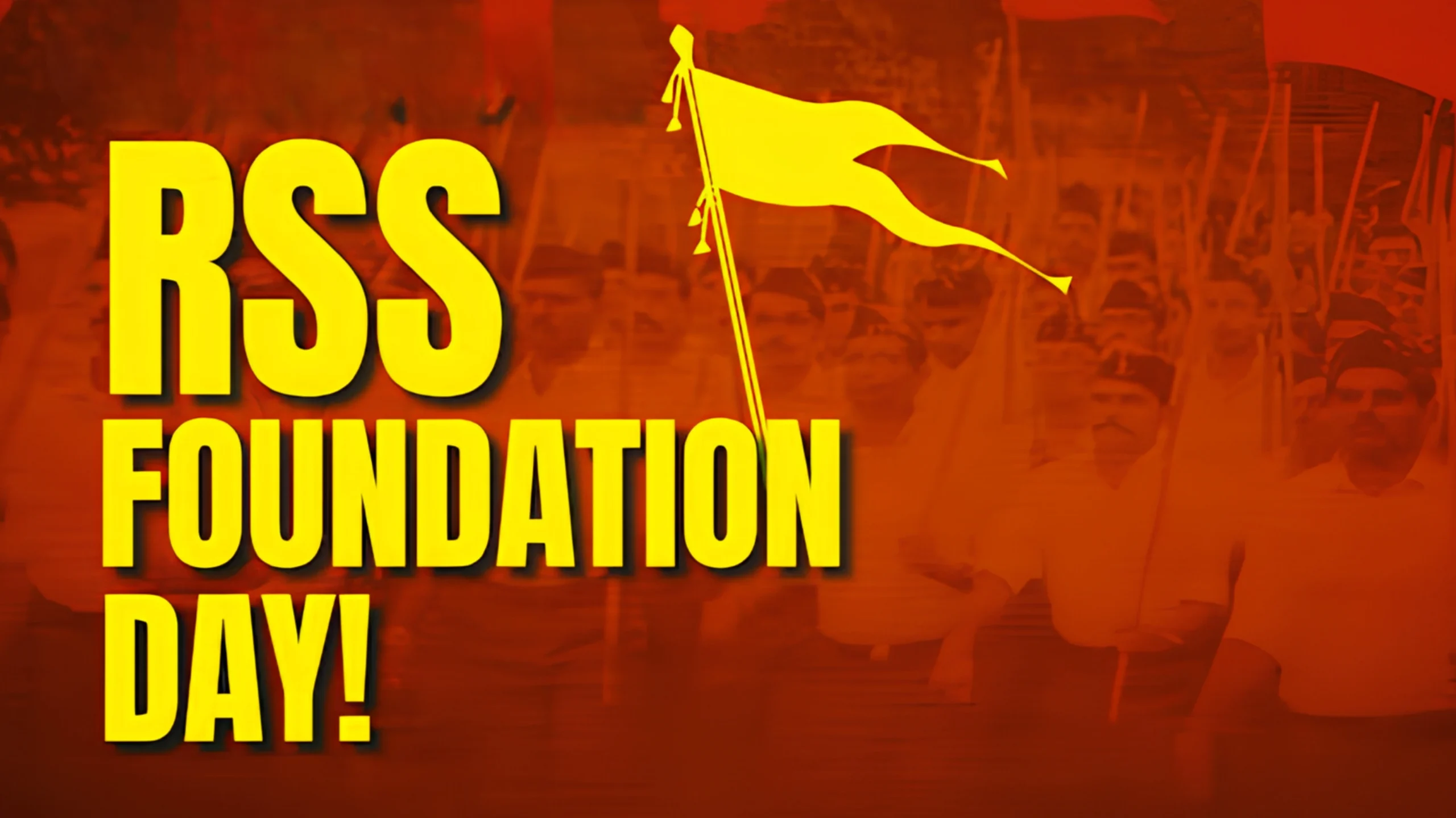
New Delhi: Every year, the Rashtriya Swayamsevak Sangh (RSS) celebrates its foundation day on Vijayadashami. In 2026, the organisation enters its 101st year. People continue to question its origins, its connection to the events surrounding Mahatma Gandhi’s assassination, the government bans it faced, its views on the national flag, its uniform, and allegations of weapons and violence. Here is a factual, chronological account that explains the organisation’s history and the major controversies surrounding it.
How and Why the RSS Was Formed in 1925
On 27 September 1925, the Hindu festival of Vijayadashami, Dr Keshav Baliram Hedgewar, a physician from Nagpur and former Congress activist, gathered a small group of young men at his house in Sukrawari and announced the formation of a new organisation. The founders finalised the name Rashtriya Swayamsevak Sangh in April 1926, after discussing several options. Other suggested names included Hindu Sevak Sangh and Bharat Udharak Mandal.
Hedgewar had participated in the Non-Cooperation Movement and served a prison sentence for sedition. Over time, he became disillusioned with the Congress, particularly because of its support for the Khilafat movement. He believed Hindus lacked the organisation, discipline and physical strength needed to protect their community and the nation. V.D. Savarkar’s book Essentials of Hindutva, published in 1923, also strongly influenced his thinking.
Hedgewar wanted to build an organisation that focused on culture, discipline and character rather than immediate electoral politics. The RSS introduced daily gatherings called shakhas, where volunteers practised physical exercises, trained with sticks or lathis, discussed ideas through intellectual sessions called baudhik, and promoted Hindu unity under the saffron flag known as the Bhagwa Dhwaj. The first regular shakha began at Mohite Wada in May 1926. The organisation formalised the full-time worker system, known as pracharaks, and the position of Sarsanghchalak, or chief, in later years.
The Khaki Uniform and Comparisons With Fascism
In its early years, the RSS dressed its volunteers in khaki shorts, khaki shirts and khaki caps, which later became black. The uniform resembled the clothing worn by Congress volunteers at the 1920 Nagpur session. It also shared similarities with the drill uniforms of British police forces at the time.
Critics have long compared the RSS’s appearance and organisational structure with European fascist youth groups. B.S. Moonje, a mentor to Hedgewar and a leader of the Hindu Mahasabha, visited Italy in 1931, met Benito Mussolini and inspected the Balilla and Avanguardisti youth organisations. His diary records his admiration for their military-style discipline. He also wrote that India needed a similar institution and connected this idea with the RSS, which already existed.
Some historians argue that the RSS drew inspiration from European fascist organisations when it developed its shakha system and uniform. RSS supporters reject this interpretation. They argue that the organisation developed independently from Indian akhada traditions and Congress volunteer practices. They also maintain that Moonje’s admiration for Italian youth organisations does not prove that the RSS itself followed fascism.
The khaki shorts remained a recognisable part of the RSS uniform until 2016, when the organisation replaced them with full-length brown trousers.
Gandhi’s Assassination, Godse’s RSS Connection and the First Ban
On 30 January 1948, Nathuram Godse shot Mahatma Gandhi during a prayer meeting in Delhi. Godse had worked as an RSS volunteer during the 1930s and served as an intellectual worker, or baudhik karyakarta.
The RSS maintains that Godse left the organisation in the mid-1930s and later joined the Hindu Mahasabha. Godse also made this claim in his court statement. However, his brother, Gopal Godse, and other family members later disputed this account. They claimed Nathuram never formally left the RSS and argued that people promoted the departure claim to protect the organisation after Gandhi’s murder.
Researchers have examined archival records that show overlapping activities between members of the RSS and the Hindu Mahasabha into the 1940s. However, no court convicted the RSS as an organisation of conspiring to assassinate Gandhi.
On 4 February 1948, five days after the assassination, the Government of India banned the RSS. The government’s official announcement accused some members of engaging in violence, including arson, robbery, dacoity and murder. It also alleged that they collected illegal arms and ammunition, distributed leaflets encouraging terrorist methods, and spread hatred. The announcement connected what it described as a culture of violence with the atmosphere in which Gandhi’s assassination took place.
Home Minister Sardar Vallabhbhai Patel later wrote that RSS speeches contained communal poison. He also stated that some members had distributed sweets after Gandhi’s assassination. Patel considered the extremist section of the Hindu Mahasabha primarily responsible for the assassination conspiracy, while he continued to view RSS activities as a threat to the state.
The Allegations About Weapons at Hanuman Temples
The government’s 1948 ban order repeatedly accused RSS members of collecting illegal weapons in different parts of the country. However, reliable primary government records and major contemporary reports provide less clear evidence for the specific claim that members hid large weapons caches inside a particular Hanuman temple.
Popular and critical accounts continue to repeat this allegation as part of wider concerns about secret military-style training and weapons collection.
In later decades, particularly in Kerala, separate controversies arose over RSS physical training and weapons-related activities on temple premises. Some court orders restricted such activities at temples managed by Devaswom boards, which oversee certain Hindu temples. Ministers also alleged that some groups had turned temple grounds into training centres.
These later disputes concern different incidents from the illegal-weapons allegations that accompanied the 1948 ban. However, critics often connect both sets of allegations when discussing the RSS’s training practices and activities at religious sites.
How the 1948 Ban Ended and Why the National Flag Became Controversial
The government lifted the first RSS ban on 11 July 1949, after RSS chief M.S. Golwalkar and other leaders negotiated with the authorities. During these discussions, the RSS prepared a written constitution that promised loyalty to the Constitution of India, respect for the national flag, democratic functioning and a rejection of violence.
Patel had insisted that the organisation explicitly accept the Indian tricolour.
Before Independence, the RSS mouthpiece Organiser had criticised the proposed national flag in editorials published in July and August 1947. The publication argued that the Hindu nation needed the saffron Bhagwa Dhwaj and claimed that the number three carried an inauspicious meaning.
After the government lifted the ban, the RSS formally accepted the national flag while continuing to use the Bhagwa Dhwaj as its own organisational symbol.
The organisation did not regularly hoist the national flag at its Nagpur headquarters for several decades. Critics highlight this long gap when questioning its historical attitude towards the tricolour. RSS supporters point to legal restrictions on private flag-hoisting and cite the organisation’s later regular observance of national occasions.
Accounts of the flag’s history also note that people hoisted the tricolour at the Nagpur headquarters on Independence Day in 1947 and Republic Day in 1950. The gap in regular hoisting after those occasions remains a point of debate.
The Second and Third Bans
The government banned the RSS for a second time during the Emergency, which lasted from 1975 to 1977. The ban formed part of the wider crackdown on opposition groups. Authorities arrested thousands of RSS volunteers during this period.
The government imposed the third ban on 10 December 1992, four days after the demolition of the Babri Masjid in Ayodhya. It lifted the ban in 1993.
The organisation resumed its activities after each ban ended. These bans did not result in a permanent criminal conviction of the RSS as an organisation.
Why Critics Call the RSS a Hard-Line Organisation
Critics describe the RSS as a highly disciplined and hierarchical organisation that promotes Hindu majoritarianism and places the idea of a Hindu Rashtra above an inclusive understanding of nationalism. They point to its decades of military-style drills and argue that its ideology contributed to communal polarisation. Patel’s letters from 1948 remain an important source for those who hold this view.
The RSS presents a different picture of its work. It describes itself as a cultural and character-building organisation that uses daily shakhas to develop disciplined and patriotic citizens. It also highlights its relief work during Partition, famines, floods and communal riots.
The organisation rejects allegations that it promotes violence. Its supporters also point to its decision not to participate in the Quit India Movement in 1942. They argue that the RSS chose to concentrate on long-term Hindu organisation instead of joining immediate anti-British protests.
Critics interpret this decision differently and question the organisation’s role in the freedom struggle. The disagreement reflects a wider debate over the RSS’s political and ideological priorities.
From a Small Group in Nagpur to a Nationwide Network
The RSS began with a small group of volunteers in Nagpur. Today, it operates tens of thousands of shakhas across the country.
Its wider network, known as the Sangh Parivar, includes the Bharatiya Janata Party (BJP), the organisation’s political offshoot, along with groups such as the Vishva Hindu Parishad (VHP), Akhil Bharatiya Vidyarthi Parishad (ABVP), Bharatiya Mazdoor Sangh (BMS) and several service organisations.
The RSS does not contest elections directly. Instead, it develops a network of volunteers and promotes its ideology through affiliated organisations and public activities.
On Foundation Day, the RSS highlights its work in social service, national integration and cultural awareness. Critics use the occasion to revisit the 1948 ban, Godse’s association with the organisation and its historical position on the national flag.
Why These Questions About the RSS Continue
The RSS continues to attract debate because of its early secrecy, military-style drills, three government bans, disputed links with Gandhi’s assassin, initial criticism of the tricolour and similarities that critics identify between its organisational practices and those of European groups during the interwar period.
Historical documents provide important evidence for examining these questions. These include government announcements, Patel’s letters, Godse’s court statements, Moonje’s diary and editorials published in Organiser. Readers can consult these records to understand the different claims and interpretations surrounding the organisation.
On RSS Foundation Day 2026, its history remains central to discussions about Indian nationalism, religion and politics. The RSS began in 1925 as a Hindu nationalist volunteer organisation focused on cultural mobilisation and discipline. The government banned it three times, and no court convicted the organisation as a whole of involvement in Gandhi’s assassination. However, Godse’s past association with the RSS, the political atmosphere surrounding the murder and the organisation’s historical positions continue to shape public debate about
