
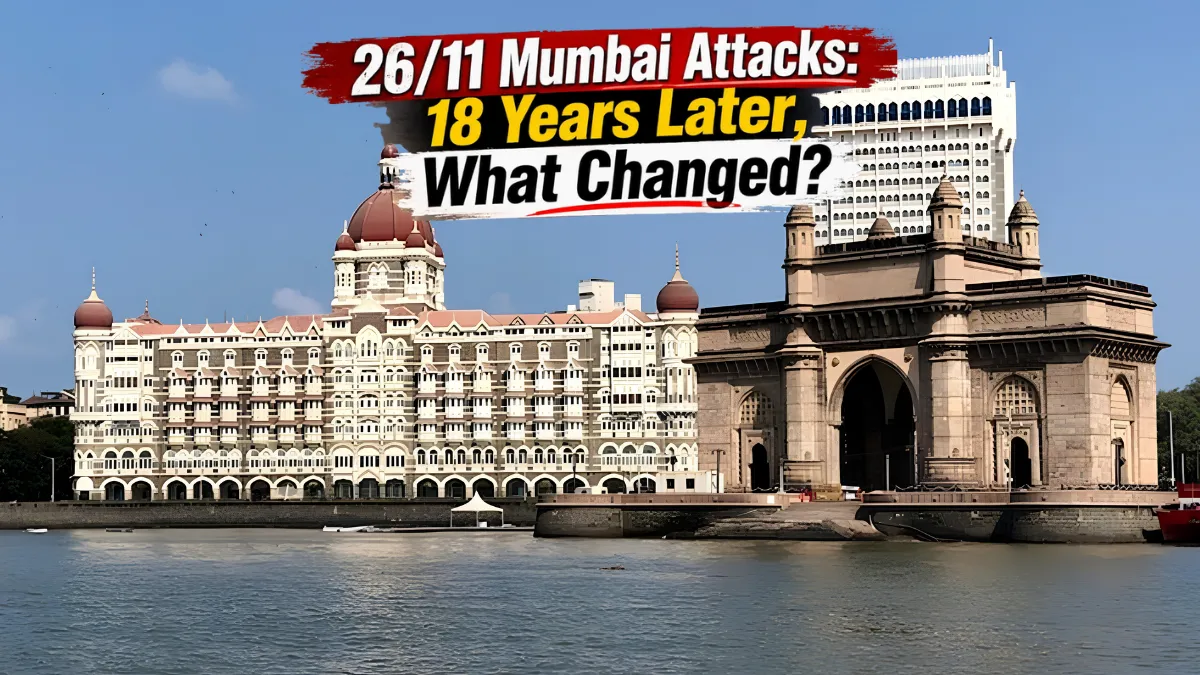
The 26/11 Mumbai attacks: 18 years after the tragedy, revisit what happened, honour the heroes and examine India’s security reforms and survivors’ struggles
New Delhi: Some dates remain deeply connected to a city’s memory. November 26, 2008, is one such date for Mumbai. Ten armed terrorists entered the city by sea and launched coordinated attacks across several locations. The violence continued for nearly 60 hours, leaving 166 people dead and hundreds injured. Eighteen years later, the attacks remain a reminder of lives lost, extraordinary courage and questions about national security. This article revisits what happened, remembers those who protected others and examines how India responded to the tragedy.
What Happened During the 26/11 Mumbai Attacks?
The attacks began on the evening of November 26, 2008. Ten terrorists reached Mumbai through the Arabian Sea. They arrived in the city after hijacking an Indian fishing boat.
The attackers divided into groups and targeted several busy locations. Their targets included hotels, a railway station, a restaurant and a Jewish community centre.
The violence continued across November 27 and 28. Security forces launched operations to rescue hostages and eliminate the attackers.
The National Security Guard (NSG), Mumbai Police and other security personnel took part in the operations.
On November 29, the final operation at the Taj Mahal Palace Hotel ended. Nine attackers had been killed. Security forces captured the tenth attacker, Ajmal Kasab, alive.
According to the Supreme Court judgment, the attacks killed 166 people and injured 238 others.
Which Places Were Targeted in the Attacks?
The terrorists targeted some of Mumbai’s busiest and most recognised locations.
Chhatrapati Shivaji Maharaj Terminus (CSMT) was among the first places attacked. The railway station was crowded with passengers when gunmen opened fire.
Leopold Café, a popular restaurant in Colaba, also came under attack. The Taj Mahal Palace Hotel and Oberoi-Trident Hotel faced prolonged sieges.
Another major target was Nariman House, also known as the Chabad House. It served as a Jewish community centre and religious space.
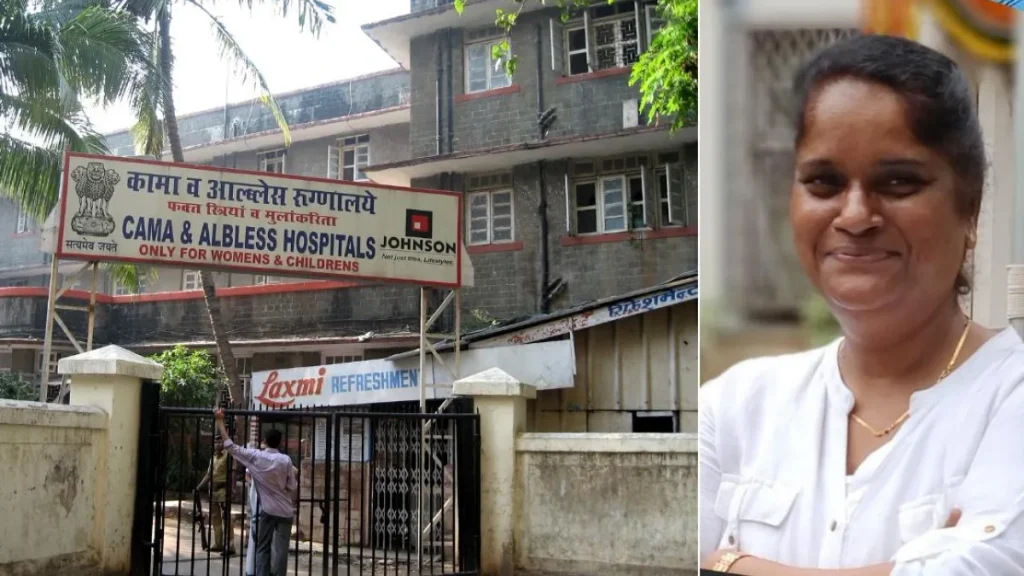
Cama and Albless Hospital also became part of the attacks. The terrorists moved through the area while police teams tried to stop them.
Other locations included Metro Cinema and areas around the city.
These attacks affected people from different backgrounds and nationalities. The Supreme Court recorded 26 foreign nationals among those killed.
The Police Officers Who Sacrificed Their Lives
Mumbai Police personnel were among the first responders during the attacks. Many officers confronted heavily armed attackers despite limited resources.
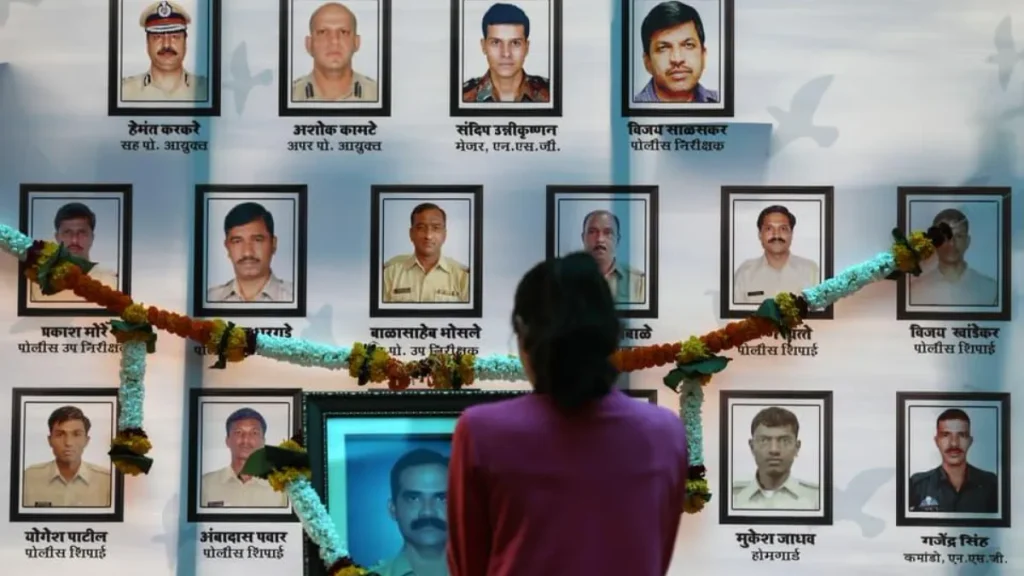
Among those killed were Maharashtra ATS chief Hemant Karkare, Additional Commissioner Ashok Kamte and senior police inspector Vijay Salaskar.
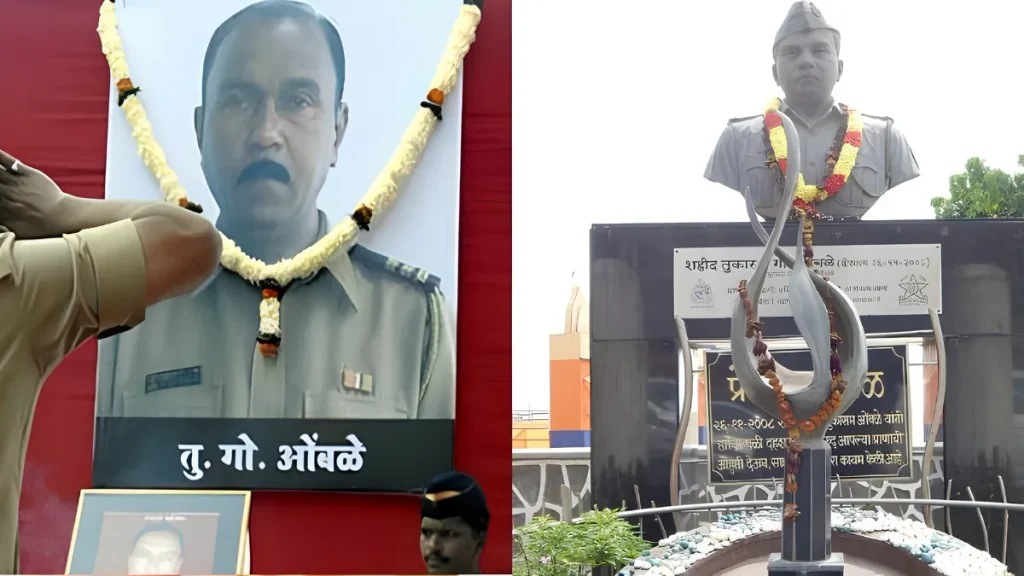
Assistant Sub-Inspector Tukaram Omble also made an extraordinary sacrifice. He confronted Ajmal Kasab during the encounter near Girgaum Chowpatty.
Omble managed to overpower Kasab and helped police capture him alive. He suffered fatal injuries during the struggle.
The attacks also claimed the lives of other police personnel and security members.
Major Sandeep Unnikrishnan and Havildar Gajender Singh of the NSG lost their lives during the hotel operations.
Six personnel associated with the Mumbai attacks received the Ashoka Chakra posthumously. They were Hemant Karkare, Ashok Kamte, Vijay Salaskar, Tukaram Omble, Major Sandeep Unnikrishnan and Havildar Gajender Singh.
Their courage remains an important part of Mumbai’s history.
The Nurse, Hotel Staff and Doctors Who Protected Others
The courage shown during 26/11 was not limited to uniformed personnel. Ordinary citizens and hospital workers also risked their lives to protect others.
One of the most remembered accounts belongs to nurse Anjali Kulthe. She was working at Cama and Albless Hospital when the terrorists entered its premises.
Kulthe helped protect 20 pregnant women by moving them into a small pantry. She kept them together and tried to ensure their safety during the attack.
She also helped a pregnant woman who needed medical attention during the crisis.
Hotel employees at the Taj and Oberoi also showed remarkable courage. Several staff members helped guests reach safer areas and guided them towards exits.
Some employees stayed behind to assist guests instead of escaping themselves. Doctors and other hospital workers continued helping injured people despite the danger.
Their actions showed how courage can emerge in the most difficult circumstances.
Ajmal Kasab’s Capture and the Legal Proceedings
Ajmal Kasab was the only attacker captured alive during the Mumbai operations.
Tukaram Omble played a crucial role in his capture near Girgaum Chowpatty. Kasab’s arrest gave investigators an opportunity to question a surviving attacker.
His trial began in 2009 before a special court in Mumbai. The prosecution presented evidence, including eyewitness accounts and forensic material.
On May 6, 2010, the special court sentenced Kasab to death. The Bombay High Court upheld the sentence in 2011.
The Supreme Court also confirmed his death sentence on August 29, 2012. Kasab was executed at Yerawada Central Prison in Pune on November 21, 2012.
The investigation also identified other people connected with the conspiracy.
David Coleman Headley, who conducted surveillance of several targets before the attacks, pleaded guilty in the United States. He received a 35-year prison sentence in January 2013.
Another major development came in April 2025. India secured the extradition of Tahawwur Hussain Rana from the United States.
As of November 17, 2026, his case in Delhi remained at the stage of arguments on framing charges. The court had also directed the NIA to provide certain unrelied documents to the defence.
Taj Mahal Palace Hotel: Rebuilding After 26/11
The Taj Mahal Palace Hotel became one of the most recognised locations associated with the attacks.
The historic building suffered extensive damage during the siege. Several guests and hotel employees lost their lives.
However, the hotel eventually reopened its heritage wing on August 15, 2010. The reopening came after nearly 21 months of restoration work.
The restoration involved repairing damaged areas and bringing the historic property back into operation.
The hotel also became a symbol of the determination to rebuild after tragedy. Its employees and management played an important role in supporting guests during the attacks.
Today, the Taj continues to stand as an important landmark in Mumbai.
Its history carries two different memories. It represents both the tragedy of 26/11 and the courage of people who helped others survive.
How Did India’s Security System Change After 26/11?
The attacks exposed major gaps in intelligence sharing, emergency response and coastal security.
The government introduced several measures after the tragedy. One of the most important developments was the establishment of the National Investigation Agency (NIA).
The NIA was created under the National Investigation Agency Act, 2008. It became a central agency responsible for investigating specified terrorism-related offences.
The government also worked towards improving the deployment of the National Security Guard. Regional NSG hubs were introduced to reduce the time required to respond to emergencies.
Coastal security received greater attention because the attackers had entered Mumbai through the sea.
The Ministry of Home Affairs expanded coastal infrastructure through different phases of the Coastal Security Scheme. These measures included coastal police stations, check posts, patrol boats and other facilities.
The government also strengthened coordination between maritime security agencies.
These reforms represented important steps towards improving preparedness. However, security remains an ongoing responsibility that requires regular reviews, training and coordination.
Survivors and Families: The Struggle Continues
The impact of 26/11 did not end when the security operation finished. For survivors and families of victims, the consequences continued long after November 2008.
Many families lost their primary earners. Others faced physical injuries, emotional trauma and difficulties returning to normal life.
Survivors also experienced the challenge of rebuilding their careers and personal lives.
Recent accounts published in November 2026 have again highlighted these struggles. Some survivors continue to face financial difficulties, health problems and the loss of family members.
For many, the passage of 18 years has not erased the memories of that night.
The families of police personnel and security members also continue to remember their loved ones.
Their experiences remind us that remembering an attack should involve more than annual ceremonies. Survivors and affected families need continued support, recognition and access to rehabilitation.
Remembering the Lives Lost and the Courage That Remains
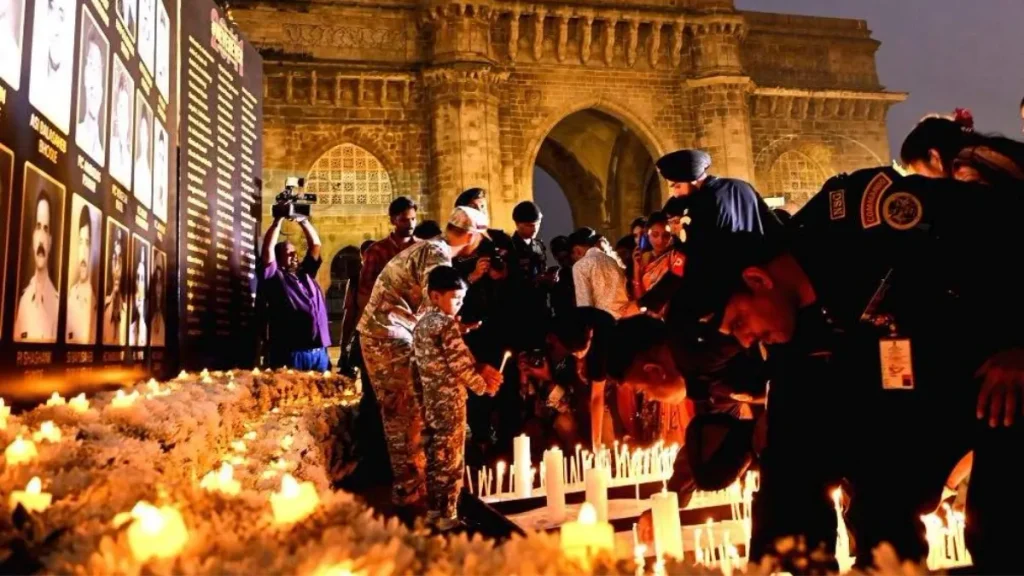
Eighteen years have passed, but the memories of 26/11 remain part of Mumbai’s story. The victims, police personnel, NSG commandos, hospital workers and ordinary citizens deserve to be remembered. Their courage helped others survive one of the darkest periods in the city’s history. Mumbai rebuilt itself, but remembrance must continue. Because the true meaning of remembering 26/11 lies in honouring lives and learning from the past.
Frequently Asked Questions
- How many people died in the 26/11 Mumbai attacks?
According to the Supreme Court judgment, 166 people were killed and 238 were injured.
- How many terrorists attacked Mumbai in 2008?
Ten terrorists carried out the coordinated attacks. Nine were killed, while Ajmal Kasab was captured alive.
- Who captured Ajmal Kasab?
Assistant Sub-Inspector Tukaram Omble played a crucial role in overpowering and capturing Kasab near Girgaum Chowpatty.
- When was Ajmal Kasab executed?
Kasab was executed at Yerawada Central Prison in Pune on November 21, 2012.
- What changed in India’s security system after 26/11?
India established the NIA, introduced regional NSG hubs and strengthened coastal security infrastructure and coordination.