
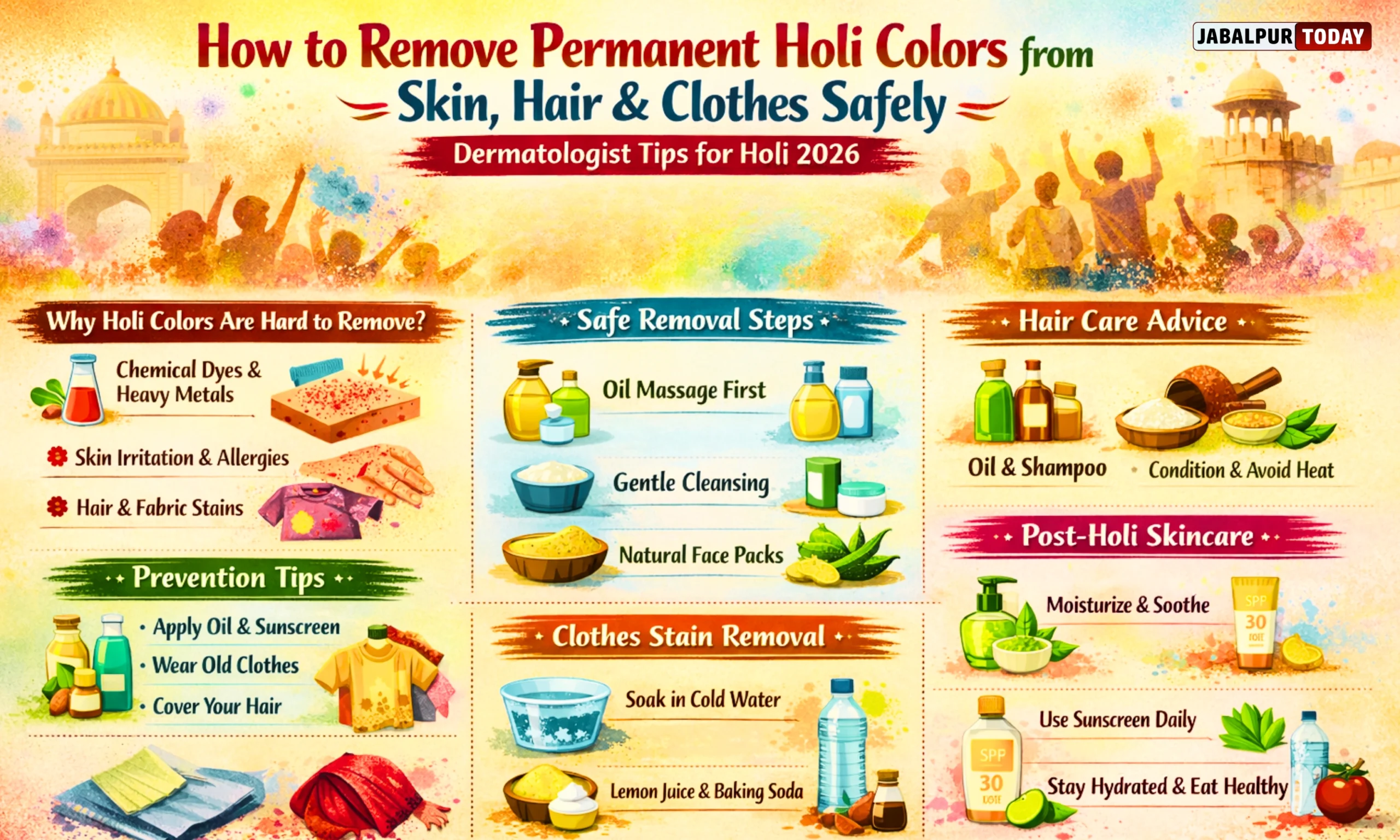
Learn how to safely remove stubborn Holi colours from skin, hair, and clothes with dermatologist-approved tips, natural remedies, stain removal hacks, and essential post-Holi skincare advice to prevent damage and irritation.
New Delhi: With Holika Dahan on March 3 and Dhulandi on March 4, 2026, millions of people are getting ready to celebrate the festival of colours. But the bright synthetic gulal that makes Holi fun and memorable can also leave behind stubborn “permanent” stains that don’t go away with normal soap and water. Here is a complete, dermatologist-approved guide to safely remove even the toughest Holi colours without harming your skin, hair, or favourite clothes.
Why Are Holi Colours So Hard to Remove?
Most colours sold in markets are synthetic. They often contain heavy metals like lead, mercury, and chromium, along with harmful dyes such as malachite green and rhodamine. These oil-based pigments stick tightly to skin pores, hair cuticles, and fabric fibres, which is why they are hard to remove.
These colours can also cause:
• Skin rashes, dryness, allergies, and dark spots
• Eye irritation or infection if colour goes into the eyes
• Breathing problems from inhaling dry powder
• Long-term health risks from chemical absorption
Dermatologists strongly advise using herbal or organic colours made from turmeric, beetroot, flowers, and herbs. But if you have already played with regular colours, follow the safe removal steps below.
Prevention First: Stop Colours from Sticking Deeply
You can prevent damage before Holi even begins:
• Apply a thick layer of coconut or almond oil, or a heavy moisturiser, along with broad-spectrum sunscreen (SPF 30+) on all exposed skin.
• Apply clear nail polish to protect your nails.
• Wear old, full-sleeve cotton clothes.
• Tie your hair in a bun or cover it with a scarf.
• Choose only FSSAI-approved herbal colours.
Step-by-Step: Remove Holi Colours from Skin (Face & Body)
Never scrub dry colour. Scrubbing pushes the pigment deeper and damages your skin.
- Oil Massage (Most Important Step)
Apply coconut, olive, almond, or baby oil generously. Massage gently in circular motions for 5–10 minutes. Leave it on for another 10 minutes. Then wipe with cotton or a soft cloth. Oil helps dissolve the colour safely.
- Gentle Cleansing
Wash with lukewarm (not hot) water and a mild, soap-free face or body wash, or use micellar water. Pat your skin dry gently. Do not rub.
- Natural Packs for Stubborn Stains
• Besan (gram flour) + curd + a pinch of turmeric: Apply for 15 minutes, then rinse.
• Fresh aloe vera gel: Apply and leave overnight to soothe and lighten.
• Lemon juice + honey (only for non-sensitive skin): Leave for 10 minutes for natural lightening.
• Tomato pulp + besan: Helps with gentle exfoliation.
Repeat these steps over 1–2 days if needed. Always apply a heavy moisturiser afterward.
How to Remove Holi Colours from Hair Without Damage
Hair can get very dry from colours and repeated washing.
• Massage coconut or almond oil into your scalp and hair length. Leave for 30–60 minutes or overnight.
• Wash with a mild, sulfate-free shampoo. You may need to shampoo twice.
• Apply a deep conditioner or hair mask afterward.
• Avoid hot water and hair dryers for 2–3 days.
This helps prevent dryness, breakage, and fading of natural hair colour.
Remove Holi Colour Stains from Clothes & Fabrics
Act quickly because fresh stains are easier to remove.
• Soak the stained area in cold water for 15–30 minutes. Never use hot water, as it sets the stain.
• For light cotton or linen clothes: Use lemon juice or white vinegar with mild detergent.
• For white clothes: Apply a paste of baking soda and detergent. Leave for 15 minutes before washing.
• For stubborn stains: Soak in a mixture of vinegar and water (1:4 ratio) for 30 minutes before washing.
• Wash coloured clothes separately and dry them in shade.
For delicate fabrics, it’s better to take them to a professional dry cleaner.
Quick Fixes for Nails, Eyes & Home Surfaces
Nails: Soak nails in warm water mixed with oil or vinegar. Gently clean and use nail polish remover if needed.
Eyes: Rinse immediately with clean water or saline solution for 15 minutes. If irritation continues, see a doctor.
Floors and Walls: Clean with a vinegar-water solution or mild floor cleaner. Avoid harsh chemicals on painted surfaces.
Post-Removal Skincare & When to See a Doctor
After removing colours:
• Apply aloe vera gel or a fragrance-free moisturiser several times a day.
• Use sunscreen daily for at least a week.
• Drink plenty of water and eat foods rich in antioxidants.
See a dermatologist immediately if you notice long-lasting redness, swelling, itching, pus, breathing problems, or changes in vision.
Choose a Safer Holi in 2026 and Beyond
Switching to herbal colours makes removal easier and protects both your health and the environment. Synthetic colours can pollute water bodies when washed away. Many brands now sell FSSAI-certified natural gulal.
This Holi, celebrate responsibly. Enjoy the colours fully — and remove them gently so your skin glows instead of suffering.

Mansi Sharma is a journalist covering Global Affairs, and wellness, known for turning complex ideas into sharp, engaging narratives. Her work is driven by curiosity, depth, and a constant urge to question and explore. When she’s not writing, you’ll often find her diving into new ideas—preferably with a cup of coffee in hand, one sip at a time.