
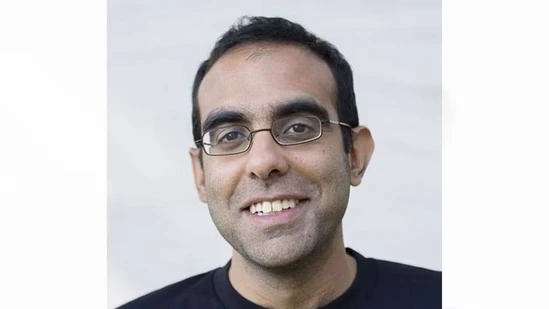
Lyft co-founder Rajat Suri questions whether his kids should attend college, arguing that real-world work experience taught him more than traditional classroom education.
New Delhi: Rajat Suri, the Indian-origin Canadian-American entrepreneur best known as a co-founder of the company that became Lyft, shared a short reflection on X that quickly drew attention.
“I went to MIT for a PhD / MBA after graduating with 2 degrees at Waterloo, and yet I’m thinking that my kids probably shouldn’t go to college,” he wrote. “Most of what I learned at school was at my work terms at Waterloo. I worked at 6 different companies there, experienced vastly different work cultures, management styles, team dynamics and business models. Wondering if we could just get that experience for kids without the unnecessary classwork that AI can teach better anyways? (Btw I dropped out of MIT after realizing I’d learn way founding startups).”
Within hours, people started sharing screenshots of the post and debating its message across social media platforms. For many readers, Suri sounded like another Silicon Valley founder questioning the value of higher education. For others, his argument stood out because he based it on his own experience rather than a general theory.
Suri is not an unknown tech entrepreneur. He has founded several companies, and his own education and career make his argument especially notable.
Who Is Rajat Suri?
Suri was born in Canada to Indian immigrant parents and grew up mainly in the Toronto area. He attended the University of Waterloo, where he earned two bachelor’s degrees in chemical engineering and economics in 2007.
Waterloo’s co-operative education programme has earned a strong reputation for combining classroom education with real-world work experience. The programme requires students to alternate between academic terms and paid work terms. By the time Suri graduated, he had completed six different placements at different companies.
Those jobs exposed him to different industries, workplace cultures, managers, teams and business models.
After Waterloo, Suri earned admission to a highly selective joint PhD/MBA programme at the Massachusetts Institute of Technology. Only four people worldwide reportedly received admission that year. MIT also offered him a full scholarship.
For many ambitious students, such an opportunity would represent the highest level of academic success. Suri, however, stayed at MIT for a limited period before leaving the programme. He has repeatedly said that he realised he could learn much more by building companies than by continuing with graduate studies.
While he remained connected to the MIT ecosystem, Suri co-founded Zimride, a ridesharing platform focused on college campuses. The company later rebranded and expanded into the business that became Lyft.
Building Restaurant Technology Company Presto
Suri later founded Presto, originally known as E la Carte. The restaurant technology company focused on tablet-based ordering and payment systems and later moved into AI-driven automation. To better understand the restaurant industry, Suri also worked as a waiter for a period.
Presto grew into a significant company, raised substantial amounts of capital and went public through a SPAC merger in 2022.
Suri later stepped away from the company. He has since co-founded Lima, a service that helps skilled immigrants navigate the US immigration system, and Tribe Chat. He also co-hosts the Founders-in-Arms podcast.
Suri is married and has two young children, who are currently around 5 and 7 years old. That makes his college question more than a theoretical discussion. He will eventually have to make that decision for his own children.
The Core of His Argument: Experience Over the Classroom
Suri’s main argument is simple: real-world experience gave him more value than much of his formal classroom education.
He believes his six work placements at Waterloo taught him lessons that traditional classroom education could not easily provide. Those experiences forced him to work with different managers, teams and workplace cultures. They also showed him how different companies operate and how different business models work.
Suri now believes that students could receive similar experiences without spending four years completing traditional academic coursework.
He also believes AI can increasingly teach academic concepts faster and more cheaply. AI tools can explain subjects, answer questions, provide practice exercises and help students learn at their own pace.
Because of this, Suri questions whether students still need to follow the traditional four-year college model by default.
However, he is not saying that all higher education has become useless. Instead, he is questioning the idea that every ambitious young person needs a four-year residential college degree, especially students who want to become entrepreneurs or work in fast-changing technical industries.
Why His Message Resonates in 2026
The timing of Suri’s post matters.
AI tools have improved rapidly and now help people learn concepts, create practice problems, receive personalised tutoring and simulate some professional tasks. At the same time, traditional college continues to demand significant money, time and effort.
Student debt remains a concern for many families. Some graduates also find jobs that do not directly connect with their degrees. Rapid technological changes can also make students question whether the skills they learn today will remain valuable several years later.
Silicon Valley has celebrated college dropouts for decades. Bill Gates, Steve Jobs and Mark Zuckerberg are among the most famous examples.
However, the conversation has changed. Successful parents now openly question whether their own children should follow the traditional education path.
Suri’s post fits directly into that debate. His comments also come at a time when more members of Gen Z are choosing to skip college completely instead of enrolling and later dropping out.
The Pushback: What College Still Offers
Many people do not agree with Suri’s argument. Traditional higher education still provides several important benefits.
- Social and emotional growth: College gives many young people a structured environment where they learn independence, manage their time and develop adult relationships.
- Networks: Students can build friendships and relationships with professors, mentors and classmates. These connections can help them throughout their careers.
- Degrees and professional requirements: Some professions still require formal education and qualifications. Medicine, law, academia and some engineering professions require degrees or professional licences.
- Career signalling: Many employers continue to use college degrees as a way to assess job candidates. A degree from a recognised institution can still influence hiring decisions.
- Exposure to different ideas and people: Residential colleges can introduce students to people, subjects and viewpoints that they might not encounter through work alone.
Critics also point to Suri’s own advantages.
Suri entered the professional world with strong academic credentials. He had already studied at Waterloo and earned admission to MIT. His educational background, confidence and professional network gave him advantages that many young people may not have.
Because of that, critics question whether other students can easily copy his model of gaining extensive work experience without first attending a strong university.
Alternatives Are Emerging
Suri’s argument also points toward alternatives that already exist and continue to grow.
These options include structured apprenticeship programmes, rotational programmes that allow recent high-school graduates to work at multiple companies, online education combined with paid work, specialised boot camps and founder fellowships.
Waterloo’s own co-op system provides an example of a hybrid model. It combines formal education with extensive workplace experience.
Several European countries and trade-focused education systems have also placed greater emphasis on introducing students to workplaces earlier.
As a result, parents and students are asking more specific questions about the value of a college degree.
They want to understand what skills, connections and career opportunities a particular degree can provide—and whether those benefits can be gained through alternative pathways.
Students are also weighing the financial cost of higher education, their individual interests and strengths, and how the job market could evolve by the time they graduate four years later. These factors can help them determine whether a degree is the right investment or whether another route may better support their long-term goals.
For some professions, college still provides the clearest path. For others, the calculation has started to change.
Privilege, Risk and Honesty
Any serious discussion about skipping college must also address privilege.
Suri’s children will have access to financial resources, guidance, professional advice and safety nets that many other young people do not have.
A wealthy or well-connected family can take more risks with an unconventional education path than a family that depends on a college degree as its main route to better economic opportunities.
Suri has not presented his argument as a universal recommendation. He has specifically discussed his own children and explained how his own education shaped his thinking.
Still, the honesty of his post has helped make it powerful.
Many successful people privately question the value of the education system they followed. Yet they continue to publicly present elite universities and degrees as the safest path to success.
Suri openly acknowledged that contradiction.
What Comes Next
Suri’s post will probably not settle the debate over whether young people should attend college.
College will remain essential for some professions and valuable for many students who benefit from a structured academic environment.
For others, particularly people who want to build companies, sell products or create new technology in rapidly changing industries, the traditional four-year college model may increasingly look like an expensive and unnecessary detour.
Suri’s own career offers one example.
He earned two degrees, entered an elite MIT PhD/MBA programme and then left it. He later co-founded a major ridesharing company, built a restaurant technology company that eventually went public and continued launching new businesses.
His experience has convinced him that real-world exposure mattered more than staying on a prestigious academic track.
The bigger question now is whether society can make that kind of experience available to a much larger number of young people.
If schools, companies and governments can create accessible programmes that give students the chance to work across several companies and industries before they turn 22, the traditional role of college could change significantly.
AI will also continue to change how people learn and how employers evaluate skills.
For now, Suri has voiced a thought that more parents and students are beginning to consider: the traditional college path may no longer be the best default choice for everyone.
