
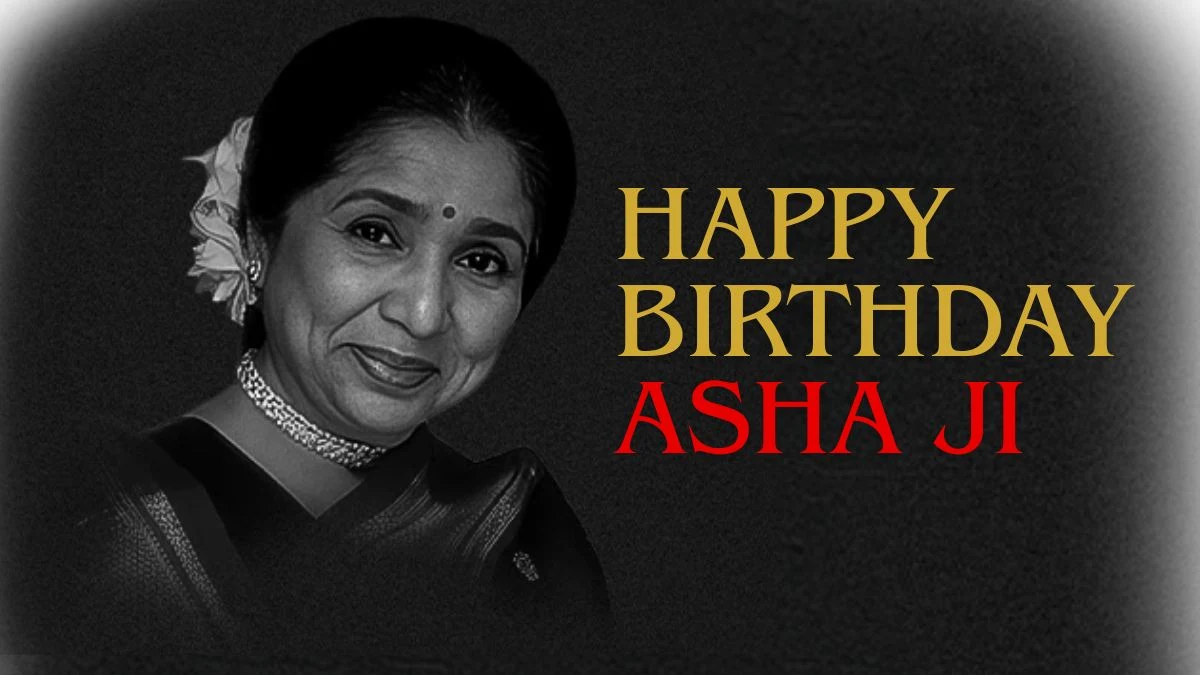
Discover Asha Bhosle’s inspiring journey from a difficult childhood and early struggles to becoming one of India’s greatest playback singers
New Delhi: Before Asha Bhosle became one of the most recognisable voices in Indian music, she was simply a young woman trying to find work and support her family.
In the Bombay of the 1950s, she travelled by local trains and trams, often leaving home early in the morning to reach recording studios. She later recalled living in Borivali and taking the early morning local to work. Her life was far removed from the glamour that people eventually associated with her name.
Born on September 8, 1933, into the famous Mangeshkar family, Asha grew up surrounded by music. Her father, Deenanath Mangeshkar, was a respected classical singer and theatre artist. But he died when Asha was only nine, leaving the family facing financial difficulties.
Her elder sister, Lata Mangeshkar, entered the film industry before her and eventually became one of its most celebrated playback singers. Asha therefore had to build her own identity in an industry where comparisons with her sister were almost unavoidable.
Instead of trying to become another Lata, Asha chose a different path. That decision changed Indian film music forever.
From Borivali to Bombay’s Recording Studios
Asha Bhosle’s early years in the film industry were marked by hard work rather than glamour.
She began recording professionally in Marathi cinema in the 1940s before gradually moving into Hindi films. Her early career involved working with composers who were willing to give her opportunities when she was still a relatively unknown voice.
Life outside the studio was equally demanding.
Asha married Ganpatrao Bhosle at the age of 16. The marriage was opposed by her family and later became a difficult chapter in her life. She eventually became the mother of three children while continuing to pursue her singing career.
She had to balance motherhood, household responsibilities and a profession that demanded long hours of rehearsals and recordings.
Her early struggles taught her an important lesson: if she wanted to survive, she needed to stand on her own.
Asha Bhosle Refused to Become a Copy of Lata Mangeshkar
Being Lata Mangeshkar’s younger sister came with enormous expectations.
Lata had already developed a distinct image as a playback singer known for her purity of tone and emotional depth. Asha realised that trying to compete with her on exactly the same ground would not help.
So she took another route. Her voice had a different energy. It could sound playful, bold, sensual, mischievous or deeply emotional depending on the song.
That flexibility allowed her to sing characters and situations that demanded something different from the traditional female playback voice.
Asha eventually turned what could have been a disadvantage into her greatest professional strength.
O.P. Nayyar Helped Shape Her
One of the most important turning points in Asha’s career came through composer O.P. Nayyar.
Their collaboration helped establish a sound that was noticeably different from the dominant female playback style of the time. Nayyar’s compositions often carried strong rhythms and a distinctive Western influence, and Asha’s voice fitted them naturally.
Songs such as “Aaiye Meherbaan,” “Ude Jab Jab Zulfen Teri,” “Aao Huzoor Tumko” and “Isharon Isharon Mein” helped audiences notice her as a star in her own right.
Her association with Nayyar proved that she could carry major songs rather than simply fill supporting musical roles. Contemporary accounts also credit their collaboration with helping her break through during the 1950s and 1960s.
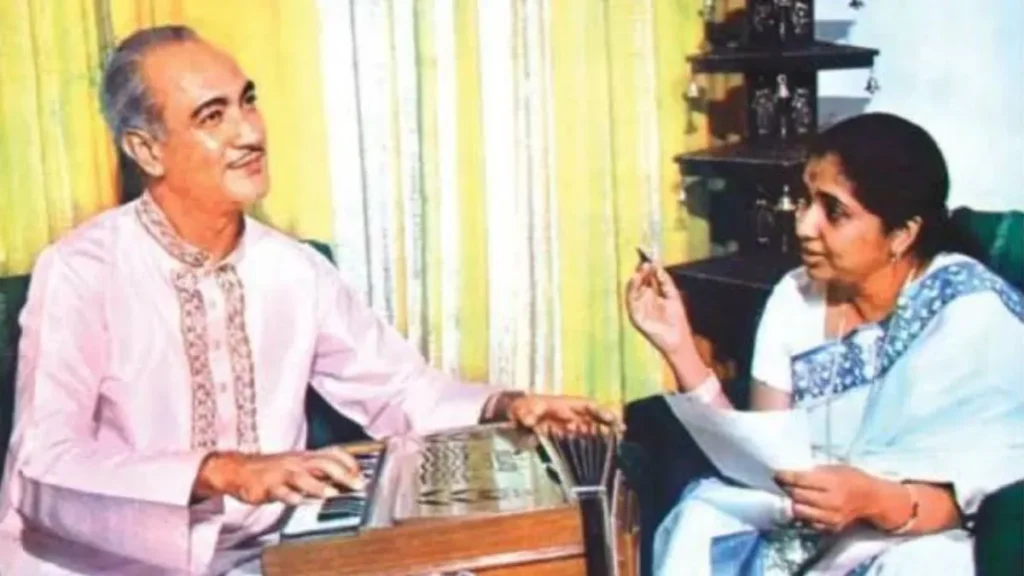
Then Came R.D. Burman
If O.P. Nayyar helped establish Asha’s identity, R.D. Burman helped expand it. Their creative partnership became one of the most influential singer-composer collaborations in Hindi film music.
Burman’s compositions often experimented with rhythm, Western instruments, unusual arrangements and new sounds. Asha understood that language instinctively.
Their work produced unforgettable songs such as:
- “Piya Tu Ab To Aaja”
- “Dum Maro Dum”
- “O Haseena Zulfon Wali”
- “Aaja Aaja Main Hoon Pyar Tera”
Asha did not merely sing these songs. She gave them personality.
Her voice could suggest confidence, flirtation, rebellion and excitement without losing musical control. This made her particularly effective in the changing soundscape of the 1960s and 1970s.
Her work with Burman also helped establish her as much more than a singer associated with cabaret songs. Their partnership became an important part of the evolution of modern Hindi film music.
From Cabaret Songs to Ghazals
For years, the industry often placed Asha in a particular category: the singer for dance numbers and glamorous screen performances.
But she refused to stay there. Her performance in Umrao Jaan changed that perception for many listeners.
Songs such as “Dil Cheez Kya Hai” and “In Aankhon Ki Masti” revealed a softer and more refined side of her singing.
The National Film Award jury recognised her work in Umrao Jaan. Asha won the 1981 National Film Award for Best Female Playback Singer, with the official citation specifically praising the way she interpreted the film’s ghazals.
She later won another National Film Award for “Mera Kuchh Saamaan” from Ijaazat in 1987. These performances destroyed the idea that Asha belonged to only one musical category. She could sing almost anything.
A Career That Crossed Languages and Generations
Asha Bhosle’s work extended far beyond mainstream Hindi film songs.
She recorded music in more than 20 Indian languages and explored several forms, including film music, ghazals, folk songs, devotional music, classical-based compositions and pop. Guinness World Records currently records more than 11,000 solo, duet and chorus-backed recordings across her career.
Her career also stretched across more than eight decades.
That longevity is remarkable on its own. But the more important achievement was her ability to remain relevant while music itself changed.
She worked with composers from different generations and continued to experiment rather than simply repeat the style that had made her famous.
Her Awards Reflect Her Extraordinary Range
Asha’s contribution eventually received some of India’s highest honours.
She won the Dadasaheb Phalke Award in 2000, one of the country’s most important honours for contribution to Indian cinema.
In 2008, she received the Padma Vibhushan, India’s second-highest civilian honour. The Government of India has recognised her for her extraordinary and enduring contribution to Indian music and cinema.
She also won the National Film Award twice and received numerous Filmfare honours during her career.
Her international recognition included two Grammy nominations, showing that her influence was not limited to Indian cinema.
Asha and Lata: More Than a Rivalry
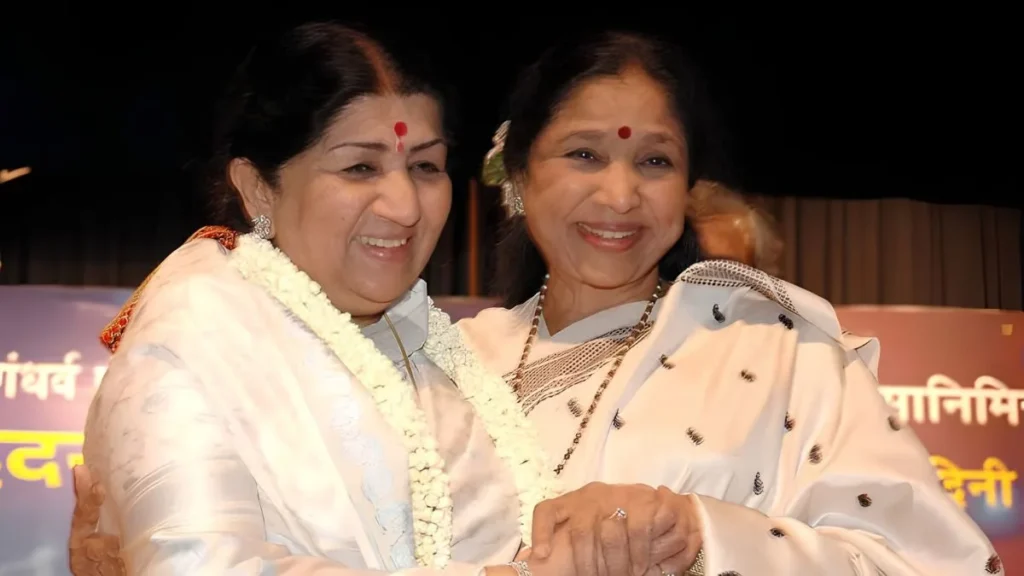
The relationship between Asha Bhosle and Lata Mangeshkar has often been reduced to a story of rivalry.
The reality was much more complicated. They were sisters who entered the same highly competitive profession and developed very different musical identities.
There were periods of personal distance between them, particularly during difficult phases of Asha’s early life. Over time, however, their relationship evolved.
Both eventually recognised each other’s extraordinary talent.
Rather than viewing their careers as a competition with one winner, it is more useful to see them as two voices that expanded the possibilities of female playback singing in India.
Lata represented one musical tradition. Asha opened the door to many others.
Asha Bhosle Was Also a Successful Entrepreneur
Asha’s creativity did not stop at the microphone. She also developed a strong interest in food and eventually entered the restaurant business. Her restaurants reflected another side of her personality: curious, entrepreneurial and willing to try something outside the world in which she was already successful.
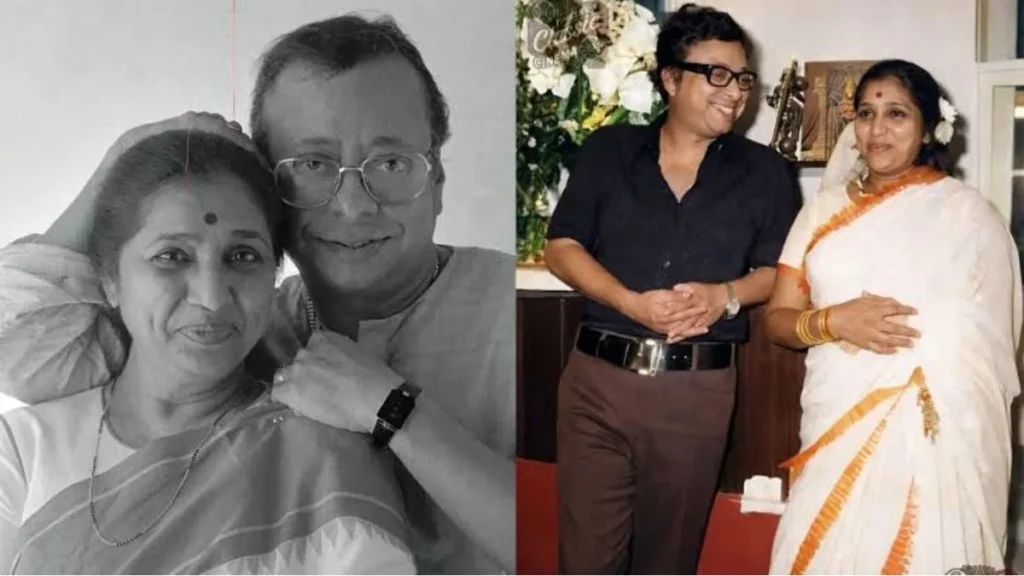
Her personal life also changed significantly when she married composer R.D. Burman. Their relationship grew from a deep musical connection, and their creative partnership remains one of the most memorable in Indian music history.
Asha Bhosle’s Major Awards and Honours
- More than 11,000 recorded songs.
- More than 20 languages.
- Two National Film Awards.
- The Dadasaheb Phalke Award.
- The Padma Vibhushan.
- Multiple Filmfare honours.
- Two Grammy nominations.
These achievements explain why Asha Bhosle is regarded as one of India’s most versatile singers.
But statistics cannot completely explain her importance.
Her real achievement was the freedom she created through her voice.
She showed that a female playback singer did not have to fit one image. She could be glamorous and classical, playful and serious, traditional and modern.She could change with the times without losing herself.
Asha Bhosle’s Legacy in Indian Music
Asha Bhosle’s story is ultimately not about being the younger sister of Lata Mangeshkar.
It is about becoming Asha Bhosle. She entered the industry during a difficult period, faced personal and professional challenges, raised a family while pursuing a demanding career and spent decades proving that her voice could belong to almost every musical world.
Her journey from a young singer struggling for opportunities to a globally recognised Indian music icon remains one of the most remarkable stories in the history of playback singing.
Her songs continue to be played, remixed, performed and rediscovered by younger generations. And perhaps that is the strongest measure of her legacy. Asha Bhosle did not simply leave behind thousands of recordings. She left behind the idea that a voice does not have to fit into one category to become unforgettable.
