
The Nvidia chief has admitted to an extramarital relationship with a woman whom US intelligence reportedly considers a Chinese intelligence asset
New Delhi: Nvidia CEO Jensen Huang has found himself at the centre of a controversy that goes far beyond his personal life. The billionaire technology executive has admitted to having an affair, while reports have linked the woman involved to a suspected Chinese intelligence operation. Nvidia has now launched an independent investigation to determine whether the relationship exposed the company or US national security to any risk.
The controversy has also raised questions about why Huang hired a crisis communications firm in October 2025, almost a year before he publicly admitted to the affair. According to a November 9 report by WIRED, the firm, Heller, had been handling communications involving Huang since at least October 2025. Its founder, Risa Heller, has previously advised powerful people facing personal scandals and allegations of sexual misconduct.
However, the timing of the firm’s appointment does not establish that Huang hired it specifically to manage the affair. WIRED reported that its initial work also involved matters related to the Huang family’s philanthropic activities. The firm later became involved in media inquiries concerning the Nvidia CEO.
To understand why this story has attracted attention across the technology industry, it is important to look at the people involved, Nvidia’s business relationship with the company at the centre of the allegations and the wider tensions between the United States and China over artificial intelligence.
Who is Jensen Huang and why is Nvidia so important?
Jensen Huang co-founded Nvidia in 1993 and has led the company as its chief executive since its early days. He helped transform Nvidia from a graphics-processing company into one of the world’s most important suppliers of computing technology.
Nvidia originally became popular for making graphics processing units, commonly known as GPUs. These chips help computers process images, videos and complex calculations. However, their role has expanded significantly with the growth of artificial intelligence.
Today, companies use Nvidia’s advanced chips to train and run AI systems, including chatbots, image generators and other complex applications. These systems need enormous computing power, and Nvidia supplies many of the processors that make this possible.
As a result, Nvidia has become central to the global AI industry. Its customers include some of the world’s biggest technology companies, cloud-computing providers and data-centre operators.
Huang also plays an important role in discussions about US technology policy, particularly restrictions on advanced chip sales to China. Therefore, any controversy involving his personal relationships with people connected to major chip buyers can raise questions about corporate security, business decisions and national interests.
Who is Alice Huang and how is she connected to Nvidia?
The woman at the centre of the controversy is Alice Huang, also known as Huang Le. She is not related to Jensen Huang.
Alice Huang previously worked as an executive at Megaspeed International, a Singapore-based company involved in data centres and computing infrastructure. She joined the company in 2023, when it operated under a business structure linked to Chinese gaming and cloud-computing interests.
Megaspeed attracted attention because of its business dealings involving Nvidia’s advanced AI chips. Its business model involved obtaining computing hardware and making computing capacity available to customers through data centres and cloud services.
This business connection matters because the United States has imposed restrictions on exports of advanced AI chips to China. Washington introduced these restrictions to prevent China from gaining unrestricted access to computing technology that could strengthen its artificial intelligence and military capabilities.
US authorities have examined whether Megaspeed or companies connected to it helped Chinese businesses obtain restricted Nvidia chips through overseas subsidiaries or other arrangements.
According to reporting by The New York Times, US intelligence officials assessed Alice Huang as an asset of China’s Ministry of State Security, the country’s civilian intelligence agency. Reports also suggested that she developed a close personal relationship with Jensen Huang as part of an alleged effort to gather information and influence discussions about US chip export restrictions.
However, these allegations have not established that Alice Huang transferred confidential information or that Jensen Huang knowingly helped a foreign intelligence operation. China has rejected the espionage allegations.
How did Jensen Huang and Alice Huang become linked?
Reports about the two executives’ association go back to at least 2024.
June 2024: Photographs from an industry gathering during the Computex technology exhibition in Taipei showed Jensen Huang sitting beside a woman believed to be Alice Huang. Reports later described this as one of their earliest publicly documented appearances together. However, the exact date when they first met remains unclear.
May 2025: The two appeared together again at a dinner in Taipei during the Computex exhibition. Video footage from the gathering showed them interacting closely. The footage later attracted renewed attention after reports linked Alice Huang to a suspected Chinese intelligence operation.
October 2025: The New York Times published a detailed report about Nvidia’s business connections with Megaspeed, its chip purchases and the US government’s scrutiny of possible export-control violations. The report also discussed Alice Huang’s association with Jensen Huang.
At the time, Nvidia described the CEO’s interactions with Alice Huang as normal business engagements involving a customer.
Late October 2026: Reports by major international news organisations brought fresh attention to the alleged personal relationship and US intelligence assessments concerning Alice Huang. The reports raised questions about whether foreign intelligence operatives had attempted to gain access to Nvidia’s leadership.
November 8, 2026: Jensen Huang admitted in a message to Nvidia employees that he had been unfaithful to his wife. On the same day, Nvidia’s board announced an independent investigation into reports that foreign intelligence operatives may have targeted its CEO.
The important distinction here is that Huang’s admission confirmed his infidelity, while the espionage allegations still require independent examination.
Why did Jensen Huang hire a crisis PR firm in October 2025?
One of the most discussed developments in the controversy emerged from a November 9 report by WIRED.
According to two people familiar with the arrangement, Huang began working with Heller, a New York-based crisis communications firm founded by Risa Heller, in October 2025.
Crisis communications firms help individuals and organisations manage situations that could damage their public image. They advise clients on media responses, public statements, reputation management and communication during controversial situations.
Heller has developed a reputation for advising high-profile individuals facing personal controversies. A 2023 profile in New York Magazine discussed her work with prominent men, including former congressman Anthony Weiner, celebrity chef Mario Batali and writer Jeffrey Toobin. However, Heller also handles corporate communications and other business-related matters.
According to WIRED, the firm’s initial responsibilities included matters connected to Huang’s family and philanthropic activities. It also communicated frequently with Huang and his daughter, Madison Huang, who works in product marketing at Nvidia.
However, the firm’s role reportedly expanded after the October 2025 New York Times report brought attention to Huang’s connection with Megaspeed and Alice Huang.
By the end of October 2025, Nvidia’s internal communications team had reportedly instructed employees to direct media questions about Huang, whether personal or professional, to Heller.
This development has attracted attention because it shows that Huang had brought in specialist communications support soon after the first detailed reports about his association with Alice Huang and Megaspeed.
Nevertheless, the available reporting does not establish that Heller knew about the alleged affair or that Huang hired the firm specifically to conceal it. The firm’s appointment alone also does not prove that Huang anticipated the current national-security investigation.
What did Jensen Huang admit in his message to Nvidia employees?
On November 8, Huang sent a message to Nvidia employees in which he acknowledged that he had been unfaithful to his wife.
He apologised to his family and colleagues and accepted responsibility for the personal consequences of his actions.
He also acknowledged that his conduct had damaged the trust of people who had supported him throughout his life and career.
Huang did not identify Alice Huang by name in the message. However, his admission followed reports that had linked the two executives.
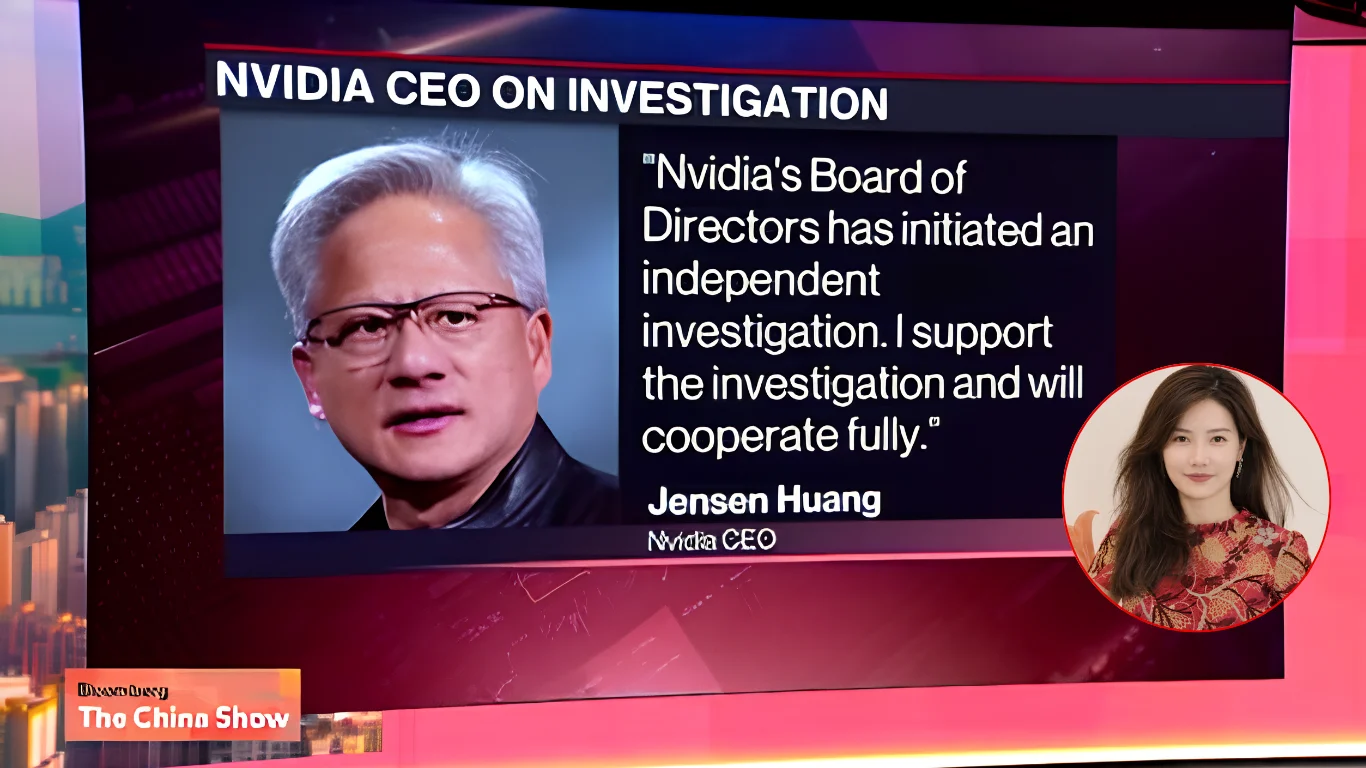
He also addressed the national-security concerns surrounding the controversy. Huang said he supported the board’s investigation and would cooperate fully.
He reaffirmed his commitment to Nvidia and said he wanted to regain the confidence of employees, business partners and shareholders.
His message therefore addressed two separate issues: his personal conduct and the questions surrounding a possible foreign intelligence effort.
Why has Nvidia launched an independent investigation?
On November 8, Nvidia’s board announced an independent investigation into reports that foreign intelligence operatives may have targeted Huang.
The board appointed a committee of independent directors and said outside independent legal counsel would assist the review.
The investigation will examine the available information to determine whether anyone compromised Nvidia’s confidential information or US national security.
Importantly, Nvidia’s board stated that it had no reason to believe that either national security or the company’s secrets had been compromised. However, it wants to examine the allegations rather than rely on assumptions.
The board also expressed confidence in Huang and his leadership team. It confirmed that Huang supports the investigation and will cooperate with the process.
This distinction matters. Nvidia has not announced that it found evidence of espionage, a leak of trade secrets or wrongdoing involving its CEO. Instead, the company has started an investigation because of the seriousness of the reports.
What does the China connection have to do with Nvidia’s AI chips?
The controversy has a larger geopolitical dimension because the United States and China are competing to lead the artificial intelligence industry.
Advanced AI chips play a major role in this competition. They provide the computing power that companies and governments need to develop sophisticated AI models, process enormous amounts of information and build advanced computing systems.
Nvidia makes some of the most sought-after AI processors in the world. However, the US government restricts the export of certain advanced chips to China because officials fear that unrestricted access could strengthen China’s military and technological capabilities.
These restrictions also create challenges for Nvidia. China represents an important market for technology companies, and limiting chip sales can affect their business opportunities.
Huang has repeatedly argued that the United States should maintain a presence in the Chinese market rather than allow domestic Chinese chipmakers to develop without competition from American companies.
He has also warned that strict export restrictions could encourage Chinese companies to develop their own alternatives and reduce their dependence on US technology.
This position has attracted attention because the latest allegations suggest that Chinese intelligence may have tried to influence Huang or gain access to information through his personal relationship with Alice Huang.
However, investigators still need to establish whether anyone actually used the relationship to influence Nvidia’s business decisions or obtain confidential information.
What happened to Nvidia’s shares and why are investors concerned?
The controversy has also affected investor confidence.
On November 9, Nvidia shares closed 4.3% lower, reducing the company’s market value by approximately $190 billion, according to Reuters.
Investors have several reasons to watch the investigation closely.
First, Huang has led Nvidia for more than three decades and remains closely associated with its growth and business strategy. Any uncertainty about his position could affect investor confidence.
Second, the allegations could increase scrutiny of Nvidia’s business relationships, particularly those involving overseas data-centre companies and customers with connections to China.
Third, the controversy could complicate the company’s relationship with US policymakers at a time when the government continues to debate how much access China should have to advanced American technology.
However, investors should not interpret the share-price decline as proof that Nvidia has suffered a security breach. The market reaction reflects uncertainty and concerns about possible future consequences.
Nvidia and Jensen Huang face a shareholder lawsuit
The controversy took another turn on November 9, when investors filed a proposed class-action lawsuit against Nvidia and Jensen Huang in a federal court in San Jose, California.
According to Reuters, the complaint accuses the company and its CEO of misleading shareholders by concealing information about Huang’s alleged relationship with Alice Huang and the potential risks it could create for Nvidia.
The plaintiffs argue that the alleged relationship and the related national-security concerns could damage the company’s reputation and business prospects.
They are seeking unspecified damages.
However, the lawsuit contains allegations, not established findings. A court will have to examine the claims and determine whether the defendants violated securities laws.
Shareholder lawsuits often follow major stock-price declines, particularly when investors believe a company failed to disclose information that could have affected their investment decisions.
What have the US and Chinese governments said?
The allegations have attracted attention in Washington because Nvidia supplies technology that plays a major role in America’s AI industry.
Earlier in November, Republican lawmakers called on Huang to brief Congress about the reported intelligence concerns. They said lawmakers needed to understand whether the allegations had exposed sensitive American technology or national-security interests to risk.
US President Donald Trump also commented on the controversy. He described Huang as an honourable person and said he had not discussed the allegations with him.
Meanwhile, China’s Foreign Ministry rejected claims that Beijing had sent an intelligence operative to develop a relationship with Huang. On November 9, ministry spokesperson Guo Jiakun described the allegations as unsubstantiated and an attempt to smear China.
These responses highlight the political sensitivity of the case. However, neither the Chinese government’s denial nor the intelligence assessments replace the need for evidence.
What happens next? Five major questions remain
The independent investigation will determine how much the controversy affects Nvidia and its leadership. Several questions remain unanswered.
- Did anyone access confidential information? Investigators need to determine whether Huang shared Nvidia’s business plans, technical information, customer details or other sensitive material with Alice Huang or anyone connected to her.
- Was Alice Huang working for Chinese intelligence? US intelligence officials reportedly consider her a Chinese intelligence asset. Investigators will need to establish the evidence behind that assessment and determine whether she received any instructions from Chinese authorities.
- Did the relationship influence Nvidia’s business decisions? Investigators may examine whether anyone tried to influence Huang’s position on chip exports to China or other company policies.
- Why did Huang hire Heller in October 2025? The firm reportedly began handling communications around the time the first major reports linked him to Alice Huang. However, its exact responsibilities and knowledge of the relationship remain unclear.
- Will Huang continue as Nvidia’s CEO? The board has expressed confidence in him and has not announced any leadership change. However, the investigation could influence future decisions if it uncovers evidence of serious misconduct or security failures.
Why this controversy matters beyond Jensen Huang’s personal life
The controversy involves more than an executive’s admission of infidelity. It raises questions about corporate responsibility, the protection of sensitive technology, foreign intelligence operations and the relationship between business leaders and national governments.
Nvidia occupies an important position in the global AI industry. Its chips power technology that businesses, governments and research institutions increasingly depend on. Consequently, any credible concern about the security of its leadership or confidential information deserves serious attention.
At the same time, investigators must separate established facts from allegations. Huang has admitted to an affair, Nvidia has confirmed an independent investigation, and WIRED has reported that he hired a crisis communications firm in October 2025. However, the available public information does not establish that he handed over company secrets, that Nvidia suffered a security breach or that the alleged intelligence operation succeeded.
The investigation will need to answer those questions. Until then, the controversy remains a major test of Nvidia’s corporate governance, Huang’s leadership and the security arrangements surrounding one of America’s most strategically important technology companies.

Mansi Sharma is a journalist covering Global Affairs, and wellness, known for turning complex ideas into sharp, engaging narratives. Her work is driven by curiosity, depth, and a constant urge to question and explore. When she’s not writing, you’ll often find her diving into new ideas—preferably with a cup of coffee in hand, one sip at a time.