
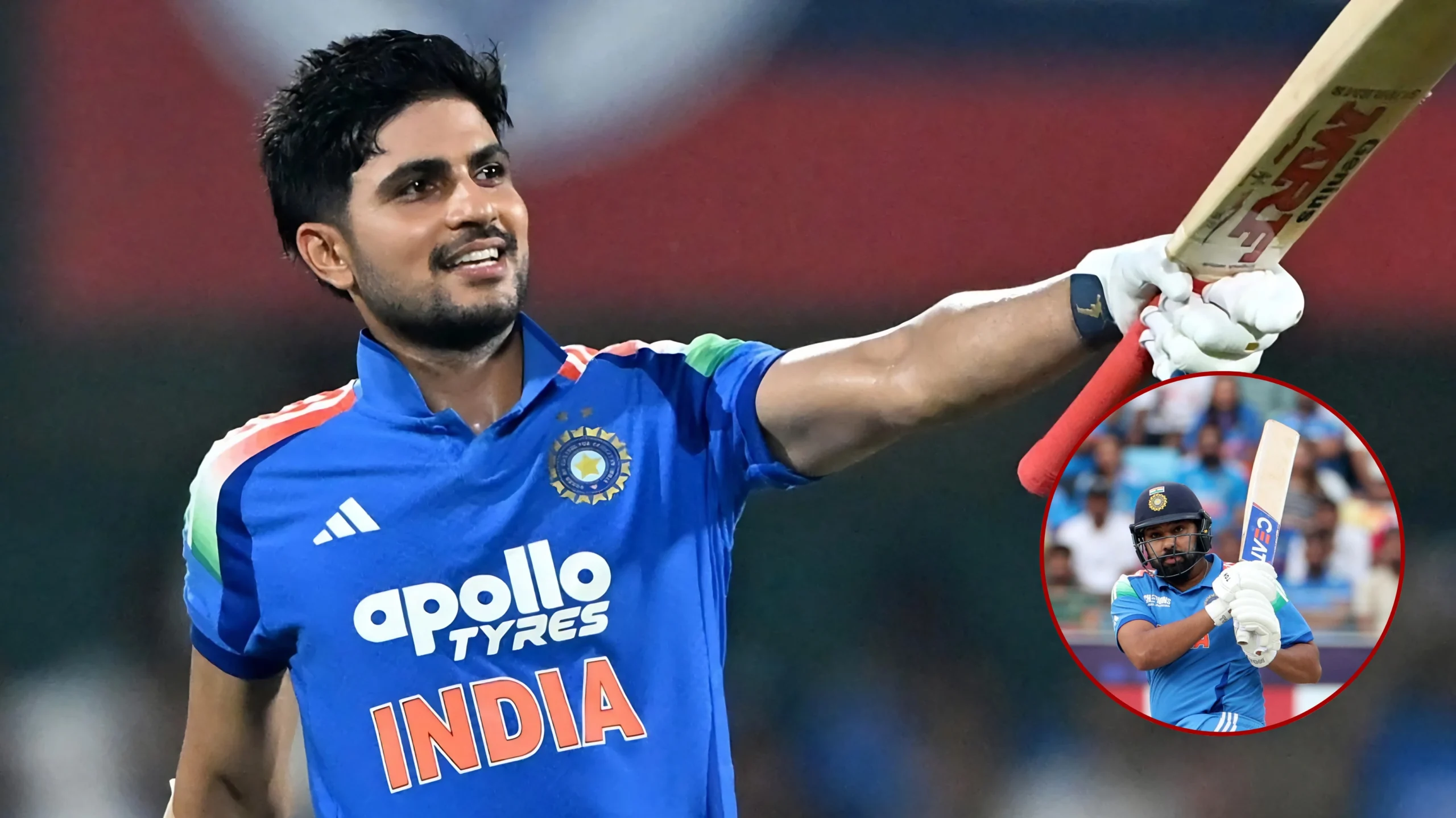
India win the series 2-0 after a record-breaking run-fest as Gill hits the fastest ODI double century and the highest score by a captain; WI also made History with Three Centuries in Guwahati
Guwahati: India delivered one of the most remarkable performances in ODI cricket as they chased down a huge target of 406 against West Indies by eight wickets with 39 balls to spare at Barsapara Cricket Stadium. Captain Shubman Gill led the chase with an unbeaten 223 off 133 balls. He recorded the highest score by an ODI captain and powered India to the second-highest successful chase in ODI history.
Earlier, West Indies created history by scoring 405 for 7, their highest ODI total. John Campbell, Shai Hope and Amir Jangoo all scored centuries, making it the first time three West Indies batters had scored hundreds in the same ODI innings.
The match produced a huge total of 811 runs, the third-highest aggregate in ODI history. Both teams dominated with the bat on a good pitch under the lights, giving cricket fans a memorable run-fest.
West Indies Make History with Three Centuries
India won the toss and chose to field, but West Indies quickly put pressure on the inexperienced Indian pace attack.
Opener John Campbell gave West Indies a flying start. He scored 101 off just 68 balls, hitting nine fours and five sixes. He reached his fifty in only 29 balls and completed his century in 65 balls. Also He recorded the fastest ODI century by a West Indian against India, breaking the previous record.
Captain Shai Hope then continued the attack with a composed 104 off 94 balls. He hit eight fours and three sixes to bring up his 20th ODI century.
Amir Jangoo then took the attack to India. He smashed 114 off 77 balls, including 13 fours and three sixes. He reached his century in around 69-70 balls.
The three batters helped West Indies reach 405 for 7. The score broke their previous highest ODI total of 389 against England in 2019.
The innings also created another major record. Three batters scored centuries in the same ODI innings for only the sixth time in ODI history. West Indies became the first team from the Caribbean to achieve the feat. South Africa had achieved it three times, while England and Australia had done it once each.
It was also only the second time any team had scored three centuries in an ODI innings against India. South Africa previously achieved the feat when they scored 438 for 4 in Mumbai in 2015.
Kuldeep Yadav took two wickets and finished as India’s most successful bowler. However, India’s seamers, including debutant Auqib Nabi, struggled on the flat pitch. And India also missed injured fast bowlers Jasprit Bumrah and Mohammed Siraj.
India Begin a Record Chase
India needed 406 runs to win, a target higher than any they had successfully chased before. The hosts responded immediately through openers Rohit Sharma and Shubman Gill.
The pair put together a stunning 255-run opening partnership from just 158 balls. It became India’s second-highest opening partnership in ODIs.
Rohit Sharma scored 101 off 75 balls, hitting 10 fours and six sixes. He completed his 35th ODI century and also crossed 12,000 runs in the format.
Rohit became only the third Indian after Sachin Tendulkar and Virat Kohli to reach 12,000 ODI runs. He eventually fell lbw to Jayden Seales in the 27th over.
Gill, however, continued to dominate the West Indies bowling attack.
He reached his 11th ODI century in only 62 balls, continuing the strong form he showed with a century in the first ODI.
Gill then increased the pace. He reached 150 in just 89 balls, the fastest 150 by an Indian batter in ODIs. He then reached his double century in only 117 balls, setting a new record for the fastest 200 in ODI cricket.
Gill broke Ishan Kishan’s previous record of 126 balls for an ODI double century.
He finished unbeaten on 223 from 133 balls, with 26 fours and eight sixes. He scored at a strike rate of 167.67.
The innings gave Gill his second ODI double century. He joined Rohit Sharma as the only players to score more than one ODI double century.
Gill also recorded the highest individual score in an ODI chase in List A cricket and the highest individual score by a captain in ODI history.
His 333 runs across the first two matches of the series also placed him among the highest run-scorers in consecutive ODI innings.
Virat Kohli added a quick 29 from 19 balls before West Indies dismissed him. Ruturaj Gaikwad stayed unbeaten on 31 as India reached 406 for 2 in 43.3 overs.
India completed the second-highest successful chase in ODI history. Only South Africa’s famous chase of 438 against Australia in Johannesburg in 2006 remains higher.
India also became the first team since that match to successfully chase a target of more than 400 runs. The result gave India their highest successful ODI chase.
Key Records Broken in Guwahati
- India’s highest successful ODI chase: 406
- Second-highest successful ODI chase overall: 406
- Fastest ODI double century: Shubman Gill, 117 balls
- Highest score by an ODI captain: Shubman Gill, 223*
- Highest individual score in an ODI chase in List A cricket: Gill, 223*
- West Indies’ highest ODI total: 405/7
- First time West Indies scored three centuries in one ODI innings
- Sixth overall instance of three centuries in an ODI innings
- Highest India-West Indies match aggregate: 811 runs
- Third-highest ODI match aggregate overall: 811 runs
- Rohit Sharma reaches 12,000 ODI runs and becomes the third Indian to do so
- India extend their consecutive bilateral ODI series wins against West Indies to 14
West Indies’ 405 also became one of the highest ODI totals in a losing innings.
India Seal the Series 2-0
India had already won the first ODI in Thiruvananthapuram by eight wickets. Gill and Kohli both scored centuries in that match.
This victory gave India an unassailable 2-0 lead in the three-match series, with one match still remaining.
Gill, who currently holds the No. 1 position among ODI batters, continued his excellent form while leading India as captain.
West Indies showed strong batting form and produced another huge total. However, their bowlers could not create enough pressure against India’s strong top order on a batting-friendly pitch. The visitors have shown that they can score heavily but now face the challenge of stopping India from taking a clean sweep.
Why This Match Will Be Remembered
The Guwahati ODI was much more than another high-scoring match. Both teams attacked throughout the game and produced almost 94 overs of aggressive batting.
The boundaries kept coming, records continued to fall and neither team backed away from the attacking approach, even after West Indies pushed their total beyond 400.
Gill’s innings will remain the biggest highlight of the night. He combined controlled batting with aggressive stroke play and continued attacking even under the pressure of a record target.
Barsapara Stadium witnessed a remarkable night of ODI cricket on September 30, 2026. West Indies started the match by creating history with three centuries in one innings. India then responded with a record-breaking chase led by their captain.
The match answered several major questions: How did West Indies cross 400? Who scored the three centuries? How did India chase such a huge target? Which records fell? And what does the result mean for both teams?
In the end, Shubman Gill became the central figure of the night. His unbeaten 223 powered India to a historic 406-run chase and became the defining performance of an extraordinary night in Guwahati.

Mansi Sharma is a journalist covering Global Affairs, and wellness, known for turning complex ideas into sharp, engaging narratives. Her work is driven by curiosity, depth, and a constant urge to question and explore. When she’s not writing, you’ll often find her diving into new ideas—preferably with a cup of coffee in hand, one sip at a time.