
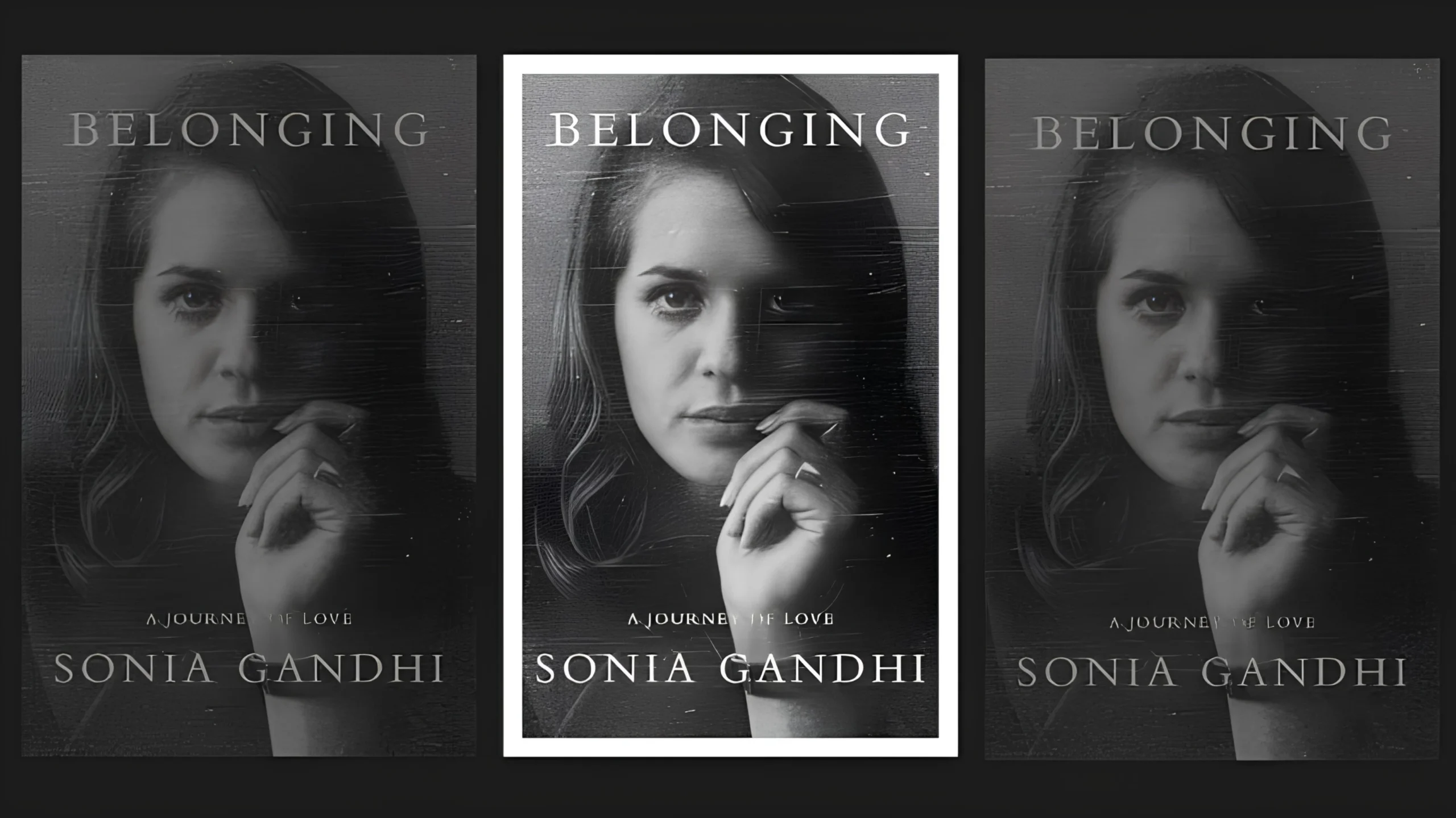
HarperCollins India will publish Sonia Gandhi’s memoir Belonging: A Journey of Love on November 10, ending weeks of uncertainty over its Indian release
New Delhi: HarperCollins India will publish Congress leader Sonia Gandhi’s long-awaited memoir, Belonging: A Journey of Love, on November 10, 2026. The announcement on Friday ended weeks of uncertainty over the book’s release in India.
The decision came after Penguin Random House India decided not to publish the Indian edition following reported disagreements over editorial changes to the manuscript.
The memoir will also release globally on November 10. Publishers have described it as one of the most awaited political memoirs of the era. The book gives a rare first-person account of a woman who spent decades at the centre of Indian public life while keeping much of her personal life private.
Why Did the Publisher Change?
Alfred A. Knopf, a New York-based imprint of Penguin Random House, first announced the memoir in mid-August 2026. The publisher set November 10 as the worldwide release date and planned an initial US print run of 100,000 copies.
William Collins, another HarperCollins imprint, will publish the book in the United Kingdom. However, questions soon emerged about the Indian edition after reports said Penguin Random House India would not publish it.
According to several reports, including a detailed report by The Indian Express, Penguin Random House India asked for certain “editorial changes and deletions” in parts of the manuscript. Sonia Gandhi’s representatives rejected those suggestions.
The reported discussions involved passages about Prime Minister Narendra Modi and his years in office. They also involved references to the Rashtriya Swayamsevak Sangh (RSS), communal tension and riots, the condition of minorities and India-China relations, including developments along the border.
Penguin Random House India rejected the suggestion that it simply stopped the publication because Sonia Gandhi refused to make editorial changes.
In a public statement, the publisher said that such a description “does not accurately reflect the circumstances.” It said publishers have both the right and responsibility to fact-check books and make recommendations when they believe those changes serve the book’s interests.
The publisher also said it still wanted to publish the memoir. It described the situation as an “impasse over a particular issue” during discussions.
Congress leaders and some opposition figures described the episode as an attack on freedom of expression. They also alleged that outside pressure influenced the decision.
Penguin Random House India rejected those allegations.
HarperCollins India’s decision to publish the book has now settled the immediate question of whether Indian readers will get the memoir.
In a social media statement, HarperCollins India described the book as “a dramatic and deeply personal story of love, identity, duty and belonging.” The publisher said the memoir also offers “a rare insider’s view of India’s journey.”
What Will Sonia Gandhi’s Memoir Cover?
Belonging: A Journey of Love runs for about 544 pages. Publishers say the book connects Sonia Gandhi’s personal experiences with major political events. It combines intimate memories with the larger story of India’s political life.
The memoir does not present itself as a traditional political manifesto or a detailed account of government policies. Instead, Sonia Gandhi tells the story of belonging and identity.
The book follows the journey of an Italian woman who entered one of the world’s most influential political families and later became a central figure in the Indian National Congress.
The memoir begins in post-war Italy.
Sonia Maino grew up in Italy’s Veneto region, around Sangano and Orbassano near Turin. She experienced a modest childhood shaped by the aftermath of the Second World War.
She later studied foreign languages in Turin before travelling to England to improve her English.
In Cambridge in 1965, 19-year-old Sonia met Rajiv Gandhi. At the time, Rajiv studied in Cambridge and belonged to the Nehru-Gandhi family. He was the grandson of India’s first prime minister, Jawaharlal Nehru.
Sonia’s memoir describes a romance that began almost at first sight. The couple married in 1968.
Sonia then moved to India and began adjusting to a new country, language and culture. She also entered a family that faced constant public attention.
Readers will learn about her early years as a young wife and daughter-in-law. She writes about learning Hindi, wearing saris, adapting to Indian food and household routines, and living alongside the powerful presence of Indira Gandhi.
The memoir then moves through a series of tragedies that changed the family forever.
These include the death of Sanjay Gandhi in a plane crash, the assassination of Indira Gandhi in 1984 and the assassination of Rajiv Gandhi in 1991.
These deaths changed more than Sonia Gandhi’s personal life. They also changed the political future of India.
From Reluctant Politician to Longest-Serving Congress President
Sonia Gandhi stayed away from active politics for several years after Rajiv Gandhi’s death. She resisted repeated calls to enter politics.
The memoir revisits that period and explains how she eventually decided to take charge of the Congress party.
She later became the party’s longest-serving president.
The 2004 general election became one of the most important moments in her political journey.
The Congress-led United Progressive Alliance won a surprise victory in the election. Congress then offered Sonia Gandhi the prime minister’s post.
She declined the position.
Instead, she chose to lead the alliance while Manmohan Singh served as prime minister. The UPA government went on to govern India for the next decade.
Sonia Gandhi’s decision sparked widespread debate at the time and continues to attract attention more than two decades later.
The memoir presents that decision as an important part of her ideas about duty, identity and political responsibility.
The book also reflects on her interactions with later political leaders, including Narendra Modi. It looks at the wider social, economic and political changes that she witnessed during six decades in India.
In a statement released by her US publisher, Sonia Gandhi explained why she decided to write the memoir.
She said that many people had written about her family, but few accounts had explored the family members’ motivations, actions and human weaknesses from their own perspective.
And She described the book as a tribute to their humanity.
She also said the memoir gives readers her perspective on the social and political changes she witnessed during six decades in India, which she called the “beautiful country of my belonging.”
Sonia Gandhi has also described writing the memoir as a difficult experience.
She said writing about her life forced her to open up and share memories and experiences that she had kept private for years.
She said love and loyalty ultimately connected the different parts of her story.
That journey starts with her childhood in a small town in Italy. It then moves through her life as Rajiv Gandhi’s wife and Indira Gandhi’s daughter-in-law before reaching her role as a political leader in her own right.
Why Does the Memoir Matter?
Sonia Gandhi has remained one of the most closely watched yet private figures in Indian public life.
She protected her personal life for decades.
Belonging therefore marks a major decision to open up about that private world.
For people interested in the Nehru-Gandhi family, the memoir offers something different from biographies written by outsiders. Sonia Gandhi herself tells the story.
The book also comes at an important time for people following Indian politics. Debates over freedom of expression, institutional independence and the limits of political speech continue across the country.
The controversy around the book has itself become part of the story.
Reports about disagreements over passages involving Narendra Modi, the RSS, communal issues and foreign policy have raised questions about the pressures publishers may face when they handle politically sensitive books in India.
Penguin Random House India has maintained that it based its decisions on editorial and fact-checking concerns.
HarperCollins India, meanwhile, has agreed to publish the memoir.
These two positions give the public different versions of what happened.
Readers will ultimately get the chance to examine the memoir themselves when it reaches Indian bookstores.
When Will the Book Release in India?
HarperCollins India will release Belonging: A Journey of Love in India on November 10, 2026.
The book will arrive on the same day in the United States through Alfred A. Knopf and in the United Kingdom through William Collins.
Publishers and booksellers will announce the exact price, formats and pre-order details closer to the release date.
The book may come in formats such as hardcover, paperback, ebook and audiobook.
The memoir has already received significant attention, and Knopf has announced an initial US print run of 100,000 copies. This publicity could drive strong demand in India as well.
What the Memoir Is — and Is Not
Publishers have presented Belonging as a personal story rather than a complete political history.
The book does not attempt to provide a detailed account of every political decision, election campaign or institutional conflict.
It also does not present itself as an exercise in settling political scores.
Instead, Sonia Gandhi uses the memoir to explore the human side of power, loss, family and public service.
The book’s main strength lies in her personal perspective. She experienced many of the events she describes from inside one of India’s most influential political families.
After decades in public life, she has now chosen to tell her own version of that journey.
For readers who want to understand how an Italian student became one of the most important figures in modern Indian politics, Belonging: A Journey of Love offers a rare first-person account.
The memoir also gives readers an opportunity to explore the personal costs of public life within the Nehru-Gandhi family.
With HarperCollins India now confirmed as the Indian publisher, readers in the country will get the memoir at the same time as audiences in the US and UK.
The story of how the memoir reached Indian bookshelves has already created its own controversy.
Now, the actual contents of the book will determine whether it lives up to the expectations created since its first announcement in August.
