
Know the date, city-wise moonrise timings, puja muhurat, vrat katha, fasting rules and rituals for Karva Chauth 2026 on October 29
New Delhi: Karva Chauth 2026 falls on Thursday, 29 October. Across North India and among Indian communities around the world, married women will wake up before dawn, eat sargi, observe a strict fast without food or water, perform evening puja and wait for the moon to rise before drinking even a drop of water. People also call this festival Karwa Chauth or Karak Chaturthi. It is one of the most emotional and visually beautiful festivals in the Hindu calendar. The festival falls about a week before Diwali and marks the beginning of the festive season for many families.
When Exactly Is Karva Chauth 2026?
In India, women will observe Karva Chauth on Thursday, 29 October 2026. The Chaturthi tithi of Kartik Krishna Paksha begins at around 1:06 AM and ends at around 10:09 PM on the same day. The exact timings may vary slightly according to the panchang, or Hindu calendar. Since the tithi covers the day and continues until after moonrise, women will observe the fast on 29 October.
In the United States and Canada, many calendars list Wednesday, 28 October, because of the time-zone difference and the timing of the lunar tithi at local moonrise. The UK, Australia and most other countries generally follow the Indian date of 29 October. Always check a reliable local panchang for your city to confirm the correct date.
Key Timings for New Delhi (2026)
- Sunrise / Start of Fast: Approximately 6:31 AM
- Puja Muhurat (Pradosh): 5:38 PM–6:56 PM
- Expected Moonrise: Around 8:17 PM, although some sources give a window of 8:12–8:17 PM
- End of Fast: Only after sighting the moon and offering arghya
Moonrise times vary significantly from one city to another. The approximate moonrise times for 29 October 2026 include:
- Kolkata: Around 7:47 PM
- Lucknow: Around 8:06 PM
- Chandigarh: Around 8:12 PM
- Jaipur: Around 8:28 PM
- Hyderabad: Around 8:41 PM
- Chennai: Around 8:44 PM
- Bengaluru: Around 8:55 PM
- Mumbai and Pune: Around 8:58–9:00 PM
- Ahmedabad: Around 8:52 PM
Check the exact moonrise time for your city on the day of the festival.
What Does “Karva Chauth” Mean?
The word “Karva” or “Karwa” refers to the small earthen pot that women traditionally use to offer water, known as arghya, to the moon. The word “Chauth” means the fourth day of a lunar fortnight.
The festival falls on Krishna Paksha Chaturthi in the Hindu month of Kartik, according to the Purnimanta calendar that people use in North India. Some religious texts also refer to the festival as Karak Chaturthi.
Significance – Why Do Women Fast?
At its heart, Karva Chauth is a prayer for a husband’s long life, good health, prosperity and protection. Over the centuries, the festival has also become a celebration of marital love, companionship and a wife’s devotion.
Women wear bridal colours, apply mehendi, adorn themselves with solah shringar and spend the day observing the fast with dedication. In modern times, many couples use the occasion to express their love and appreciation for each other. Some husbands also observe a partial fast or support their wives throughout the day.
The Stories Told on Karva Chauth
Women traditionally share three main stories during the evening gathering.
1. Queen Veeravati
The story of Queen Veeravati remains the most popular Karva Chauth katha. Veeravati was the only sister of seven brothers. Her brothers tricked her into breaking her fast early by creating the appearance of a moon with a lamp and a mirror. Soon after, her husband fell seriously ill.
Veeravati observed the complete fast again the following year with full faith and devotion. According to the story, her husband recovered. The traditional ritual of looking at the moon through a sieve is also linked to this story, as it reminds women to look at the real moon before breaking their fast.
2. Karva and the Crocodile
According to another story, a devoted wife named Karva used the power of her purity to bind a crocodile that had seized her husband. She then prayed intensely to Yama, the god of death, and asked him to save her husband. Her devotion moved Yama, who restored her husband’s life. This story also explains the origin of the festival’s name.
3. Savitri and Satyavan
The story of Savitri and Satyavan comes from the Mahabharata. Savitri followed Yama when he took her husband’s life. Through her wisdom, determination and devotion, she persuaded the god to restore Satyavan’s life. Some folk versions of the Karva Chauth stories also connect Draupadi with the festival.
These stories highlight patience, sincerity, devotion and the power of a sincere vow.
Who Observes the Fast?
Traditionally, married Hindu women in North Indian states such as Punjab, Haryana, Delhi, Rajasthan, Uttar Pradesh, Himachal Pradesh and parts of Madhya Pradesh observe Karva Chauth.
Today, many unmarried women also observe the fast while praying for a future husband. Indian communities around the world have also adopted the festival and continue to follow its traditions.
Pregnant women, people who feel unwell, those taking medication and anyone whose doctor advises against fasting can choose a partial fast or consume water and light food when needed. Health should always come first.
Sargi – The Pre-Dawn Meal
Before sunrise, the mother-in-law or another elder in the family prepares or sends sargi for the woman observing the fast.
A traditional sargi meal may include pheni or seviyan cooked in milk, mathri, parantha, curd, fresh fruits, dry fruits, coconut, sweets and plenty of water. Women eat sargi before sunrise to prepare themselves for the long nirjala fast, during which they avoid both food and water.
A nutritious sargi meal can make the day easier and help women manage the long hours without food or water.
Fasting Rules
The traditional form of the Karva Chauth fast is called nirjala vrat. Women avoid all food and water from sunrise until they see the moon and offer arghya.
However, many families allow women to drink water when their health requires it. The purpose of the vow matters more than putting the body through unnecessary hardship.
Women should avoid heavy physical work, harsh conversations and activities that use up too much energy. They can rest, apply mehendi, prepare the puja thali and keep their minds calm and positive throughout the day.
Puja Samagri Checklist
Prepare the following items before the puja:
- Karva, an earthen pot with a spout
- Sieve or chhalni
- Diya, along with ghee or oil and wicks
- Roli or kumkum
- Sindoor
- Rice grains, also known as akshat
- Incense sticks
- Flowers
- Sweets and fruits
- Water for the ritual
- A small picture or idol of Gauri, Shiva and Ganesha, or Chauth Mata
- Red cloth
- Puja thali
Many families also keep 13 wheat grains, a small amount of money and gifts for the mother-in-law. People call these gifts baya.
Step-by-Step Rituals for the Day
1. Wake up early and eat sargi.
Wake up before sunrise, bathe and eat sargi. Make a sankalp, or mental vow, to observe the fast with devotion and pray for your husband’s long life.
2. Spend the day calmly.
Avoid exhausting activities and use the day to rest and prepare for the evening puja. Many women apply mehendi the previous evening. They also wear red, maroon or other bright colours, along with bangles, sindoor and jewellery.
3. Gather for the evening puja.
In the late afternoon or during the puja muhurat, gather with other women. Arrange the puja thalis in a circle and prepare the items needed for the rituals.
4. Perform the puja and listen to the katha.
Pray to Ganesha, Gauri and Shiva, and light the diya. Listen to or recite the complete Karva Chauth katha. During the traditional ritual, women pass the karvas around the circle at specific points. People call this practice feri.
5. Wait for the moon to rise.
After completing the katha and evening rituals, wait for the moon to appear.
6. Offer arghya to the moon.
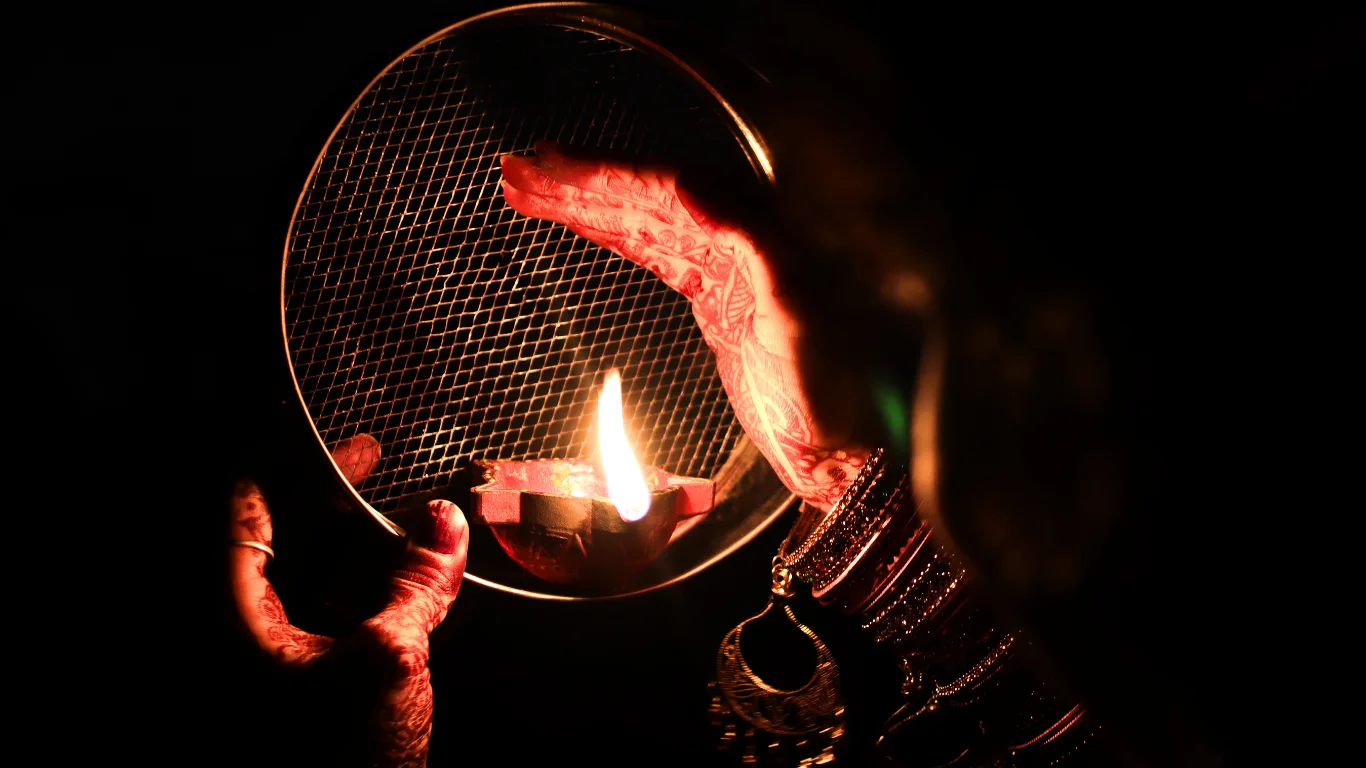
Once the moon appears, go outside and look at it through the sieve. Offer water from the karva as arghya while praying. Then look at your husband’s face through the same sieve and perform his aarti.
7. Break the fast.
The husband traditionally offers his wife the first sip of water and the first bite of food. She then breaks her fast.
8. Share a meal and exchange gifts.
Many families exchange gifts and enjoy a special dinner together after completing the rituals.
Why Do Women Look at the Moon Through a Sieve?
The sieve, also called a chhalni, plays an important role in the Karva Chauth rituals. Women look at the moon through the sieve to make sure they see the real moon before breaking their fast. The practice also reminds them of Queen Veeravati’s story.
Women then look at their husbands through the same sieve. This ritual symbolically filters out negativity and focuses their prayers and blessings on their husbands.
Practical Tips for a Smooth Fast
- Drink enough water the day before: Hydrate well before the fast and drink plenty of water during sargi.
- Get enough rest: Avoid unnecessary physical activity, especially during the hottest hours of the day.
- Keep yourself occupied: Spend time talking to family, applying mehendi or praying instead of constantly checking the clock.
- Break the fast slowly: After moonrise, take your first few sips of water slowly to avoid discomfort.
- Listen to your body: If you feel unwell at any point, drink water or break the fast. Devotion does not require you to risk your health.
Modern Touch and Regional Traditions
In cities, many women now replace traditional community gatherings with family gatherings or video calls with friends and relatives. However, the emotional meaning of the festival remains the same.
Some husbands now observe a similar fast alongside their wives or prepare the evening meal to support them. Among Indian communities living abroad, the date may differ by a day depending on the local time zone and moonrise. However, the main rituals remain familiar.
Karva Chauth is more than a day of fasting. It represents love, patience and faith, and generations of families have continued these traditions year after year. On 29 October 2026, as the moon rises and women lift their sieves, many will repeat the same traditional prayer for long life, protection and the lasting strength of their relationships.
Whether you are observing Karva Chauth for the first time, helping a newly married daughter-in-law prepare for the festival or simply learning about its traditions, this guide covers the main practical and emotional aspects of the day. Check your local panchang for accurate timings, prepare your puja thali a day in advance and approach the vrat with a calm and sincere heart.
As the moon rises, its light passes through the sieve, and families come together to complete the rituals. For many people, this moment renews a tradition of devotion that has continued for generations under the October sky.

Mansi Sharma is a journalist covering Global Affairs, and wellness, known for turning complex ideas into sharp, engaging narratives. Her work is driven by curiosity, depth, and a constant urge to question and explore. When she’s not writing, you’ll often find her diving into new ideas—preferably with a cup of coffee in hand, one sip at a time.