
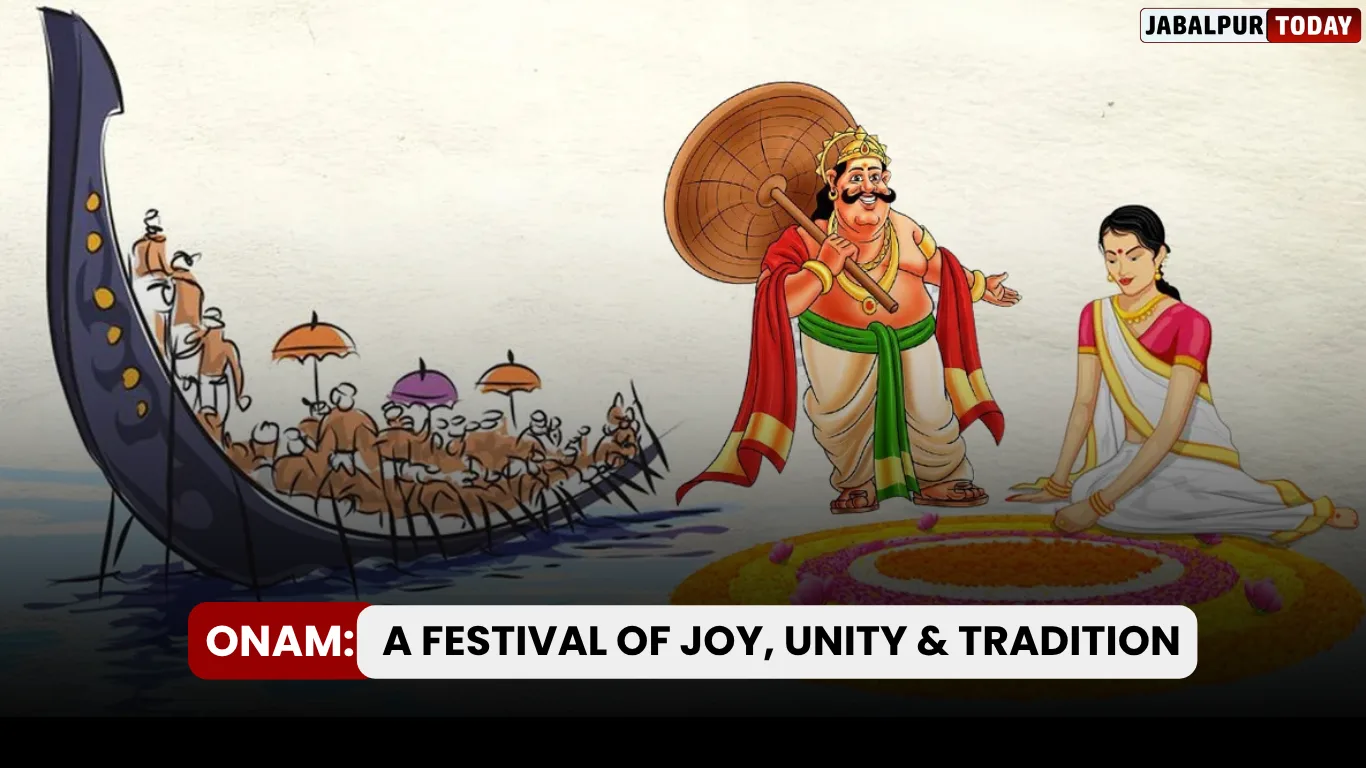
Know Why Kerala Welcomes King Mahabali With Flowers, Feasts and Festivities
New Delhi: Onam holds a special place in Kerala’s cultural identity. The festival brings together colourful floral Pookkalam, grand Sadhya served on banana leaves, traditional dances, boat races and family gatherings. This year, people celebrate Thiruvonam on Wednesday, August 26, 2026. However, Onam does not last for just one day. The festival begins with Atham and continues for around 10 days, with Thiruvonam marking the main day of celebrations.
When is Onam celebrated?
People celebrate Onam during the Chingam month of the Malayalam calendar, which usually falls between August and September. The 10-day celebration begins with Atham, while Thiruvonam marks the most important day. In 2026, the celebrations began with Atham on August 17 and reached their peak with Thiruvonam on August 26.
Simply put, August 26 does not represent a random festival date. The date marks the Thiruvonam nakshatra in the Malayalam calendar, which causes the corresponding Gregorian calendar date to change every year.
Why is Onam celebrated? The story of King Mahabali
The most popular Onam story centres on King Mahabali. According to legend, Mahabali ruled his kingdom with justice and generosity. His people loved him and enjoyed prosperity, equality and happiness during his reign.
According to the legend, Mahabali’s growing power and popularity worried the gods, who sought Lord Vishnu’s help. Vishnu took the form of Vamana, a dwarf Brahmin, and approached Mahabali. He asked the king for three paces of land. Mahabali accepted his request.
Vamana then took a gigantic form. He covered the earth with his first step and the heavens with his second step. When Vamana had no space left for his third step, Mahabali offered his own head.
Vishnu appreciated Mahabali’s devotion and sacrifice. He then allowed Mahabali to return and meet his people once every year. Kerala’s traditions associate this annual return of Mahabali with Onam.
What is the real significance of Onam?
Onam goes beyond religious rituals and ceremonies. The festival celebrates equality, prosperity, family and the spirit of sharing.
The belief in Mahabali’s return reminds people of an ideal era that represented prosperity and equality. Onam therefore encourages people to put aside their differences and come together. In Gen-Z language, the festival’s entire vibe can be summed up as “community over everything.”
Onam also serves as Kerala’s major harvest festival. The celebration connects with agriculture, the new harvest, prosperity and gratitude towards nature.
Pookkalam sets the festive mood
Pookkalam remains one of the most iconic elements of Onam. People create this floral rangoli outside their homes during the festival. Throughout the 10-day celebration, they add new flowers and patterns each day.
By the time Thiruvonam arrives, the Pookkalam becomes larger and more elaborate. In many places, children and young people come together to create it. The activity encourages competition, creativity and family bonding. People may not always win a trophy, but they create memories that last.
Why does the feast come on a banana leaf?
No discussion about Onam feels complete without Onam Sadhya. People traditionally serve this vegetarian feast on a banana leaf.
The feast includes rice, sambar, avial, thoran, olan, pickles, papad, bananas and different varieties of payasam, among several other dishes. However, Sadhya does not focus only on the number of dishes. It encourages people to sit together and share a meal. Sadhya represents the abundance, hospitality and sharing that Onam celebrates.
In the age of social media, the banana-leaf presentation of Onam Sadhya also offers plenty of visual appeal and can easily compete with a food reel.
Boat races and traditional dances add to the celebrations
During Onam, Kerala’s famous Vallamkali, or snake boat races, attract large crowds. Long boats carry several participants who row together in perfect rhythm. The races create an atmosphere filled with energy, coordination and teamwork.
Traditional performances such as Thiruvathirakali, Kathakali and Pulikali also play an important role in Onam celebrations. These performances bring together spirituality, entertainment and Kerala’s rich folk culture.
Is Onam celebrated only in Kerala?
Kerala hosts the biggest and most prominent Onam celebrations, and the festival holds the status of a major state festival. However, Onam no longer remains limited to Kerala.
Malayali communities across India also celebrate Onam on a large scale. States such as Tamil Nadu, Karnataka, Telangana, Andhra Pradesh, Maharashtra and Delhi host Onam programmes organised by Malayali associations and community groups. People who live away from Kerala stay connected to their roots through Pookkalam, Sadhya, cultural programmes and community gatherings.
Malayali communities abroad also celebrate Onam. The location may change, but people continue to celebrate the festival around the same core values: home, people, food and culture.
What is the Gen-Z connection with Onam?
Today’s Gen-Z connects with Onam by blending tradition with modern life. Traditional outfits, Pookkalam and Sadhya remain central to the celebrations, while Instagram reels, WhatsApp wishes and digital celebrations add a modern touch.
Technology has changed the way people celebrate, but it has not changed the festival’s basic spirit: bringing people together.
Therefore, Onam 2026 does more than celebrate the traditional story of King Mahabali’s return. It also celebrates the idea that prosperity does not depend only on money or luxury. Family, friends, community and shared happiness also create prosperity.
Onam delivers a simple message: people should not enjoy happiness alone. Happiness becomes more meaningful when people celebrate it together.
