
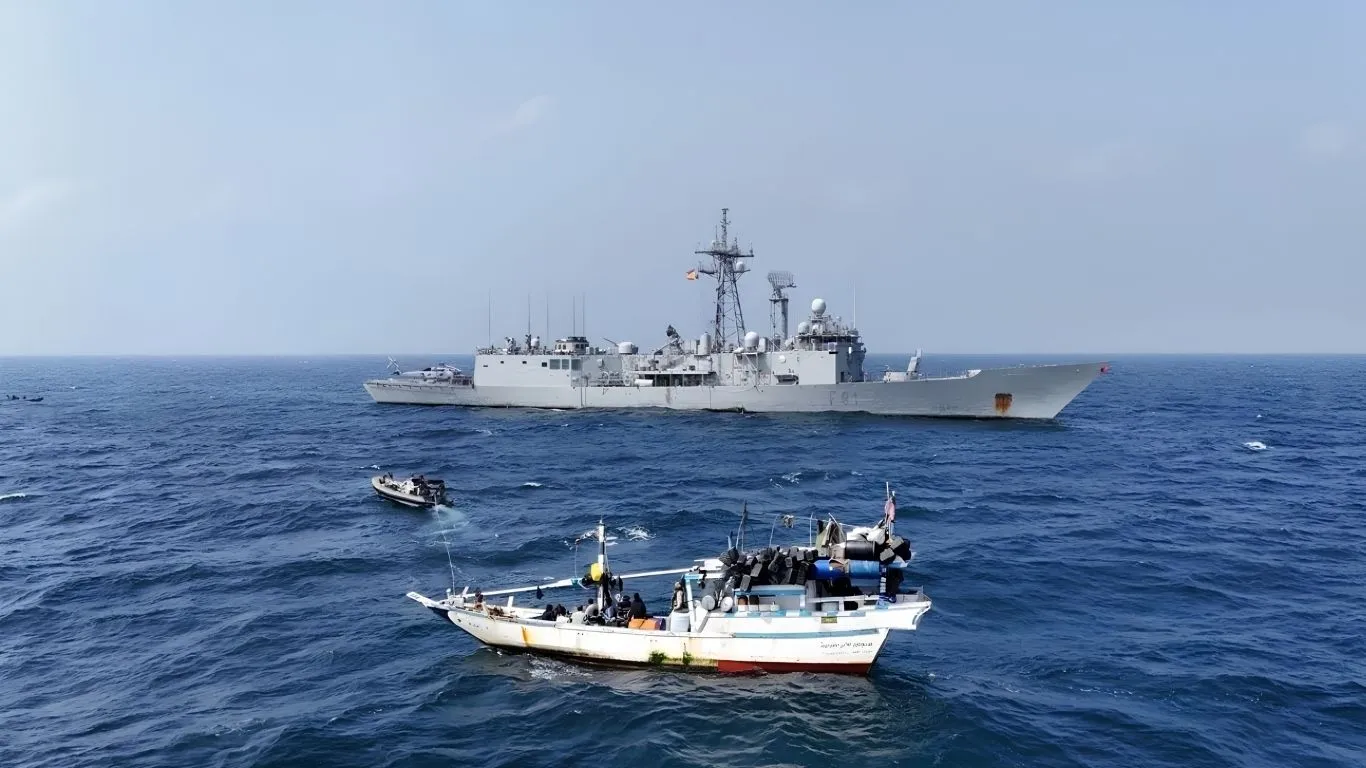
All 22 Indian crew members reported safe as pirates seize oil tanker off Yemen and cargo ship carrying Turkish weapons off Somalia
New Delhi; Two separate pirate attacks near Yemen and Somalia have once again raised concerns about maritime security in the Horn of Africa. Armed pirates hijacked two commercial vessels carrying a total of 22 Indian nationals.
Indian officials confirmed the incidents on Thursday and Friday. The first attack targeted an oil products tanker in the Gulf of Aden, while the second involved a cargo ship near Somalia’s Puntland coast.
According to the latest information from a senior shipping ministry official and the Directorate of Maritime Administration (DMA), all 22 Indian crew members remain safe. However, authorities have not yet shared complete details about the vessels’ current locations, conditions onboard or any negotiations that may be taking place.
The two incidents have highlighted a worrying increase in Somali piracy and other attacks in one of the world’s most important shipping routes. The attacks have also raised concerns about the safety of seafarers, instability in the region and the effectiveness of existing anti-piracy measures.
First Hijacking: Tanker M.T. Sibu 1 Seized in the Gulf of Aden
Six armed pirates boarded the Eritrea-flagged oil products tanker M.T. Sibu 1 in the Gulf of Aden on or around August 20. The vessel was sailing around 30 nautical miles from the Yemeni coast.
The tanker had a crew of 20 people. The crew included 16 Indian nationals, one Syrian, one Sudanese, one Iraqi and one seafarer whose nationality officials had not confirmed when they first reported the incident.
The Directorate of Maritime Administration said all 20 crew members were safe. However, authorities were still waiting for more information about the vessel’s exact location and the conditions onboard.
The DMA asked the concerned Recruitment and Placement Service Licence (RPSL) agency to submit a detailed report about the incident. It also asked the agency to provide regular updates through the e-Navik online marine casualty reporting system.
At least one recruitment agency, SKS Krishiv Marine Services, confirmed that it had placed four members of the crew. The agency also provided their details to the authorities.
The Gulf of Aden remains a high-risk maritime area because it lies close to Yemen’s conflict zones and the strategic Bab-el-Mandeb Strait. A large amount of global oil and container traffic passes through this important waterway.
Pirates can take advantage of the security problems caused by the region’s prolonged instability. As a result, attacks in the area can involve traditional piracy as well as wider regional security concerns.
Second Hijacking: Cargo Ship M/V LUTUF Attacked Off Somalia’s Puntland Coast
Pirates seized another vessel a few days earlier, on Monday, August 17. They targeted the Cameroon-flagged cargo ship M/V LUTUF around 3.5 nautical miles from Marraya in Puntland’s Eyl district.
The pirates later moved the vessel toward the Nugaal coast and an area near Garmaal in Dangoroyo district.
A Somali official, who spoke to the Associated Press on condition of anonymity, said eight pirates carried out the attack. Authorities suspected that the pirates belonged to the same group that hijacked the M/V Sward on April 26.
The LUTUF carried 10 crew members. The crew included six Indians, one Turkish national, one Georgian and two Serbian security guards.
Polar Movement Shipping owns the vessel. The ship was carrying weapons meant for a Turkish military training facility in Mogadishu. It also carried communications and satellite equipment.
The nature of this cargo made the hijacking more sensitive from a geopolitical point of view.
Turkish-owned vessels later moved toward the hijacked ship. Turkish helicopters and drones also monitored the area.
According to the same Somali official, a small boat later delivered khat, a local stimulant, to the vessel on Tuesday. After the boat returned to the shore, an airstrike reportedly killed four men and injured two others.
Authorities had not independently confirmed who carried out the airstrike or the exact identities of the people who died or suffered injuries.
Early reports also did not provide a clear picture of the LUTUF’s condition, its crew or its sensitive cargo. However, later statements from Indian officials confirmed that the Indian nationals remained safe.
Why These Waters Remain Dangerous
International naval forces, stronger security measures and improved governance in Somalia helped reduce piracy in the Gulf of Aden and off Somalia during the early 2010s.
However, the region has experienced a noticeable increase in piracy and other attacks between 2024 and 2026.
Earlier this year, pirates held vessels such as the oil tankers Honour 25 and Eureka, along with the cargo ship Sward, for extended periods. Dozens of seafarers, including Indian nationals, remained in captivity during some of these incidents, according to concerns raised by the International Maritime Organization (IMO).
Several factors continue to create security problems in the region.
Persistent insecurity in parts of Somalia, especially Puntland, gives pirate groups opportunities to operate. The ongoing conflict in Yemen also affects security around the Gulf of Aden. Economic hardship can push people toward pirate groups, while international naval forces have also shifted some of their attention toward other regional conflicts.
Indian sailors face particular risks because Indians make up a large part of the global merchant marine workforce. Many Indian seafarers work on vessels registered under different countries and sail with multinational crews. This can expose them to danger when their ships enter high-risk waters.
Indian Authorities’ Response and Protection of Seafarers
A senior official from India’s shipping ministry confirmed both incidents and the presence of 22 Indian nationals among the crews.
Officials said the latest available information showed that all Indian crew members were safe.
The DMA continues to monitor the situation and has asked manning agencies to provide formal reports and regular updates.
Indian authorities normally coordinate such cases through several agencies, including the Ministry of External Affairs, the Indian Navy’s Information Fusion Centre-Indian Ocean Region (IFC-IOR) and relevant Indian diplomatic missions.
India has also demonstrated its ability to respond quickly to piracy incidents.
In March 2024, the Indian Navy launched a major operation involving INS Kolkata and MARCOS special forces to free the hijacked MV Ruen. The operation also resulted in the capture of dozens of pirates hundreds of miles from the Indian coast.
The Indian Navy has carried out other operations during incidents in the Gulf of Aden and Arabian Sea.
Authorities have not publicly explained whether they are planning or carrying out a similar operation in the latest cases. Military authorities often keep operational details confidential to protect ongoing missions.
Manning agencies and the DMA continue to ask shipping companies and crews to follow Best Management Practices (BMP). These measures include keeping stronger watch, using secure citadels, changing speed and routes when necessary and using armed security when regulations allow it.
Authorities and recruitment companies generally keep families informed through official channels. However, families often remain worried until authorities confirm the release of the vessels or the safe return of the crew.
What the Hijackings Mean for Global Shipping
The latest hijackings come at a time when commercial shipping already faces serious security challenges.
Ships sailing through the Red Sea and nearby waters continue to face risks from drone and missile attacks. Shipping companies also face higher insurance costs and longer journeys because many vessels now avoid dangerous routes.
Successful or prolonged pirate attacks can encourage other groups to carry out similar attacks. They can also increase war-risk insurance premiums and force shipping companies to send vessels around the Cape of Good Hope.
The weapons and military-related equipment aboard the LUTUF add another layer of concern.
Turkey maintains a military presence in Somalia and plays a role in training Somali forces. A prolonged seizure of a vessel carrying weapons linked to Turkish military activities could affect regional relations and lead to further military action.
If authorities confirm that the reported airstrike directly resulted from the hijacking, the incident would also show how quickly a piracy case can develop into a wider security confrontation.
For India, these incidents underline the importance of maintaining a strong naval presence in the Indian Ocean Region. They also highlight the need for effective information sharing through platforms such as IFC-IOR and continued diplomatic cooperation with Somalia, Yemen and other regional partners.
At the centre of the issue remain the seafarers themselves. These workers keep international trade moving but often face serious personal risks when they sail through dangerous waters.
What Happens Next
The immediate priority for authorities remains the safety of all crew members and their eventual safe release or extraction.
Authorities are expected to continue tracking the vessels, assessing possible negotiation options and considering whether any intervention may become necessary. Officials will also continue supporting the families of the affected seafarers.
Shipping companies and flag states are likely to review their security measures after the attacks. International organisations such as the IMO may also renew calls for stronger vigilance and better coordination among countries operating in the region.
The two hijackings show that piracy remains a serious threat in the waters near Yemen and Somalia.
For the 22 Indian nationals and their fellow crew members, the immediate priority remains reaching a safe outcome. For the wider maritime industry, the attacks highlight the need for stronger prevention measures, faster response systems and continued efforts to address the conditions that allow piracy to grow.
Indian agencies, regional authorities and international partners will continue to monitor the situation and work toward resolving the incidents while taking steps to prevent further attacks.All 22 Indian crew members reported safe as pirates seize oil tanker off Yemen and cargo ship carrying Turkish weapons off Somalia
