
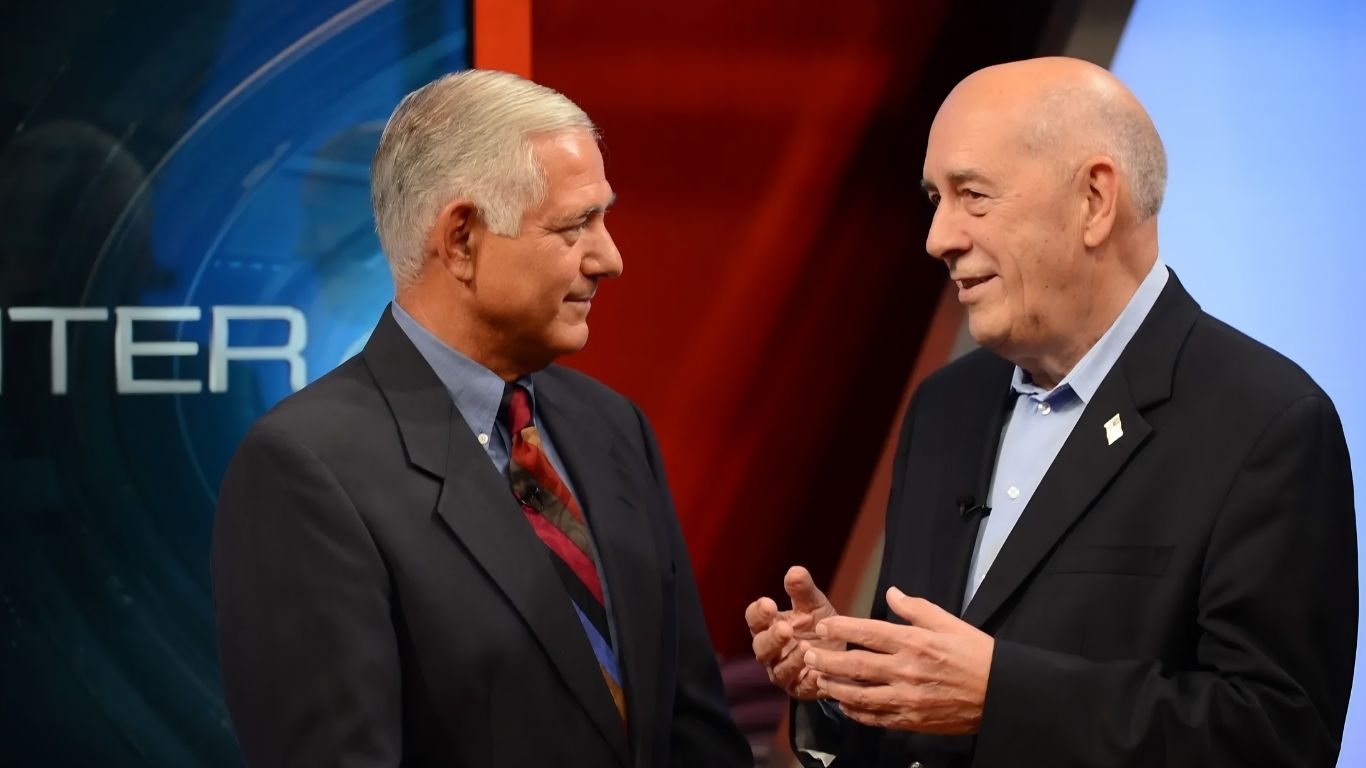
Bill Rasmussen, the man whose idea helped transform sports broadcasting into a round-the-clock television industry, has died at the age of 93
Bristol, Connecticut: Bill Rasmussen, the co-founder of ESPN who helped turn round-the-clock sports coverage into a global television phenomenon, has died at the age of 93.
Rasmussen died on Tuesday, August 18, at his home in Florida. He had lived with Parkinson’s disease for several years. Doctors diagnosed him with the condition in 2014, although he spoke publicly about it only from 2019.
Rasmussen leaves behind a legacy that extends far beyond the launch of a television network. He helped establish the idea that sports could fill an entire television schedule and that audiences would return throughout the day for live events, scores, news, interviews, analysis and highlights.
When Rasmussen and his early partners launched ESPN in 1979, the concept of a television network devoted entirely to sports appeared highly ambitious. Today, sports fans consume content around the clock across television, websites, streaming services, mobile applications and social media. Rasmussen helped lay the groundwork for that transformation.
Who Was Bill Rasmussen?
William F. Rasmussen, widely known as Bill Rasmussen, was born on October 15, 1932. He built his career around sports and broadcasting before pursuing the idea that eventually became ESPN.
Rasmussen did not view sports only as individual events that audiences watched when major matches took place. He saw an opportunity to make sports a continuous form of television programming.
His son, Scott Rasmussen, also became an important part of the early ESPN story. The two worked together on the idea of creating a dedicated sports network that could provide programming throughout the day.
Their vision eventually led to the creation of the Entertainment and Sports Programming Network, which viewers came to know as ESPN.
How Did ESPN Begin?
American television already carried sports in the 1970s, but major networks largely concentrated on popular sports, high-profile tournaments and events that could attract large audiences.
That left limited television space for college competitions, regional events and sports that did not command the same national attention.
Rasmussen saw an opportunity in that gap.
He believed a network could focus entirely on sports and attract viewers by offering a steady flow of programming. However, the idea came with major financial and operational challenges.
A 24-hour sports network needed a constant supply of content, broadcasting facilities, production teams, advertising and significant financial backing.
Rasmussen nevertheless continued to pursue the idea with Scott Rasmussen and other early collaborators. Their efforts eventually produced ESPN.
September 7, 1979: ESPN Goes on Air
ESPN began broadcasting on September 7, 1979, from Bristol, Connecticut.
The network did not have the enormous facilities or resources that ESPN commands today. Instead, Rasmussen and his team concentrated on one basic goal: putting more sports in front of television viewers.
Early ESPN programming included softball and other sporting events. The network faced financial difficulties and other challenges during its initial years, but it gradually demonstrated that a television channel could build an audience by focusing entirely on sports.
That achievement changed the economics and possibilities of sports broadcasting.
Rasmussen’s Vision of 24-Hour Sports
Rasmussen’s most enduring contribution came from his belief that sports did not need to follow the traditional television schedule.
In the 1970s, viewers generally watched major sporting events when networks chose to broadcast them. Rasmussen wanted to create a network where fans could turn on the television at almost any time and find sports-related programming.
That programming did not have to rely entirely on live matches.
News, scores, interviews, highlights, analysis and other programmes could keep viewers connected to sports even when no major event was taking place.
That approach eventually became central to the modern sports media industry.
Today, fans can follow a match live, watch post-game analysis, check scores, listen to expert opinions and follow breaking sports news without waiting for a particular broadcast slot.
Rasmussen helped establish the television model that made this possible.
ESPN Gave More Sports a National Platform
Rasmussen also believed television should cover more than the biggest American sports.
During ESPN’s early years, the network provided exposure to college sports, regional competitions and other events that received limited coverage on major national television networks.
That approach benefited both viewers and athletes.
Fans could discover sports and competitions they might otherwise never have seen, while athletes and teams gained access to audiences beyond their local markets.
ESPN’s expansion of sports coverage therefore created opportunities for a much wider range of competitions.
ESPN’s Early Years Were Far From Easy
The idea of a 24-hour sports channel carried enormous risks.
ESPN needed to secure broadcasting rights, produce enough programming to fill its schedule and attract advertisers willing to invest in a new and untested television concept.
The central question remained simple: Would viewers actually watch sports throughout the day?
Rasmussen believed they would if the network gave them enough content and enough reasons to keep watching.
ESPN’s eventual growth proved the basic idea right.
The network developed from a small operation in Connecticut into one of the world’s best-known sports media brands.
What Happened to ESPN After Its Launch?
Rasmussen played a crucial role in creating ESPN, but he did not control the network’s entire later development.
After its 1979 launch, ESPN went through major changes in ownership and management. Getty Oil invested in the network, while its relationship with ABC became increasingly important as ESPN expanded.
The network eventually became a major part of The Walt Disney Company’s media business.
These later developments involved many executives, journalists, broadcasters and business leaders. However, the original concept of a dedicated sports network remains closely linked to Rasmussen and the people who worked with him during ESPN’s formative years.
How Bill Rasmussen Changed Sports Journalism
Rasmussen’s impact went beyond increasing the number of sporting events on television.
ESPN helped create a new model for sports journalism.
Before ESPN, audiences largely followed sports through newspapers, radio and sports segments on general television news programmes. ESPN turned sports into a dedicated, continuous media category.
Coverage could now begin well before an event, continue through the competition and extend long after it ended.
Broadcasters could discuss team news, interview players, analyse performances, present statistics and debate major developments even when no game was taking place.
This model changed the relationship between sports and television.
Sports became more than something audiences watched during a match. It became a continuous news and entertainment cycle.
SportsCenter Became a Defining Sports News Format
SportsCenter later became one of ESPN’s most recognisable programmes.
The programme brought together scores, highlights, major sports stories and analysis in a fast-moving format that audiences could follow regularly.
SportsCenter developed after Rasmussen’s initial founding role, so his contribution should not be confused with the programme’s later creation and success.
However, the platform that made such programming possible began with the network Rasmussen helped establish.
The modern expectation that fans can receive sports news, scores and highlights at any time has clear roots in the transformation that ESPN helped bring to television.
Rasmussen Helped Build a New Sports Business
Perhaps Rasmussen’s biggest contribution came from his belief that sports could support an entire media ecosystem.
A dedicated sports network could attract advertising, acquire broadcasting rights and keep audiences engaged with sports content throughout the day.
That model eventually expanded far beyond cable television.
Today, sports organisations and media companies operate across television, streaming platforms, websites, mobile applications and social media. Major sporting events generate enormous media-rights deals, while fans can follow matches, scores, highlights and breaking news across multiple platforms.
Rasmussen helped establish the basic commercial and editorial idea behind that transformation: sports could become a continuous media business rather than occasional television programming.
Life After ESPN
Rasmussen eventually stepped away from ESPN’s day-to-day operations, but he remained closely associated with the network’s history.
He continued to discuss ESPN’s early years, the challenges he faced while building the network and the idea that first pushed him to pursue 24-hour sports television.
His story stands out because he pursued an idea that many people initially considered impractical.
Rasmussen believed audiences would watch sports beyond the biggest games and tournaments. He also believed that television could create demand by giving viewers access to a wider range of sports.
ESPN eventually turned that vision into reality.
From a small sports network that went on air in 1979, ESPN grew into a global sports media powerhouse. The modern sports broadcasting industry now operates on a scale that Rasmussen could hardly have imagined when he began pursuing his idea.
But the principle behind his vision remains unchanged: sports audiences do not switch off when the final whistle blows.
Bill Rasmussen helped television understand that.

Mansi Sharma is a journalist covering Global Affairs, and wellness, known for turning complex ideas into sharp, engaging narratives. Her work is driven by curiosity, depth, and a constant urge to question and explore. When she’s not writing, you’ll often find her diving into new ideas—preferably with a cup of coffee in hand, one sip at a time.