
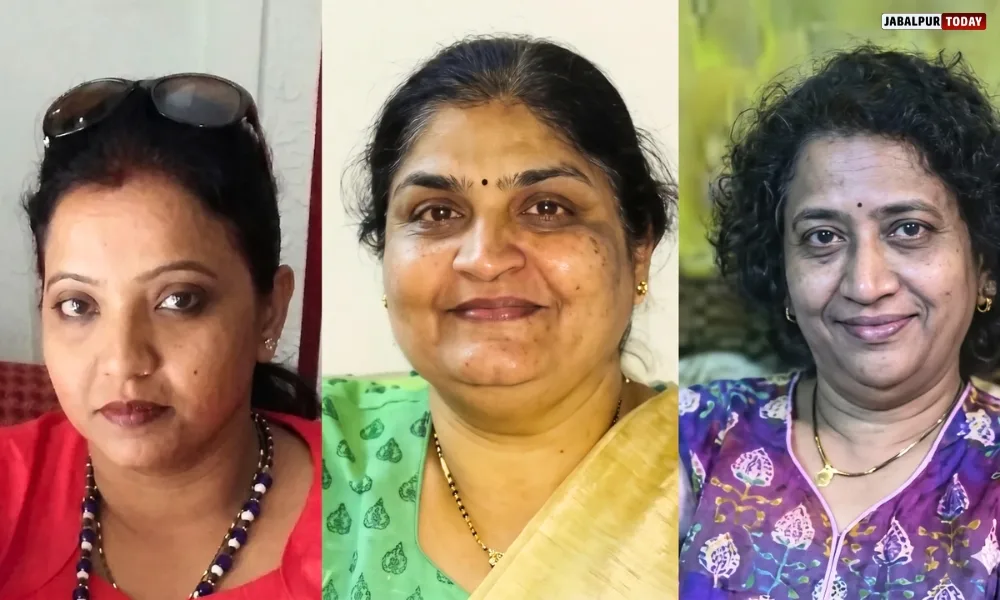
Three ‘Manishas’ at centre of NEET-UG 2026 leak: Inside the scam that cancelled India’s biggest medical exam
New Delhi: A beautician. A biology teacher. A school principal. Three women from completely different professions — and all three share the same first name: Manisha. As the CBI investigates the NEET-UG 2026 paper leak case, one name keeps appearing again and again — Manisha. The coincidence sounds unbelievable, but investigators say the connection between them was very real. Together, these three women allegedly played key roles in a scam that compromised India’s biggest medical entrance exam and forced authorities to cancel a test taken by more than 23 lakh students.
The Exam That Shocked the Country
The NEET-UG 2026 exam took place on May 3 in 551 cities across India and 14 centres abroad. Around 23 lakh students appeared for the exam after preparing for years, often studying 12 to 15 hours daily.
But just four days later, on May 7, the National Testing Agency (NTA) received information from central agencies about alleged malpractice. On May 12, the government made a massive announcement — NEET-UG 2026 was cancelled. The CBI took over the investigation. Authorities promised a re-exam at a later date and said students would not need to register again. The government also announced fee refunds.
For students, the cancellation felt devastating. Many had spent years preparing for the exam. One student told ANI, “We studied for 15 hours every day. If re-NEET happens, the paper will become even tougher.”
The country wanted answers. People were not only asking who leaked the paper — they also wanted to know how someone managed to leak it from inside the system itself.
According to investigators, the answer allegedly began in a beauty parlour in Pune.
Manisha No. 1: The Beautician Who Became the Main Link
Manisha Waghmare, 46, runs a beauty parlour in Sukhsagar Nagar in Pune. At first glance, she did not appear connected to any major exam racket. But the CBI has called her the “common link” of the entire Pune-based network.
The CBI arrested Waghmare on May 14, 2026. She became the first of the three Manishas to be detained. On May 16, the court sent her to 10 days of CBI custody.
According to investigators, Waghmare had built contacts with parents and students over the years. Many approached her for tuition recommendations for competitive exams. She allegedly connected them with reputed teachers in exchange for commission. Investigators say this referral network later turned into an illegal exam racket.
The CBI alleges that Waghmare discovered that another contact of hers — Manisha Mandhare — had joined the NTA’s NEET-UG 2026 question-setting panel. This role allegedly gave Mandhare access to the real question papers before the exam.
Investigators say Waghmare then allegedly made a plan with Mandhare. She also involved retired chemistry lecturer P.V. Kulkarni. Together, they allegedly searched for students willing to pay for leaked papers.
According to the CBI, the group charged around Rs 10 lakh per student. Waghmare, Mandhare and Kulkarni allegedly planned to share around Rs 2.5 lakh to Rs 3 lakh each per candidate.
The CBI says Waghmare later expanded the network further. She connected parents and students to Dhananjay Lokhande from Ahilyanagar. Lokhande then allegedly linked them to Shubham Khairnar, a 27-year-old BAMS student from Nashik who ran a counselling business.
Investigators say Khairnar became the first suspect arrested in the case, within hours of the scandal becoming public. What allegedly started with a few insiders had now turned into a city-wide distribution network — and investigators claim Waghmare stood at the centre of it.
Manisha No. 2: The Biology Teacher Who Allegedly Had Access to the Paper
While Waghmare allegedly handled the network, investigators say Manisha Gurunath Mandhare, 57, provided access to the actual paper.
Mandhare worked as a biology subject expert at Modern College of Arts and Science in Pune. The NTA had appointed her to its NEET-UG 2026 question-setting panel. According to the CBI, this position gave her access to both Botany and Zoology question papers.
Police arrested Mandhare in Pune on May 15. A Delhi court later granted the CBI 14 days of custody. Investigators told the court that she was one of the alleged “masterminds” behind the leak.
The CBI alleges that Mandhare leaked question papers to selected candidates in exchange for large amounts of money. Investigators say she worked with Waghmare and retired chemistry lecturer P.V. Kulkarni to identify students willing to pay.
Kulkarni, from Latur, was arrested alongside Waghmare on May 16. The CBI has described him as both a “kingpin” and “mastermind” in the case.
Investigators allege that Kulkarni used his own contacts inside the NTA system to access the chemistry question paper. He allegedly held special coaching sessions where selected students wrote leaked questions, answer options and correct answers into notebooks before the exam.
According to the CBI, Waghmare’s network connected Mandhare and Kulkarni to each other.
Manisha No. 3: The Principal Who Allegedly Shared Physics Questions and Burned Evidence
The latest arrest in the case brought even more outrage.
On May 22, 2026, the CBI arrested Manisha Sanjay Havaldar, principal of Seth Hiralal Saraf Prashala in Pune. The school is run by Vidya Prasarini Sabha (VPS), a 103-year-old educational institution established before Independence.
The CBI identified Havaldar as an empanelled translator for Physics in NEET-UG 2026. Her job allegedly involved translating or reverse-translating physics questions into regional languages. According to investigators, this role gave her access to the physics question bank.
Authorities produced her before a Pune court, which sent her to transit remand before her appearance in a Delhi court.
The CBI alleges that Havaldar shared physics questions with at least one student. Investigators also claim she passed questions to Manisha Mandhare.
According to sources cited in court, Havaldar allegedly received Rs 20,000 from one student and Rs 25,000 from another person in exchange for the leaked questions.
Investigators also revealed a major detail about the alleged cover-up. According to the CBI, Havaldar deleted all chats with Mandhare after the scandal became public. She also allegedly burned notes containing the physics question bank.
A CBI spokesperson said investigators matched the questions allegedly shared by Havaldar with the actual questions that later appeared in the NEET-UG 2026 physics paper sets. According to the agency, this directly linked her to the leak.
After her arrest, Vidya Prasarini Sabha suspended Havaldar. The institution issued a statement calling her alleged actions “condemnable.” The organisation said it never expected someone associated with it to cause “academic loss to students.”
How the Alleged Leak Network Worked
According to the CBI, the alleged network worked in a structured chain.
Mandhare and Kulkarni, both linked to the NTA’s question-setting process, allegedly gained access to Biology and Chemistry papers before the exam. Havaldar allegedly supplied Physics questions to Mandhare, bringing all three science subjects together.
Investigators say Mandhare and Kulkarni then organised special coaching sessions where selected students copied leaked questions and answers into notebooks before exam day.
Waghmare allegedly handled student recruitment and money collection. She identified families willing to pay large amounts, connected them to the suppliers, and expanded the network further through Dhananjay Lokhande and Shubham Khairnar’s counselling operation in Nashik.
Khairnar remains in extended CBI custody as investigators continue tracing more accused people across the country.
The alleged racket also spread beyond Maharashtra.
In Jaipur, police arrested BJP worker Dinesh Biwal, along with his son and brother, over alleged financial and distribution links.
Investigators also found links in Haryana. According to reports, a BAMS student named Yash Yadav from Gurugram allegedly supplied leaked papers to Mangilal Khatik through Telegram on April 29 — several days before the May 3 exam.
A System That Was Supposed to Be Secure
What makes this scandal especially shocking is that investigators believe insiders exploited the system itself.
Mandhare and Havaldar were not outsiders trying to hack into NEET. The NTA itself had appointed them after institutional checks and verification processes.
After the controversy, the NTA announced that NEET would shift to a computer-based format from 2027. The government says this move will help create a more “fool-proof” examination system.
For the NEET-UG 2026 re-exam, authorities say they will introduce stronger security measures and conduct the test using the NTA’s own resources. Officials have not announced the new exam date yet.
23 Lakh Students and One Massive Betrayal
The story of the three Manishas is not just about an unusual coincidence of names.
It is about trust. More than 23 lakh students and their families trusted the examination system with their future. Investigators allege that insiders used their positions for personal profit and damaged that trust.
Three women. Three professions. One name. One scandal that has once again forced India to confront deep problems inside institutions responsible for shaping students’ futures.
The investigation is still ongoing. No court has convicted any of the accused so far. All individuals named in the case are accused, not convicted.
