
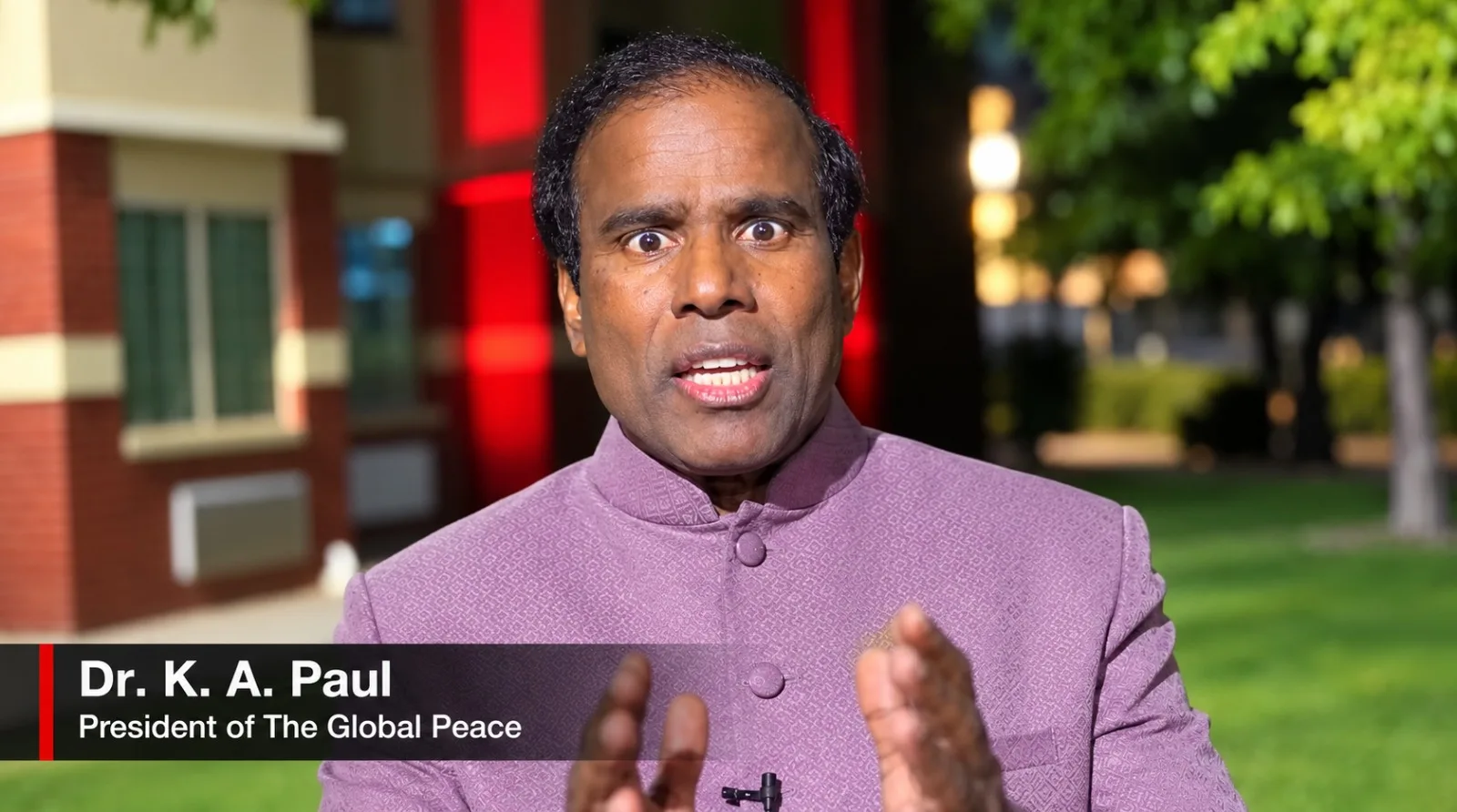
Dr. K. A. Paul urges Israelis to seek peace, demand political accountability and consider diplomatic solutions to the Iran war ahead of October 27
WASHINGTON, D.C.: International peace advocate Dr. K. A. Paul has appealed to Israelis to unite for peace, demand political accountability and consider a change in leadership through the democratic process on October 27. He has criticised Israeli Prime Minister Benjamin Netanyahu’s approach to Iran and called for negotiations to end the ongoing conflict.
Dr. Paul, founder of the Global Peace Initiative, said military confrontation could deepen regional instability and increase the humanitarian and economic costs of the war. He urged Israeli citizens, political leaders and the international community to prioritise diplomacy and civilian protection.
“My appeal is to every Israeli who loves Israel, every Jewish person who wants a secure future for their children, and every citizen who believes that peace is possible,” Dr. Paul said, calling for peace, accountability and a new political direction.
Dr. K. A. Paul Warns of the Global Impact of the Iran War
Dr. Paul said the consequences of the Iran war extend beyond the Middle East. He highlighted concerns about rising fuel and food prices, economic instability, displacement and the growing difficulties faced by vulnerable communities.
He argued that higher grocery prices could place additional pressure on families already struggling to afford basic necessities. He also urged governments, humanitarian organisations and religious leaders to assess the conflict’s effects on food security, access to clean water and nutrition.
According to Dr. Paul, the human cost of war should include not only military casualties but also hunger, economic hardship and the loss of livelihoods.
He called for immediate efforts to protect civilians and prevent further escalation.
Dr. Paul Calls for Netanyahu to Face Political Accountability
Dr. Paul criticised Prime Minister Benjamin Netanyahu’s approach to Iran, arguing that his policies contributed to the escalation of military tensions.
He also questioned the advice given to US President Donald Trump regarding military action and the possibility of bringing political change in Iran through force.
Dr. Paul said he had visited Iran four times, including three official visits and one private visit. He cited these experiences while arguing that military strikes or the killing of national leaders would not necessarily produce regime change.
He referred to a meeting with Iranian President Masoud on September 25, 2026, in New York City, as described in his statement.
Dr. Paul called for an examination of the decisions behind the conflict, the objectives of the military campaign and the prospects for a negotiated settlement. He urged Israeli voters to consider the consequences of the government’s policies when making political choices.
Dr. Paul Appreciates Mike Johnson’s Peace Efforts
Dr. Paul expressed appreciation for US House Speaker Mike Johnson, whom he described as a friend and a person of faith.
He said he valued efforts by political leaders to explore ways to end the conflict and encouraged the US administration to support a diplomatic solution.
Dr. Paul argued that political and religious leaders have a responsibility to prioritise human life, diplomacy and long-term security over prolonged military confrontation.
He also called for greater clarity about how the US administration reached its decisions on Iran and what diplomatic alternatives it considered.
Questions Over the Decisions Behind Military Action
Dr. Paul raised questions about the influence of advisers and intermediaries involved in discussions about the Iran conflict. He called for transparency regarding the advice provided to President Trump, the alternatives considered and the role of regime-change objectives.
He also raised concerns about potential conflicts of interest involving people participating in Middle East diplomacy. He said authorities should examine such concerns through documented evidence.
Dr. Paul stated that he had presented a 15-point peace proposal on March 15 to help end the war. He urged the relevant parties to review the proposal and assess whether it could contribute to a diplomatic settlement.
He said credible peace initiatives should receive serious consideration if they offer a way to save lives and reduce hostilities.
Dr. Paul Urges Israel, Iran and the US to Pursue Diplomacy
Dr. Paul called on the United States, Israel, Iran and international partners to pursue direct dialogue and negotiations. He said a sustainable agreement should address security concerns, protect civilians and prevent further regional escalation.
He argued that military action alone could not guarantee lasting stability and that diplomatic engagement would remain essential to resolving the underlying issues.
Dr. Paul urged world leaders to examine his 15-point proposal alongside other credible diplomatic initiatives.
October 27 Appeal: A Call for Peaceful Political Change
Addressing Israelis directly, Dr. Paul urged citizens who oppose Netanyahu’s policies to express their views peacefully and participate in the democratic process.
He stressed that supporting Israel’s security did not require supporting every decision made by its government.
He also clarified that his appeal focused on political leadership and government policy, not Jewish people as a religious or ethnic community.
Dr. Paul said Israelis, Palestinians, Iranians, Americans and other people across the region deserved a future without the constant threat of war.
Dr. Paul Announces Global Peace and Prayer Meeting in Dallas
Dr. Paul also invited media representatives and leaders to attend a Global Peace and Prayer Meeting in Dallas at Prismo Colinas from 6 pm to 9 pm on Sunday, October 25, 2026, according to his statement.
He urged President Trump, Prime Minister Netanyahu, Iranian leaders, Speaker Mike Johnson and the wider international community to support credible peace efforts.
Dr. Paul reiterated his commitment to engaging political, religious and humanitarian leaders in pursuit of a peaceful resolution.
He said the international community must prioritise human life, security and diplomacy to help build a more stable future.
