
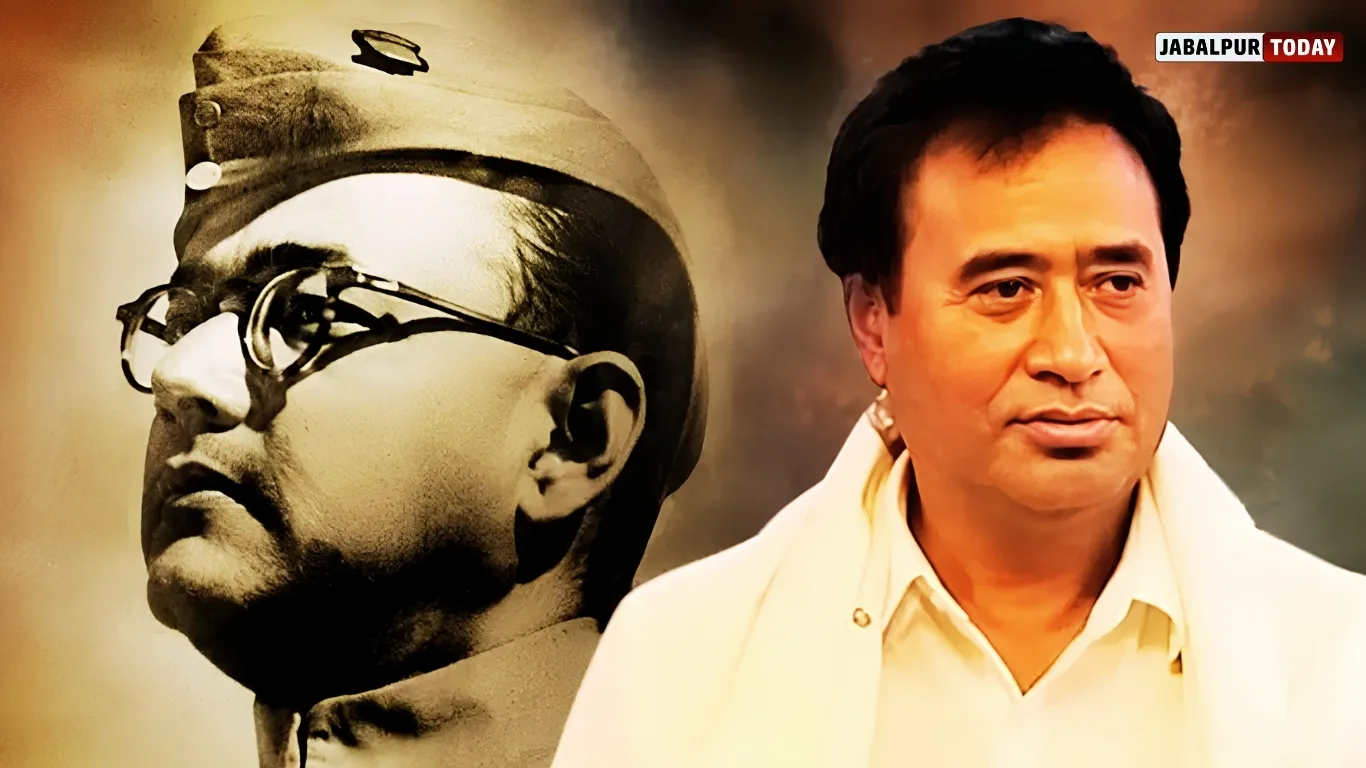
West Bengal BJP distances itself from Ananta Maharaj’s remarks as comments on Subhas Chandra Bose reignite controversy in North Bengal
New Delhi/West Bengal: BJP Rajya Sabha MP Nagen Roy, popularly known as Ananta Maharaj, has sparked a political controversy in West Bengal. He referred to Netaji Subhas Chandra Bose as a “war criminal” and a “world criminal” at a public meeting near Siliguri.
Roy reportedly made the remarks on Sunday at a Greater Cooch Behar People’s Association (GCPA) gathering in Jabravita. The event marked Cooch Behar’s historic merger agreement. Roy is a prominent Rajbanshi leader and a key GCPA figure. He questioned Netaji’s role in India’s freedom struggle. He claimed that the people of Cooch Behar, not Netaji, played the decisive role in India’s independence.
According to reports, Roy asked the gathering, “Who made Subhas a leader? What kind of leader was he?” He alleged that Netaji fought against India, fled to Japan and took up arms against the country. Members of the gathering reportedly agreed that such a person could be called a traitor. Roy then claimed that Netaji did not liberate India.
“We have liberated India. No one else had the courage. If anyone other than us liberated India, let them provide proof and documents. If they can, they can hang me,” Roy was quoted as saying.
Roy also highlighted former Cooch Behar ruler Maharaja Jagaddipendra Narayan’s role. He raised demands for the rights of indigenous communities in the region. He set 2029 as a deadline for some of these demands.
The latest remarks came less than 24 hours after reports suggested that Roy had moderated his earlier position on Netaji. However, he has since defended his comments. According to Roy, his statements were based on information and evidence. Meanwhile, his remarks have continued to draw political attention.
Pattern of Controversy
This is not the first time Roy has faced criticism over his remarks on Netaji. In July 2026, he questioned Netaji’s role in organising the Azad Hind Fauj, or Indian National Army (INA), claiming that the force was essentially made up of former British soldiers and had been “misused.”
Those remarks prompted police complaints from All India Forward Bloc leaders in Cooch Behar and drew strong criticism from prominent Rajbanshi intellectuals, who described Roy’s comments as false, misleading and derogatory.
Veteran BJP leader Tathagata Roy also publicly criticised the West Bengal BJP leadership over the controversy. He warned that repeated remarks against Netaji, whom he described as one of three figures “above reproach” for Bengali Hindus, could alienate voters. Netaji researcher Anuj Dhar was also among those who criticised Roy’s comments.
BJP Distances Itself from Remarks
Roy’s latest comments have put the BJP in a politically sensitive position. West Bengal BJP general secretary Bapi Goswami distanced the party from the remarks. He said, “Netaji is in the heart of every Indian. I do not know who said what. The party will consider the matter.”
Earlier, BJP leader and former Union minister Nisith Pramanik also called Roy’s views personal. He said they did not represent the party’s position.
The BJP nominated Roy to the Rajya Sabha in 2023. He remains an influential leader among the Rajbanshi community in North Bengal. Roy has often differed publicly with senior BJP leaders. He continues to raise regional and community issues. These include demands related to Cooch Behar’s political status and rights.
Historical Context
Claims describing Netaji as a “war criminal” have surfaced in political and historical debates over the years. Some rely on disputed documents, wartime allegations or unverified correspondence. However, claims that Bose was formally designated a war criminal require careful qualification. This is especially important given the historical record of post-World War II investigations and the status of the Indian National Army.
Netaji Subhas Chandra Bose remains one of India’s most revered freedom fighters. His legacy holds deep emotional, historical and political significance in Bengal. Political parties and groups across the ideological spectrum continue to invoke his legacy.
Roy’s remarks have again highlighted the link between regional identity politics and historical memory in West Bengal. They have also revived debate over the legacy of one of India’s most prominent national figures.
