
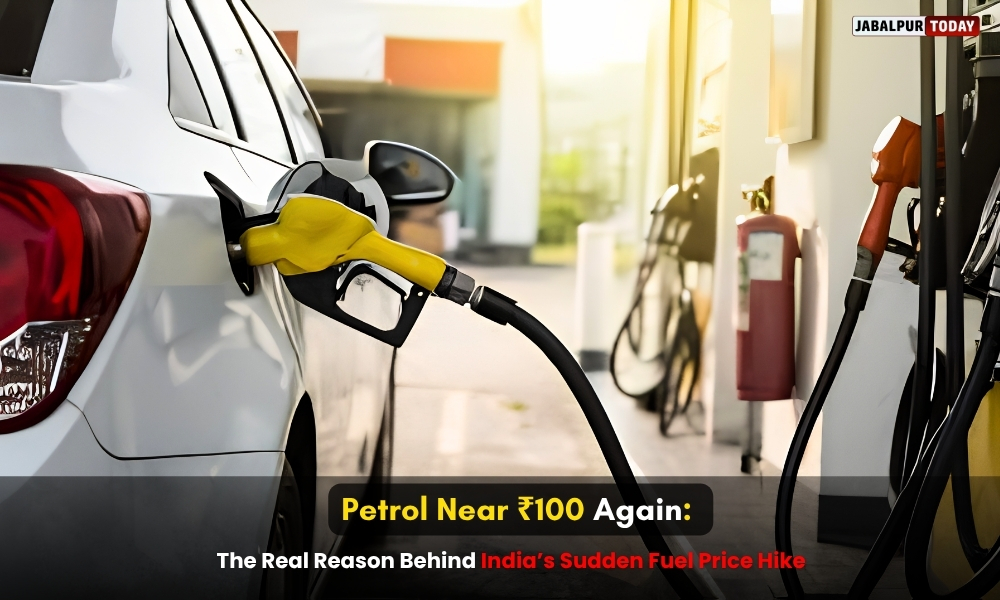
Petrol and diesel prices rose ₹3 across India on May 15, 2026. Check new rates, reasons behind the hike, and why fuel prices may rise further
New Delhi: Millions of Indians woke up on May 15, 2026, to higher fuel prices as petrol and diesel rates increased by ₹3 per litre overnight across the country. In Delhi, petrol rose to ₹97.77 per litre and diesel reached ₹90.67. Mumbai, Kolkata, Chennai, and several other cities also saw sharp increases. While the ₹3 hike shocked consumers, experts say the real crisis began months ago with the West Asia conflict, disruption in global oil supply routes, rising crude oil prices, and massive losses faced by India’s oil companies. The latest hike reflects growing pressure on the government and oil marketing companies, and analysts warn that fuel prices could rise further if the global situation worsens.
Fuel Prices Increased Across India Overnight
The fuel price hike came into effect on the morning of May 15, 2026.
New petrol prices in major cities included:
• Delhi: ₹97.77 per litre
• Mumbai: ₹106.68 per litre
• Kolkata: ₹108.74 per litre
Diesel prices also increased sharply across states.
Even before the official announcement, reports of a likely fuel price increase had started spreading on social media and local news channels. By the evening before the hike, petrol pumps in several cities witnessed long queues as people rushed to fill their tanks.
Many consumers feared prices could rise by ₹5 to ₹20 per litre. Several petrol pumps temporarily displayed “No Fuel” boards due to sudden heavy demand.
Ground reports from Delhi-NCR, Uttar Pradesh, Gujarat, Odisha, and Bihar showed unusually crowded fuel stations and growing public concern over future price hikes.
West Asia War Triggered the Crisis
The current fuel crisis started after tensions in West Asia escalated earlier this year.
On February 28, 2026, the conflict disrupted movement through the Strait of Hormuz — one of the world’s most important oil shipping routes. Nearly 20% of global oil trade passes through this narrow waterway connecting the Persian Gulf to the Arabian Sea.
For Asian countries like India, China, Japan, and South Korea, the Strait of Hormuz is critical because a major share of their crude oil imports moves through this route.
After the disruption, India reportedly lost access to more than 40% of its regular crude oil supply routes almost immediately.
India is the world’s third-largest crude oil importer and depends heavily on imports from the Middle East.
The closure of the Strait of Hormuz has now continued for nearly two months, making it one of the longest major oil supply disruptions in recent history.
Global Crude Oil Prices Rose Sharply
The disruption pushed global crude oil prices much higher.
Brent crude oil prices increased from around $70 per barrel last year to nearly $105 per barrel by early May 2026.
Several global analysts believe prices could rise even further if the conflict continues:
• Some estimates project crude prices may reach $154 per barrel if the disruption lasts longer.
• Under severe escalation, experts say oil prices could even touch $200 per barrel.
Higher global crude prices directly increase India’s import costs because the country imports most of its oil requirements.
Government Tried to Prevent Fuel Price Hike for Months
One major reason the ₹3 hike came as a shock is that India had not increased retail fuel prices for a long period despite rising global crude prices.
Government-owned oil marketing companies (OMCs) — including Indian Oil Corporation (IOC), Bharat Petroleum Corporation (BPCL), and Hindustan Petroleum Corporation (HPCL) — had kept petrol and diesel prices mostly stable since April 2022.
The government also reduced excise duty by ₹10 per litre earlier to protect consumers from rising international oil prices.
However, this relief came at a huge financial cost.
According to Oil Minister Hardeep Singh Puri, oil companies were losing nearly ₹1,000 crore every day by selling fuel below market cost.
The central government was also reportedly losing around ₹14,000 crore every month because of lower excise duty collections.
Oil Companies Were Facing Massive Losses
Experts say oil companies could no longer continue absorbing such heavy losses.
Reports suggested:
• Oil companies were losing around ₹14 per litre on petrol.
• Losses on diesel reached nearly ₹18 per litre.
• Combined monthly losses for IOC, BPCL, and HPCL crossed ₹30,000 crore.
• Total under-recovery since the beginning of the West Asia conflict crossed ₹1 lakh crore.
Analysts warned that the situation had become financially unsustainable.
Industry experts estimated that if prices were not revised soon, total losses could cross ₹50,000 crore by the end of June 2026.
India Turned to Russian Oil Amid Supply Disruptions
After Middle Eastern oil supplies became difficult to access, India increased purchases of discounted Russian crude oil.
However, India faced strong competition from China, which also began buying more Russian oil after supply disruptions in West Asia.
Analysts said this competition pushed Russian oil prices higher as both countries tried to secure limited supplies.
Energy experts also pointed out that India remained more vulnerable than China because:
• India depends more heavily on Middle Eastern crude.
• India maintains lower strategic oil reserves.
• India’s emergency crude stock can reportedly support only around 30 days of demand.
India’s crude oil imports reportedly declined in March even as fuel demand inside the country remained strong.
Fuel Crisis Also Hurt India’s Economy
The fuel crisis has already started affecting the broader economy.
Several economic indicators weakened during the first months of 2026:
• Foreign investors reportedly withdrew more than $20 billion from Indian markets.
• The Indian rupee fell to record lows against the US dollar.
• Sensex declined by nearly 11% in 2026 so far.
• Nifty 50 dropped around 9.5%.
Economists also warned that rising fuel prices could increase inflation because transportation costs affect prices of food, goods, and services across the economy.
India’s GDP growth forecast for 2026–27 has already slowed to 6.7% from 7.7% in the previous year.
Reserve Bank of India Governor Sanjay Malhotra had earlier warned that fuel prices might rise if the West Asia crisis continued.
Why Did the Government Increase Prices Now?
Experts say the government delayed the hike for as long as possible.
However, several factors forced the decision:
• Massive daily losses faced by oil companies
• Rising global crude oil prices
• Continued disruption in the Strait of Hormuz
• Pressure on government finances
• Competition for Russian crude oil
• Inflation concerns and supply uncertainty
Industry groups had also recommended gradually reducing fuel subsidies and restoring taxes to manage the growing financial burden.
The ₹3 increase appears to be a calibrated step instead of a sudden massive hike.
Still, experts believe it also signals the end of the long fuel price freeze.
Will Petrol and Diesel Prices Rise Again?
Analysts say further fuel price hikes cannot be ruled out.
Several major problems still remain unresolved:
• The Strait of Hormuz remains disrupted.
• Brent crude prices remain above $100 per barrel.
• Oil companies continue facing losses.
• Global supply chains remain unstable.
Experts also warn that even if the Strait reopens, oil supply systems may take several months to fully normalise because of tanker shortages, insurance issues, and damaged infrastructure.
For now, the ₹3 hike has already increased daily expenses for millions of Indians who depend on fuel for transportation and work. The bigger concern is whether this is a temporary adjustment — or the beginning of a much larger fuel price crisis in the months ahead.

Mansi Sharma is a journalist covering Global Affairs, and wellness, known for turning complex ideas into sharp, engaging narratives. Her work is driven by curiosity, depth, and a constant urge to question and explore. When she’s not writing, you’ll often find her diving into new ideas—preferably with a cup of coffee in hand, one sip at a time.